UniFi Case Study: 77,000 sq ft Warehouse Physical Security with UniFi AI PTZ & Active Deterrence
Infrastructure Summary
This enterprise industrial integration details the first deployment phase of a license-free surveillance network across a 77,000-square-foot warehouse and office facility. Built on a high-throughput routing core, the architecture coordinates fixed 4K video capture nodes with automated panning-tracking arrays and IP-based acoustic horns to deliver zero-latency perimeter protection and long-term storage retention.
Project at a Glance
Site Overview
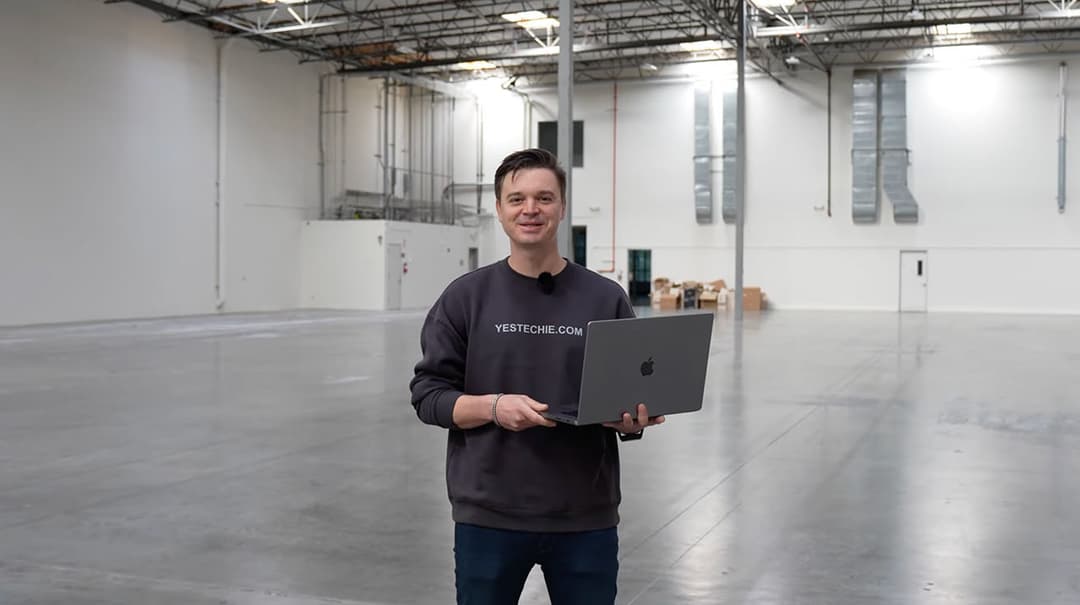
- Location & Client: Industrial Logistics & Corporate Office Complex, Los Angeles, CA
- Facility Footprint: 77,000 Square Feet Total (Comprising Active Warehouse Bays and Administrative Wings)
- Project Scope: Phase 1 — Comprehensive Outdoor Perimeter Surveillance & Coordinated Active Deterrence Matrix
Network & Routing Infrastructure
- Core Gateway Node: UniFi Dream Machine Pro Max (UDM Pro Max)
- Core Switching Layer: UniFi Pro Max Switching Infrastructure (High-Wattage PoE+ / PoE++ Allocation)
- Network Framework: Scalable managed network infrastructure topology ready for upcoming multi-subnet office expansion
Surveillance & Storage Hardware Matrix
- Stationary Imaging Nodes: UniFi G6 Pro Bullet Cameras (4K Video Capture with Optical Zoom)
- Dynamic Interlocking Arrays: UniFi AI PTZ Precision Cameras (High-Speed Continuous Pan-Tilt-Zoom Tracking)
- Acoustic Deterrence Arrays: UniFi AI Horn Speakers (IP66 Weatherproof Public Address & Siren Units)
- Central Storage Engine: UniFi Enterprise Network Video Recorder (Enterprise ENVR)
- Data Retention Target: 90 Days (3 Months) of Continuous High-Resolution Recording Across All Channels
Introduction to the 77,000 Sq Ft Industrial Infrastructure
Large-scale industrial sites present substantial physical security vulnerabilities that legacy, license-driven surveillance platforms fail to address efficiently. In physical asset protection, simply recording an intrusion as it occurs is insufficient for modern operational needs. Large logistics facilities require an active defense strategy that transforms perimeter video from a passive recording mechanism into an automated threat mitigation system.
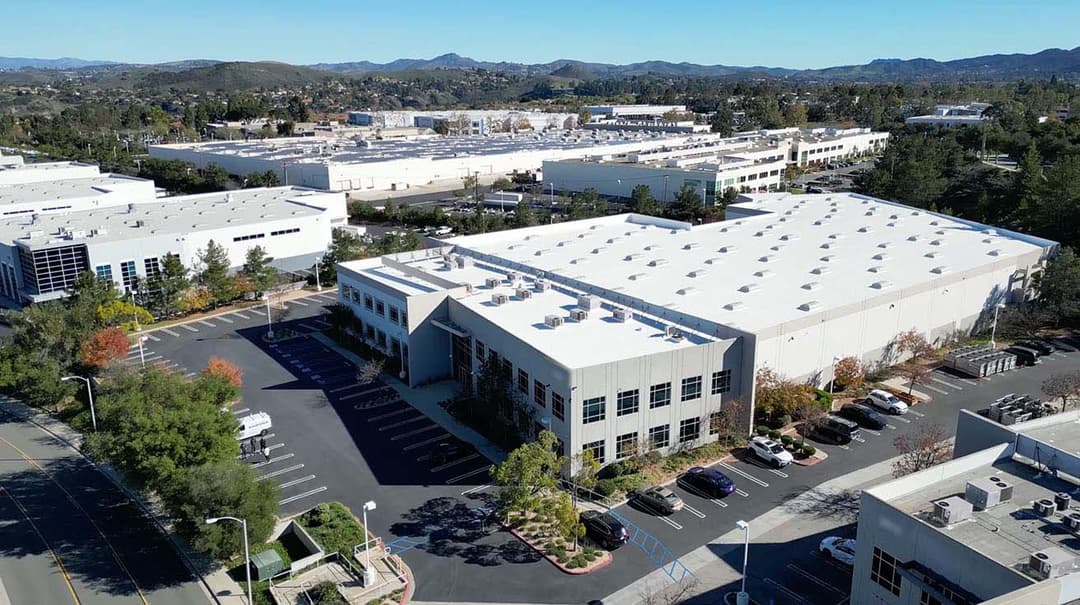
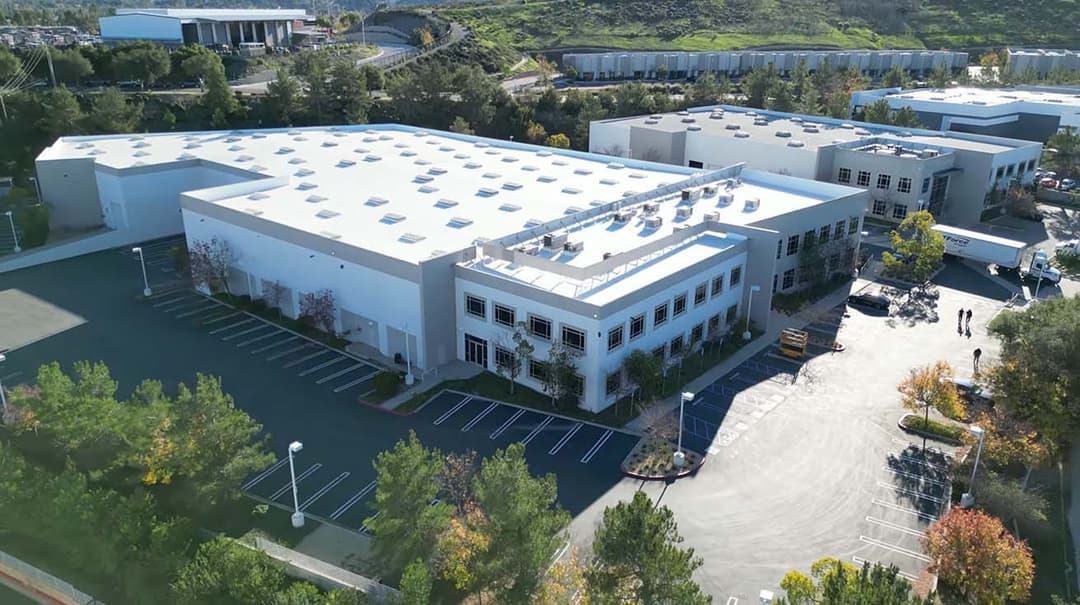
When an enterprise client approached YesTechie to protect a massive 77,000-square-foot industrial facility in Los Angeles, their requirements demanded an architecture that could secure extensive outdoor boundaries, automate field responses, and consolidate data into a single management interface. The site contains high-value asset storage zones, active loading docks, and attached corporate offices, meaning an uncompromised perimeter boundary line was mandatory.
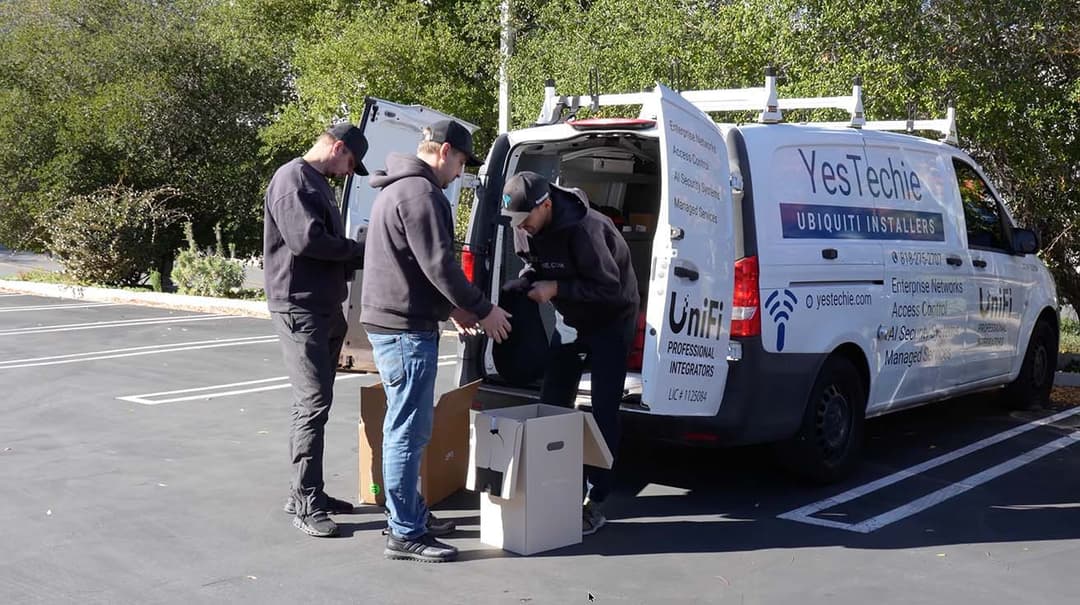
To handle these requirements, our low-voltage field technicians engineered a unified, multi-layered commercial security camera installation built entirely on a high-capacity UniFi ecosystem. By executing this project in structured deployment phases, our engineering crew optimized the primary exterior defense perimeters before integrating internal subnets, door access lines, and enterprise wireless arrays.
Core Server Room Hardware & License-Free Ecosystem Architecture
The performance of an AI-driven, multi-camera surveillance matrix depends heavily on the computational capabilities of the central network rack. High-resolution 4K video feeds, real-time license plate recognition (LPR), continuous facial index hashing, and automated camera-to-camera triggers require a high-throughput routing and storage foundation.
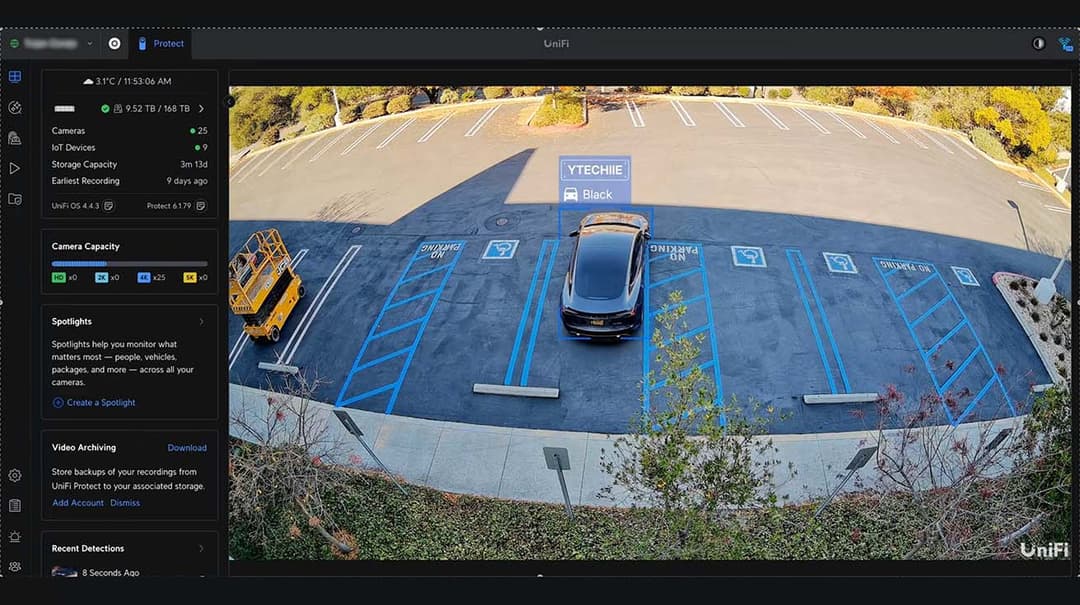
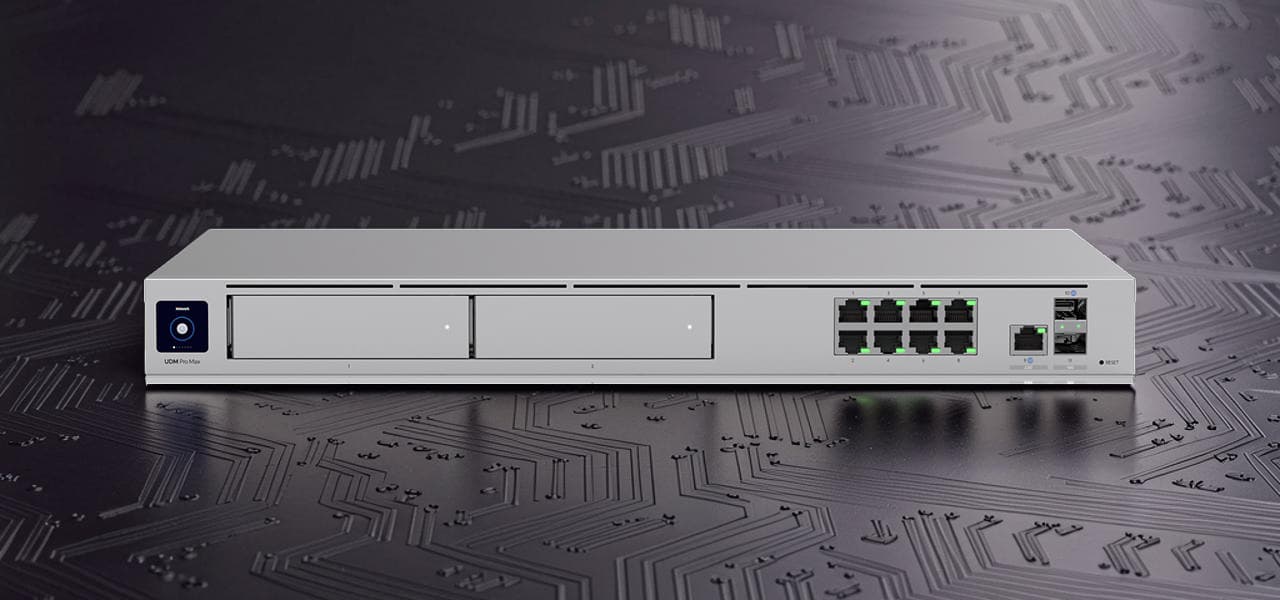
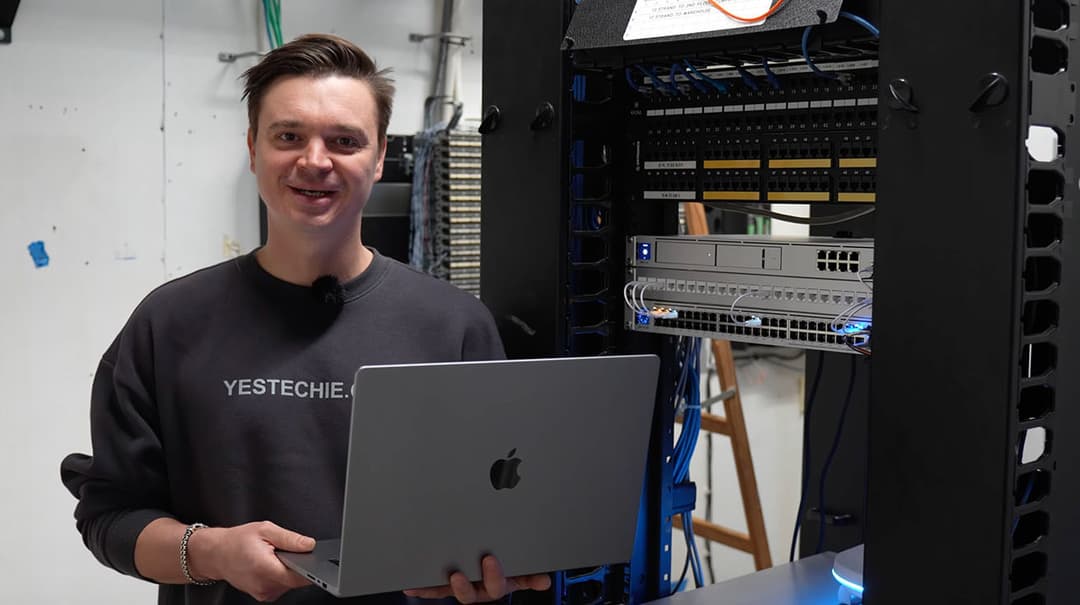
Inside the secured IT equipment room, our technicians anchored and terminated the core infrastructure within a standard equipment cabinet. The system's routing engine is built on the UniFi Dream Machine Pro Max (UDM Pro Max). This dual-power-supply console manages all network data routing, security firewall rules, and host configuration subnets, processing high incoming packet traffic with exceptional stability.
The switching layer utilizes UniFi Pro Max Switches, which provide high-power PoE+ and PoE++ (802.3bt) power allocation across all outdoor drop coordinates. This power configuration allows high-draw PTZ motors and acoustic heaters to run over a single CAT6A line, completely avoiding the need for external secondary transformers out on the building fascia.
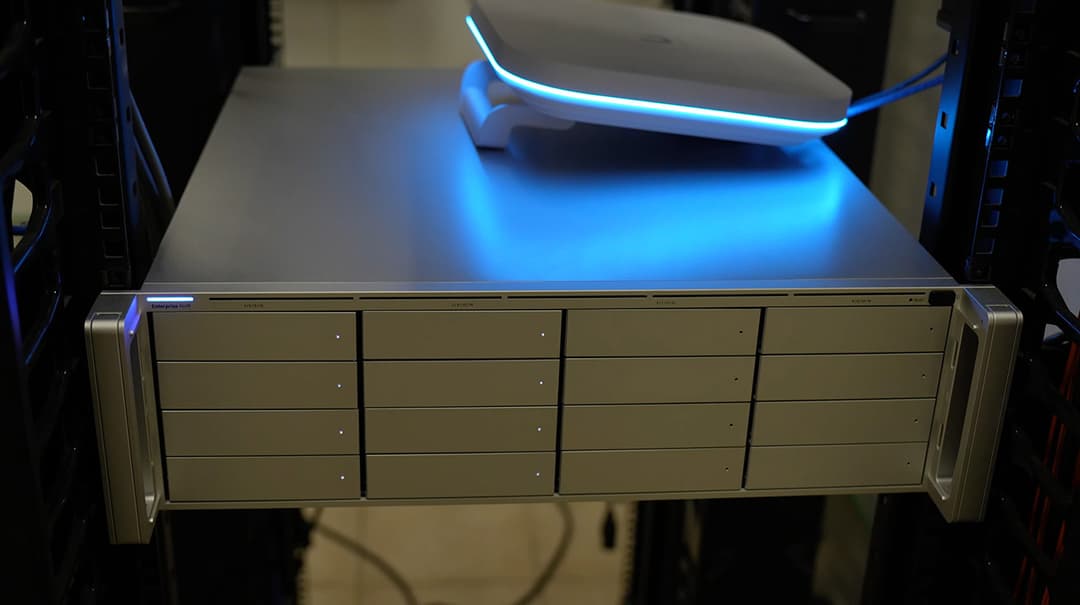
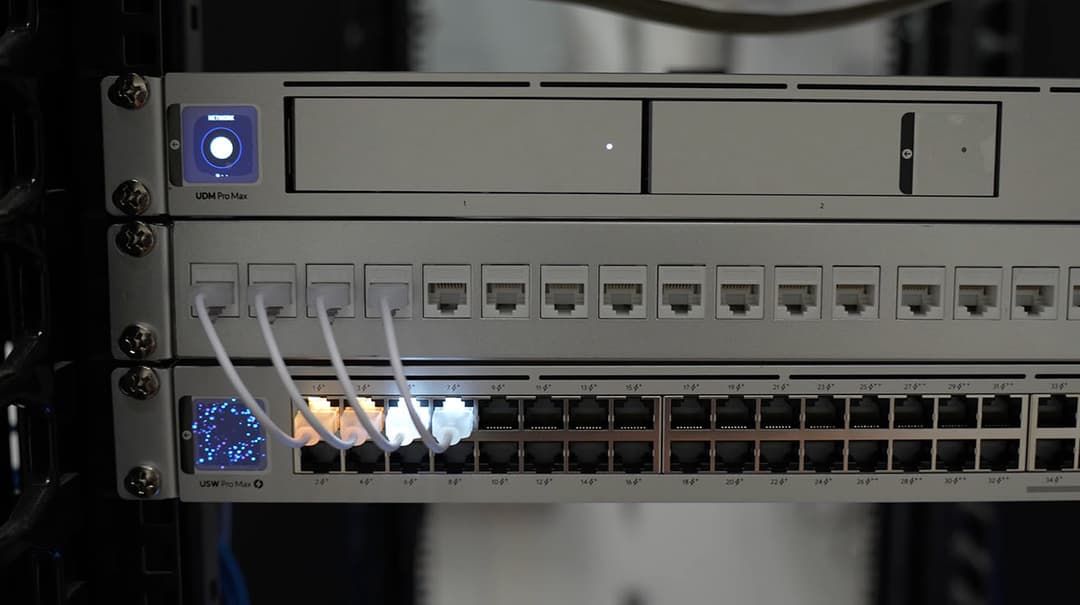
For video storage, we implemented the UniFi Enterprise Network Video Recorder (Enterprise ENVR). To satisfy the client’s strict mandate for 90 days (3 months) of continuous, uncompressed video retention, we equipped the unit with high-capacity enterprise hard drives. This storage configuration provides reliable write cycles and the necessary data headroom to manage multiple concurrent high-definition video streams without frame dropping.
By implementing this unified architecture, the client's IT staff can monitor network metrics, surveillance footage, and operational logs through a single interface. Because the entire deployment runs on a license-free enterprise IT infrastructure model, the organization pays zero monthly software seat fees or camera connection charges, resulting in substantial operational savings over the system’s lifecycle.
Perimeter Defense Strategy: Coordinated Tracking and Active Deterrence
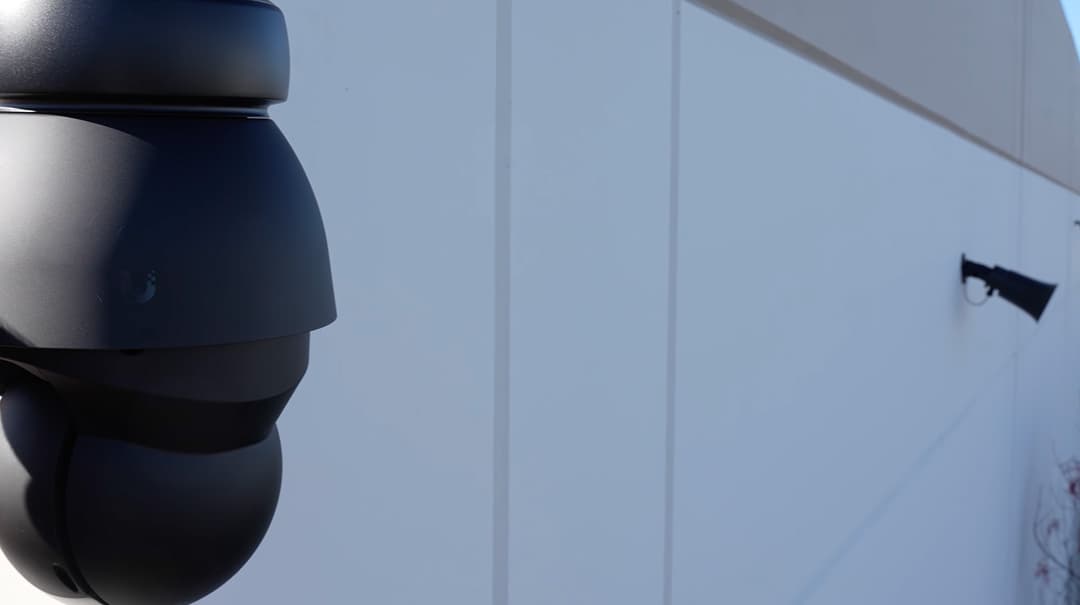
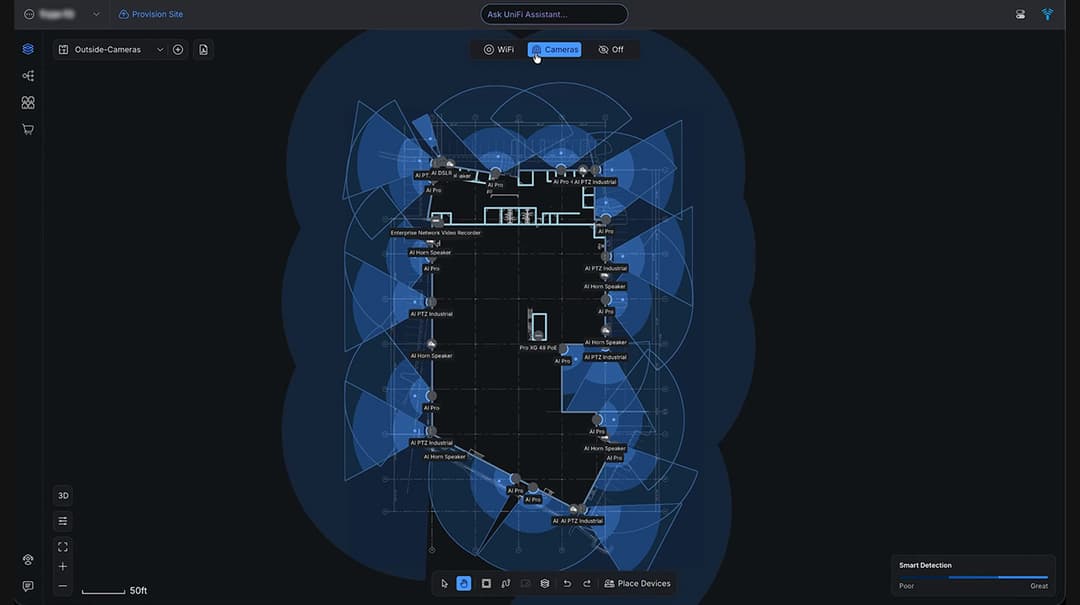
Securing a wide industrial exterior perimeter requires a combination of fixed-angle focal points and high-speed dynamic tracking arrays. Placing individual cameras on isolated schedules creates systemic vulnerabilities, as an intruder moving past a single camera’s blind spot can easily avoid detection. To address this risk, our perimeter defense plan pairs stationary cameras with dynamic tracking units to create interlocking detection zones.
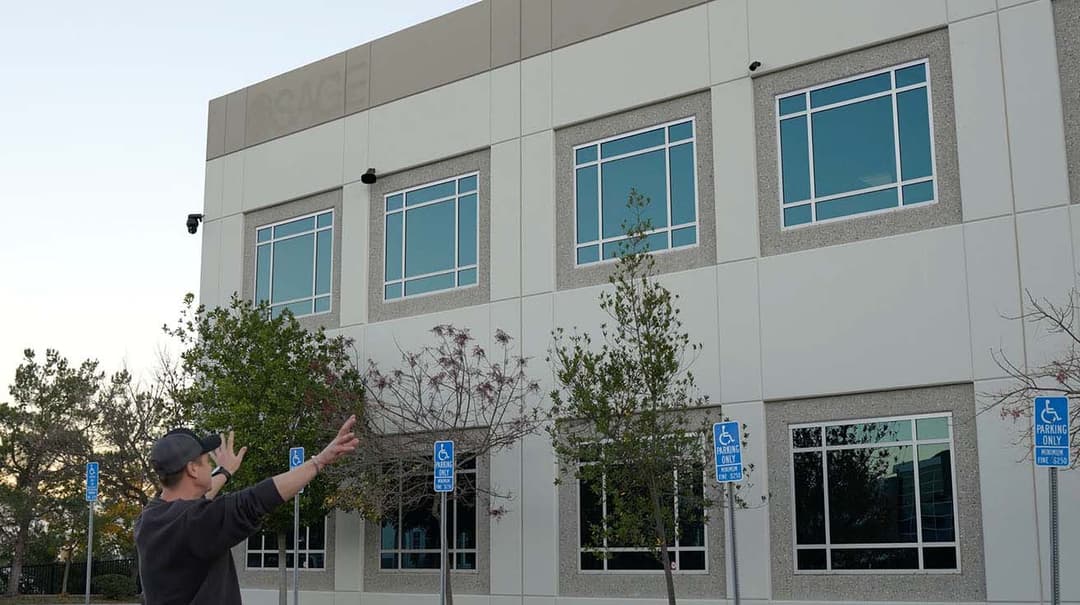
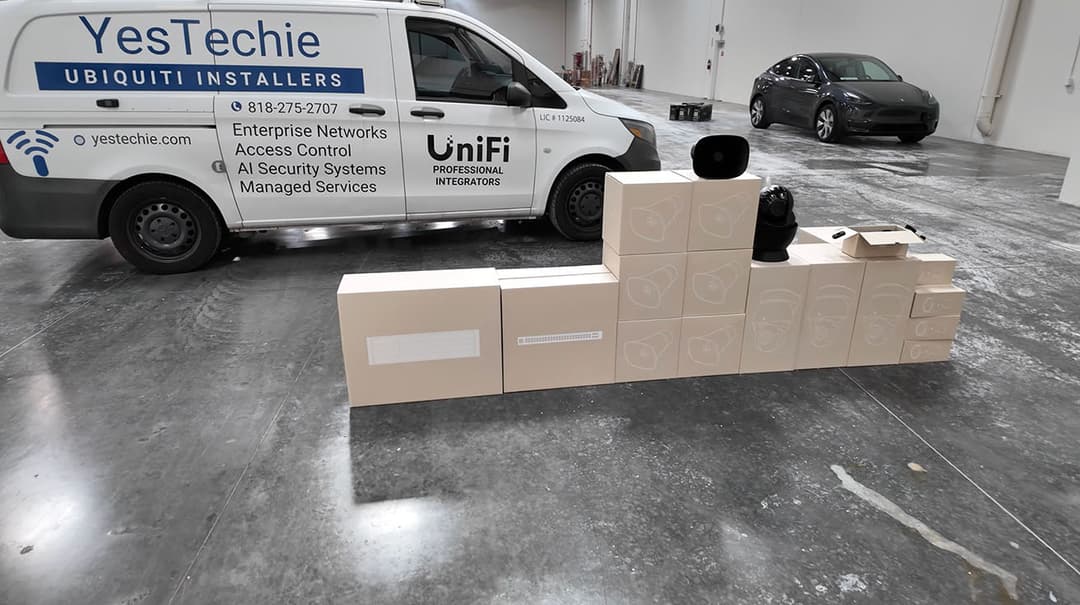
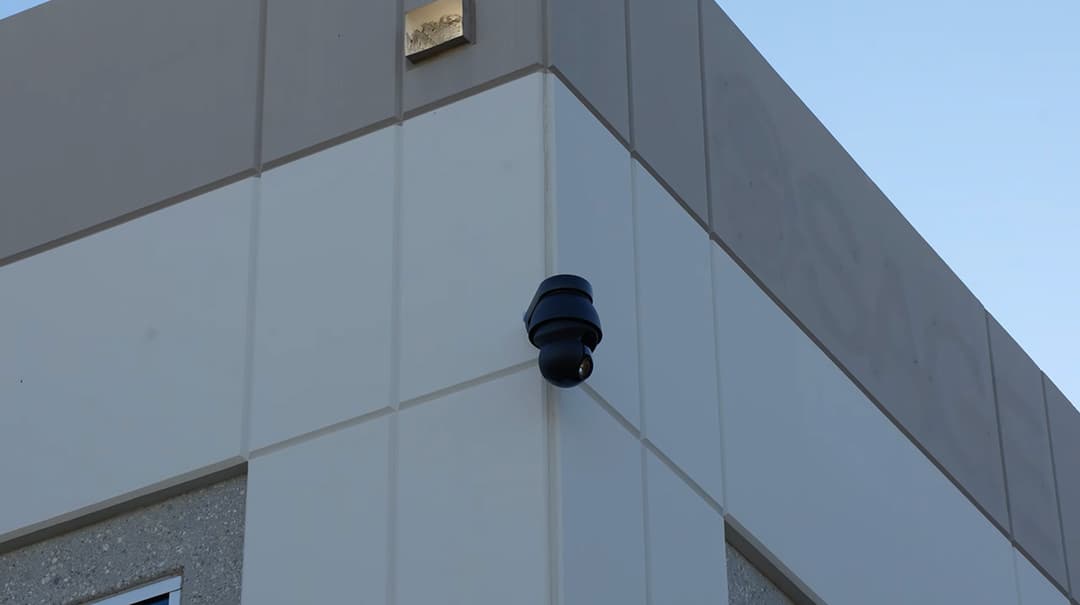
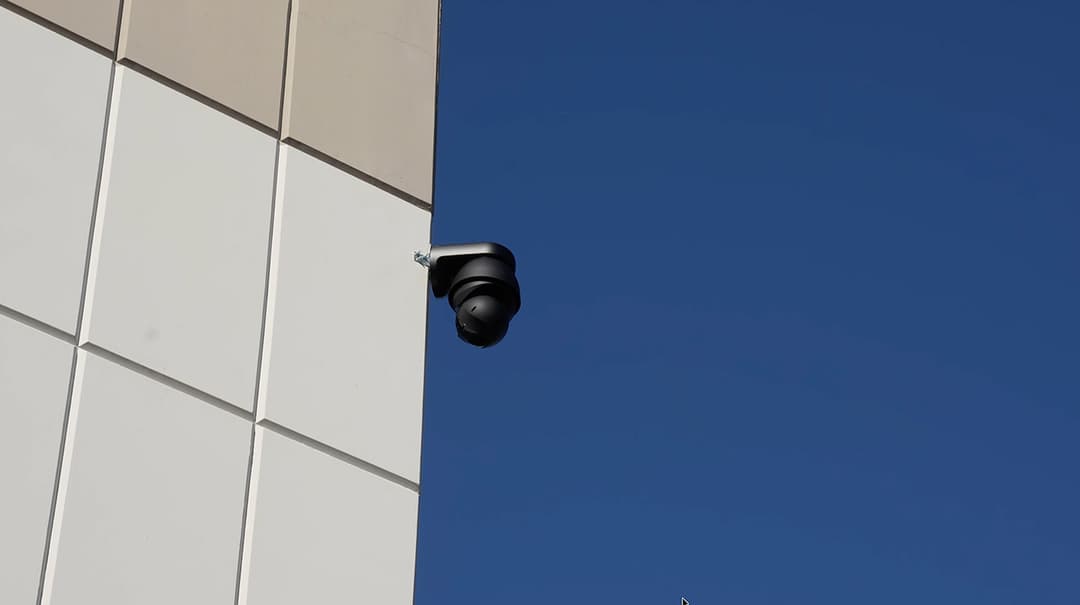
We deployed a specialized three-node hardware array on each structural corner of the 77,000-square-foot facility:
- The Fixed Anchor Node (UniFi G6 Pro Bullet): Mounted in a fixed position, this camera delivers continuous 4K video capture across a specific perimeter sector. It functions as the primary detection point, running constant on-board AI algorithms to filter and classify vehicles and personnel.
- The Dynamic Tracking Node (UniFi AI PTZ Precision): Placed adjacent to the fixed camera, this high-speed pan-tilt-zoom unit continuously cycles through programmed patrol paths.
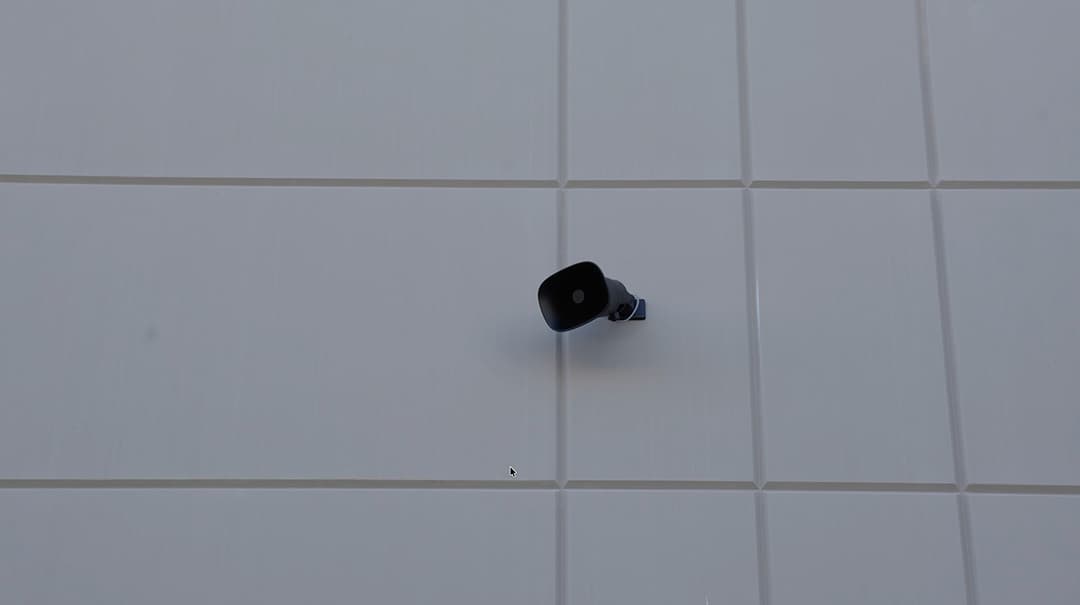
- The Active Deterrence Node (UniFi AI Horn Speaker): Positioned centrally between the cameras, this IP66 weatherproof speaker provides immediate acoustic response capabilities, replacing passive recording with active threat mitigation.
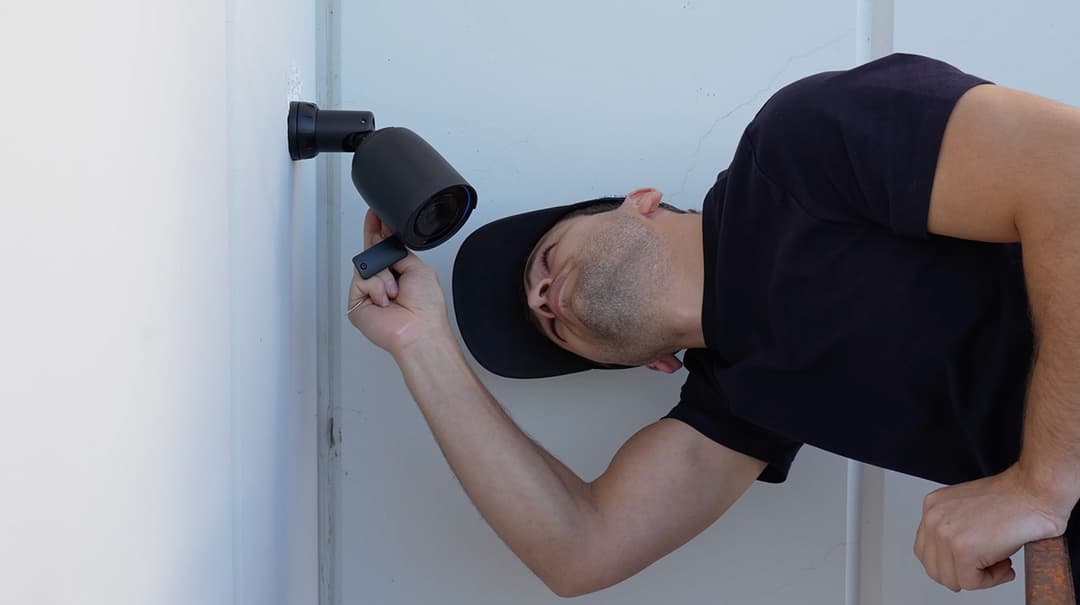
When the stationary G6 Pro Bullet detects an individual or vehicle entering a restricted zone after hours, it transmits immediate telemetry triggers across the local network to the AI PTZ camera. The PTZ unit instantly interrupts its standard patrol route, swinging around to focus on the target coordinate and tracking the subject's movements with its high-magnification optical lens.
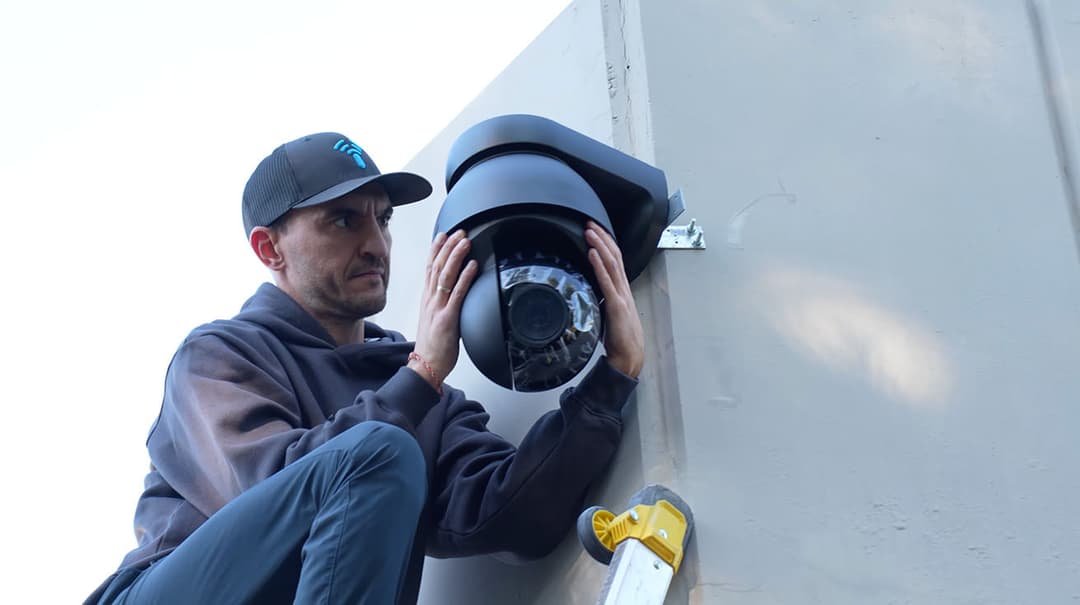
Simultaneously, the system sends an automated command to the AI Horn Speaker to activate an audible alarm or verbal warning, deterring the intruder before they can approach a window or loading bay. This automated defensive loop operates completely independent of human security guards, providing reliable 24/7 protection across the entire property.
UniFi Protect Camera Configuration: Smart Detection Zones and PTZ Presets
Converting raw physical security hardware into an automated defense line requires precise configuration within the UniFi Protect software environment. Installing premium cameras on a building corner achieves little if the system's software detection zones are improperly calibrated or flooded with environmental noise.
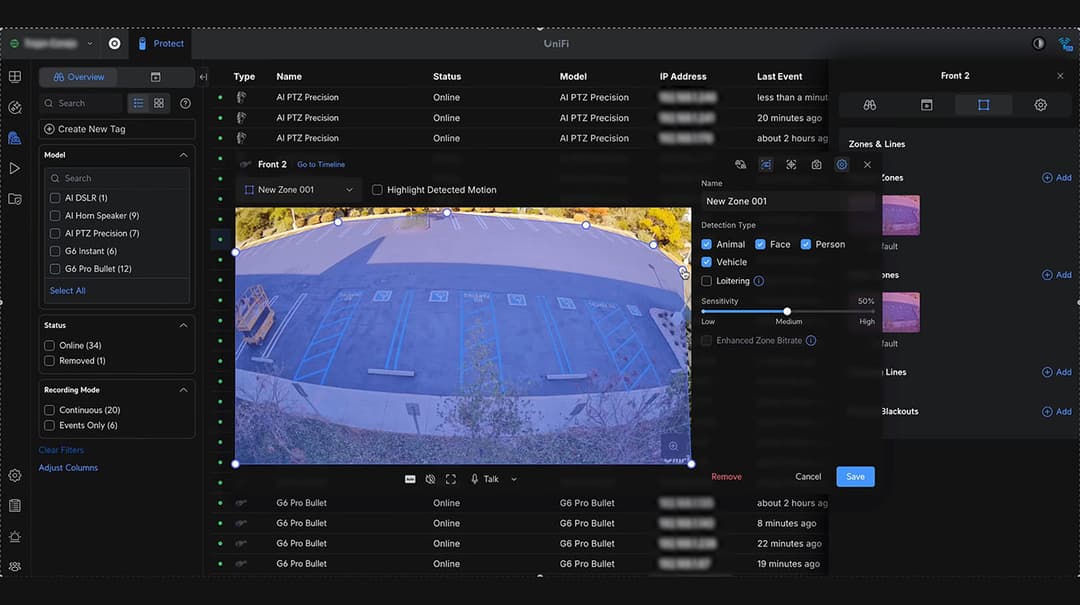
Our field engineering team executed a two-stage software calibration process for each structural corner node:
1. Motion Mapping & Sensitivity Calibration
We initialized the configuration by mapping a unified detection zone across the fixed camera's entire optical field of view. For this specific industrial layout, we adjusted the algorithm sensitivity threshold to maximum. This optimization ensures that even at extreme cell edges, the G6 Pro Bullet immediately registers target vectors.
To prevent systemic false alarms, we utilized the platform’s masking features to block out adjacent public roads and high-frequency utility lines, preventing background traffic from triggering false alerts.
2. PTZ Coordinate Preset Programming
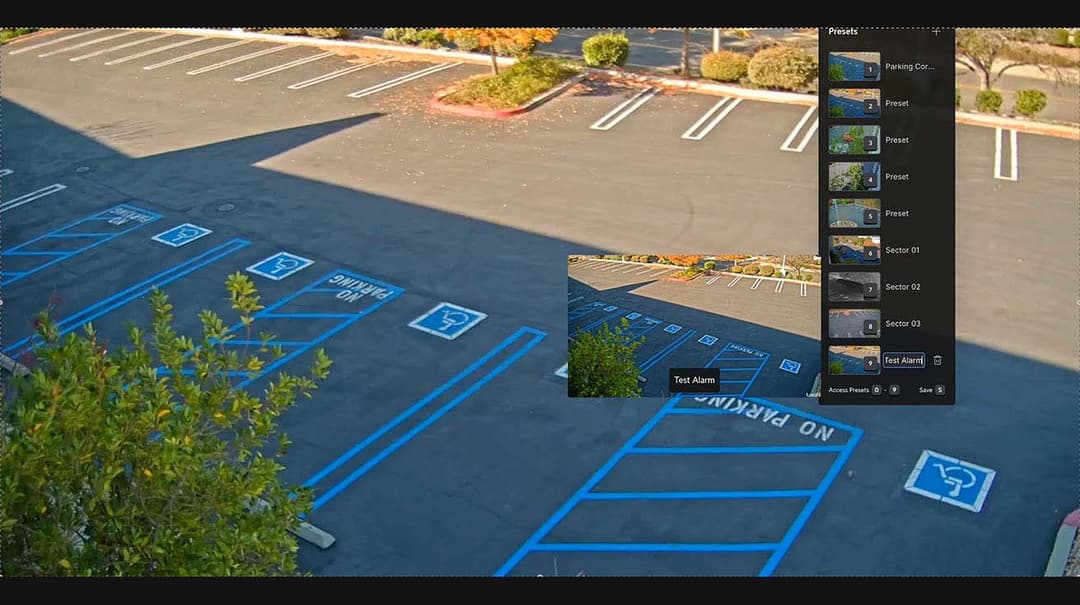
Next, we configured the UniFi AI PTZ Precision camera by establishing locked spatial coordinates (presets) aligned with the stationary camera's blind spots. Our technicians manipulated the mechanical pan, tilt, and optical zoom layers to frame the facility’s primary loading bay gates and low-elevation office window lines. Once framed, these spatial metrics were saved as a localized hardware preset within the software architecture, enabling the tracking lens to swing into position with zero mechanical delay.
Advanced Alarm Manager Integration: Multi-Stage Triggers and Webhooks
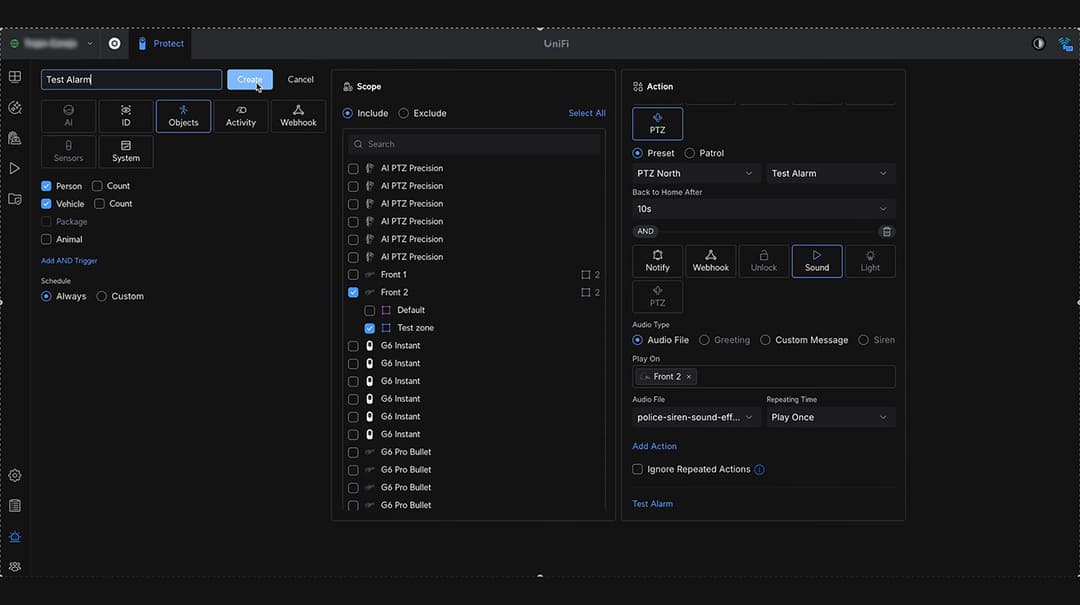
The core orchestration engine for this perimeter automation is managed within the UniFi Protect Alarm Manager interface. This software utility allows system engineers to construct conditional logic rules (If/Then statements) that bridge separate hardware devices over the local network layer.
Our technicians built a nested multi-action alarm rule designed to safeguard the property during restricted hours:
Alarm Manager Core Automation Logic
- Primary Trigger Source
- Configuration Detail: Fixed Anchor Node (
UniFi G6 Pro Bullet) - Functional Objective: Initiates the master detection and telemetry cycle.
- Configuration Detail: Fixed Anchor Node (
- Object Classification
- Configuration Detail: Person / Vehicle Detection Filters
- Functional Objective: Eliminates systemic false alarms caused by wind, shadows, or environmental animals.
- Target Area Zone
- Configuration Detail: Master Perimeter Boundary Line
- Functional Objective: Isolates the high-value restricted zone from routine background movement.
- Intercept Action 1
- Configuration Detail: Dynamic Tracking Node (
UniFi AI PTZ Precision) - Functional Objective: Commands the high-speed camera to swing to Preset 1 and lock onto the target.
- Configuration Detail: Dynamic Tracking Node (
- Deterrence Action 2
- Configuration Detail: Acoustic Deterrence Node (
UniFi AI Horn) - Functional Objective: Automatically fires a high-decibel acoustic siren audio file to clear the zone.
- Configuration Detail: Acoustic Deterrence Node (
- External Event Action
- Configuration Detail: Secured Webhook Integration
- Functional Objective: Transmits an encrypted JSON data payload directly to the off-site monitoring center.
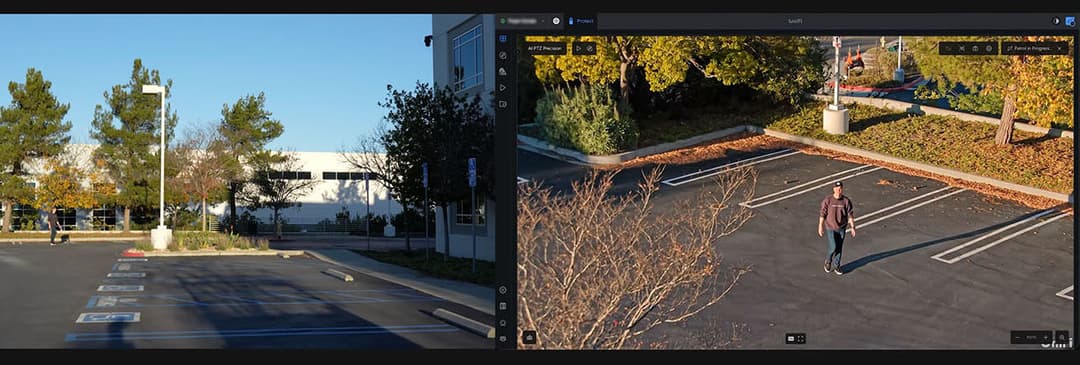
Beyond localized audio sirens and automated camera movements, the Alarm Manager supports native webhook integrations. When an alarm rule is tripped, the UDM Pro Max immediately transmits an encrypted JSON data payload to an off-site central monitoring station. This automation bypasses standard notification lag, providing the third-party security firm with instant validation data so they can dispatch law enforcement to the premises within seconds.
Real-World Field Performance Testing and Automation Validation
To verify the system's operational efficiency prior to signing off on Phase 1, our team conducted an open-air field simulation to test the coordinated tracking and acoustic deterrence loops under realistic conditions.
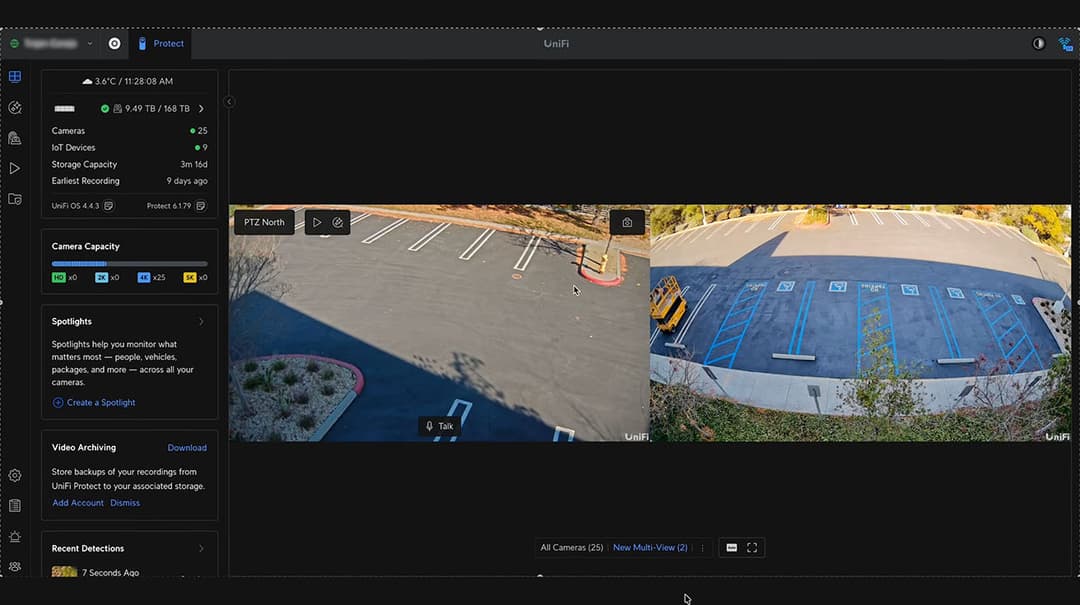
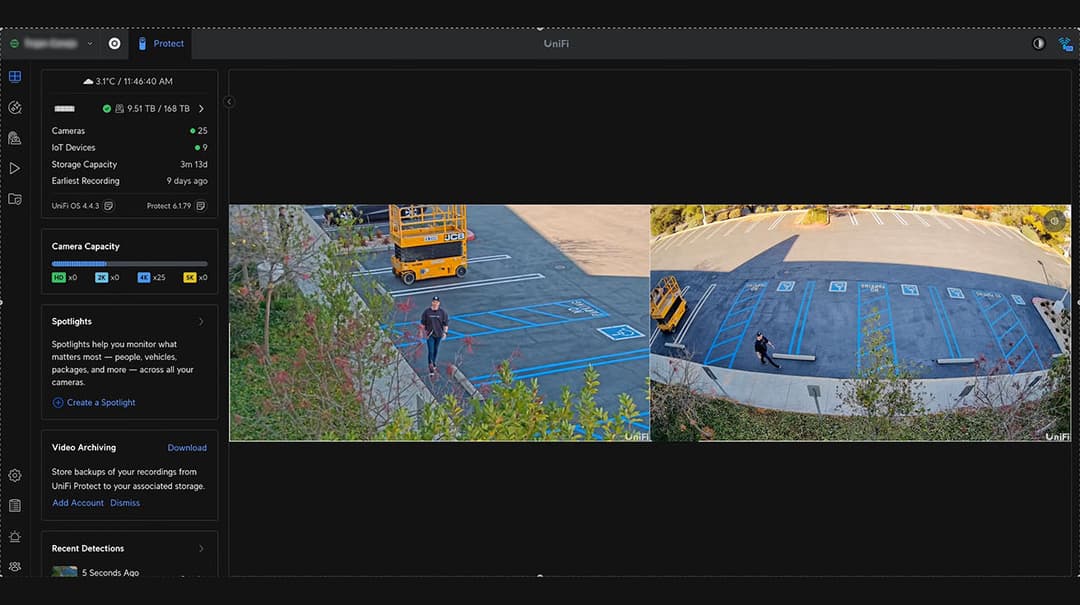
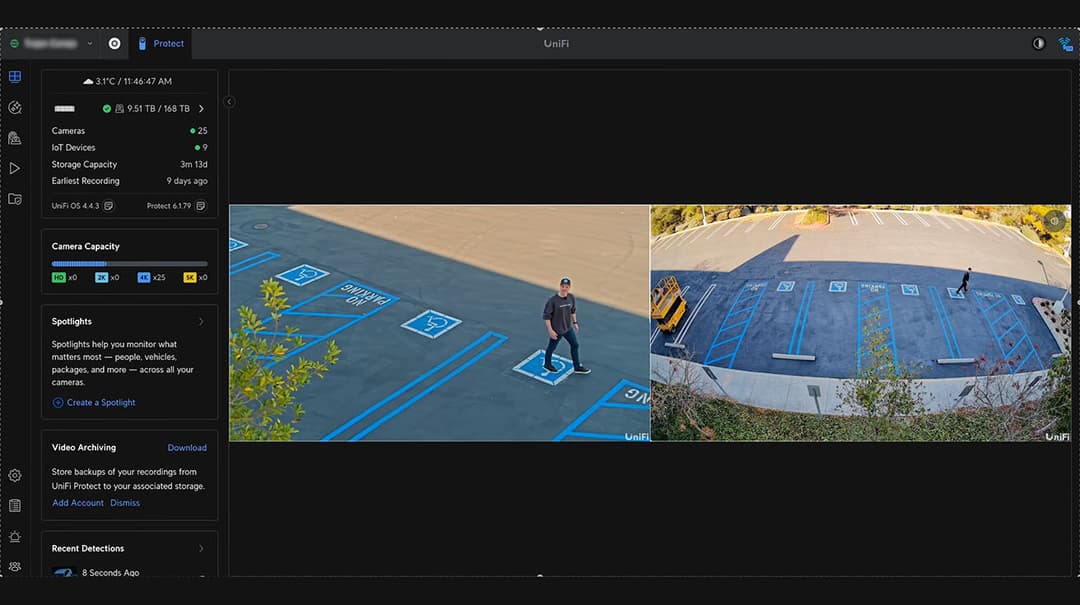
During the live test, a field technician simulated an unauthorized perimeter breach by walking past the outer fence line into the target zone. The automated response loop executed with zero noticeable latency:
- Instant Lock-On: The stationary G6 Pro Bullet identified the human vector the moment the line was crossed, instantly executing the tracking rule across the network.
- Target Acquisition: The AI PTZ Precision camera immediately abandoned its routine patrol route, rotated to the target coordinate, and locked onto the technician.
- Acoustic Deterrence: The UniFi AI Horn activated its internal siren file, emitting a loud acoustic warning across the property.
As the technician attempted to evade surveillance by altering speeds and switching direction across the concrete yard, the AI PTZ’s internal servo motors and predictive object tracking algorithms kept the lens centered on the subject. The camera maintained a crisp, high-magnification visual lock throughout the test, proving the system's ability to supply definitive video documentation for law enforcement.
Project Expansion Roadmap and Multi-State Deployment Scope
The activation of this high-density exterior surveillance array concludes the first deployment phase for this 77,000-square-foot facility. Because the core routing, switching, and storage engines were sized with extensive performance headroom, subsequent system scaling will proceed without requiring core structural changes.
The facility modernization roadmap includes two distinct upcoming installation phases:
- Phase 2 (Commercial Access Control): This upcoming stage involves implementing a complete commercial door access control infrastructure across 15 critical interior and exterior doors. Every secure path will feature video-capable UniFi readers wired straight to centralized Access Hubs, generating real-time video logs for every entry event.
- Phase 3 (Enterprise Wireless Distribution): The final stage will deploy high-capacity indoor access points across the massive warehouse floor and office cubicle blocks. Our team will execute a professional wifi installation layout tuned to handle active material-handling scanners, administrative client devices, and continuous internal inventory tracking systems.
While YesTechie is based in California, our certified low-voltage engineering crews deliver turnkey enterprise system designs across North America. Our technicians routinely execute large-scale rollouts for industrial clients nationwide, having recently completed full-scale infrastructure deployments in Pennsylvania, Indiana, Texas, and Florida.
About YesTechie
YesTechie serves as a premier commercial systems integration firm specializing in enterprise-grade network engineering, smart access control architecture, AI-driven surveillance arrays, and industrial low-voltage field deployments. As certified Ubiquiti integration specialists, our design teams construct high-performance, unified ecosystems tailored to the physical demands of defense, aerospace, commercial logistics, heavy manufacturing, and multi-floor corporate properties.
Our integration philosophy focuses on eliminating structural complexity and vendor lock-in. By deploying high-throughput hardware platforms managed via single-pane-of-glass administrative consoles, we ensure our clients retain complete ownership of their security data while maintaining absolute operational scale readiness. Explore our complete technical design capabilities by browsing our comprehensive commercial low-voltage integration index.
Partner Perspective
This industrial perimeter deployment case study was documented in direct collaboration with the technical low-voltage auditing crew at Pipl Systems. Oleg Bordiian, Founder and Lead Content Creator at Pipl Systems, highlighted why authentic on-site case studies offer critical value to commercial enterprise evaluators:
"This project walkthrough represents a significant operational milestone. We joined the YesTechie engineering team directly on a live 77,000-square-foot U.S. industrial site to document their installation, system provisioning, and automation workflows from the ground up.
This technical brief moves past standard manufacturer marketing datasheets to showcase real-world low-voltage deployment practices, precise software rule configurations inside the Alarm Manager, and a live validation of cross-camera tracking loops. This authentic documentation proves how a certified integrator combines advanced AI hardware with intelligent network design to maximize safety outcomes for high-scale enterprise operations."
— Oleg Bordiian, Founder of Pipl Systems (Read the full B2B infrastructure report via Oleg's Professional Low-Voltage Field Assessment on LinkedIn).
Commercial Infrastructure Consultation
Engineering an uncompromised automated security matrix across expansive logistics yards, warehouse zones, or manufacturing lines requires an experienced balance of power distribution, network backhaul management, and software logic optimization. Miscalculating lens fields of view or over-allocating PoE switch ports can lead to camera dropouts, missed object detections, and structural vulnerabilities along your perimeter.
Our certified engineering group provides end-to-end site analysis, low-voltage blueprinting, and complete integration services tailored to your property's physical operational demands. To eliminate visual blind spots, establish robust threat deterrence loops, and audit your facility's multi-gigabit readiness, connect with our technical design team today.
- Project Intake Portal: Schedule a Professional On-Site Security & Network Layout Assessment
To evaluate the exact line of enterprise-grade UniFi hardware components deployed throughout this 77,000-square-foot logistics facility project, you can review current inventory configurations directly via our verified affiliate link: Official Ubiquiti Enterprise Store.
Field Tour: Watch the Full Perimeter Automation Walkthrough
To see the real-world hardware deployment across this 77,000-square-foot industrial facility and witness the live calibration, Alarm Manager triggers, and cross-camera tracking loops in action, watch our complete field video here:
FAQ: Industrial Perimeter Automation & Camera Engineering
How do stationary UniFi cameras communicate with PTZ units to automate tracking?
This cross-camera orchestration is managed via the UniFi Protect Alarm Manager interface. A fixed camera—such as the UniFi G6 Pro Bullet—is assigned to run continuous edge AI object classification over a designated perimeter sector. When it registers an anomaly (such as a person or vehicle) entering the zone after hours, it transmits immediate telemetry data across the local network to an adjacent UniFi AI PTZ Precision camera. This command forces the PTZ unit to interrupt its standard patrol cycle, instantly rotate to the target coordinate, zoom in, and lock onto the moving subject.
What are the infrastructure requirements for deploying high-draw outdoor PTZ cameras and acoustic horns?
High-performance outdoor security devices require stable network backhaul and high-wattage power delivery to run internal panning motors, optical lenses, and built-in acoustic heaters in cold weather. Our engineering team installs specialized UniFi Pro Max switches that deliver centralized PoE+ and PoE++ (802.3bt) power allocation. This design allows data transmission and high-wattage electrical current to run over a single, weather-rated Category 6A cable run, removing the need to install separate electrical conduit boxes out on the building fascia.
How does the UniFi Enterprise ENVR handle 90 days of video retention for multiple 4K cameras?
The UniFi Enterprise Network Video Recorder (Enterprise ENVR) is a high-density, multi-drive storage platform designed to ingest immense data streams without dropping frames. To achieve a strict 3-month retention window across multiple high-resolution 4K channels, our technicians calculate the cumulative bitrate requirements and equip the ENVR with specialized enterprise-class hard drives. These storage units feature reinforced mechanical components built to withstand the continuous, 24/7 read-write workloads typical of enterprise security operations.
Can the automated security responses be integrated with third-party off-site monitoring companies?
Yes. While the UniFi platform executes localized active deterrence—such as triggering the UniFi AI Horn's internal siren file or flashing warning lights—the underlying Alarm Manager supports native webhook integrations. The moment a perimeter line breach is validated by the AI detection algorithms, the UDM Pro Max router transmits an encrypted JSON data payload over a secure internet link straight to a third-party central station monitoring company, enabling immediate emergency verification and rapid police dispatch.
What is the operational advantage of a license-free security ecosystem for large industrial sites?
Traditional enterprise physical security platforms run on subscription-based business models, charging ongoing monthly or annual software seat licenses for every connected camera, access control door reader, and administrative user profile. For an expansive 77,000-square-foot facility with dozens of devices, these subscription costs can scale into thousands of dollars in recurring overhead. The UniFi ecosystem operates on a completely license-free model; you own the physical hardware outright and retain full access to all software features, AI upgrades, and remote monitoring tools with zero ongoing fees.


.svg)