Managed VoIP & PA
.svg)
We deliver enterprise-grade voice communication and Session Initiation Protocol (SIP) routing solutions engineered to sustain high call concurrency, guarantee maximum packet delivery, and support long-term operational scaling. Whether you are moving into a new corporate facility, retrofitting an older commercial building, or connecting a multi-site enterprise network, our team designs, deploys, and optimizes commercial Voice over IP (VoIP) architectures tailored to your specific traffic and security requirements. From high-capacity corporate offices to industrial distribution hubs, we build resilient, high-throughput telecom and communication foundations.
The Engineering Standard: Professional Communication Foundations
Our team brings enterprise-level network integration expertise to commercial telecommunications. We treat your IP phones, softphone clients, and SIP trunking hardware as critical data nodes traversing your network backbone, mapping out network logic and bandwidth constraints before a single device is deployed. We isolate high-concurrency voice traffic, establish strict voice network segmentation, and eliminate packet loss, jitter, or performance bottlenecks at the source. Because we assess infrastructure through an objective, vendor-agnostic lens, we match the hardware stack directly to your technical and structural requirements, balancing raw voice clarity with cost efficiency.
Step-by-Step Infrastructure Breakdown
Commercial VoIP deployment is a highly structured, engineering-driven process that converts business operational needs into a stable, documented logical layout. Unlike basic residential plug-and-play phone systems, commercial voice environments must manage multi-line call queues, overcome local area network congestion, integrate with physical security and paging systems, and maintain strict uptime under constant administrative loads.
1. Discovery and Needs Assessment
We begin by evaluating your current physical layout, benchmarking available ISP bandwidth utilization, and auditing operational call capacity requirements. For businesses operating under strict compliance frameworks, we map out telecom-related security obligations, including encrypted voice mandates or localized emergency routing standards (E911), directly into the initial design phase. Our engineers evaluate real-time call volume density and audit the specific throughput demands of your internal communication applications, ensuring the core infrastructure is engineered for your unique traffic peaks rather than a theoretical baseline.
2. Strategic Network and SIP Routing Design Phase
This phase establishes the technical blueprint of your facility to prevent costly deployment errors and maximize hardware efficiency.
- Logical Communication Topology: We define the routing, session border controller (SBC), and voice endpoint layers optimized for clear, distributed voice traffic distribution.
- Physical Cable Plant Design: We plan and map structural low-voltage cabling pathways to optimize voice data transit. We select the most efficient grade of shielded copper for horizontal station cabling runs and Power over Ethernet (PoE) endpoints, documenting all links in strict adherence to ANSI/TIA labeling standards.
- High-Availability Call Architecture: We engineer multi-WAN backup routing paths across your central network gateway. Redundant physical switching paths ensure that corporate voice communication automatically reroutes without downtime if a primary internet link encounters an issue.
- Gateway and Session Redundancy: If a primary gateway or SIP registrar experiences an interruption, a secondary fallback node instantly assumes control. Combined with uninterruptible power supply (UPS) battery backups, we guarantee survival during localized power failures.
3. Expert Voice Planning and Quality of Service Mapping
Modern workplaces are heavily dependent on immediate, crystal-clear voice execution.
- Network Infrastructure Site Surveys: We execute comprehensive active and passive network traffic surveys utilizing professional diagnostic tools to detect structural data bottlenecks before any hardware deployment begins.
- Predictive Call Modeling: We simulate telephone data loads directly across your network blueprints to define the precise network coordinates required to achieve uniform, uninterrupted voice quality.
- Capacity and Bandwidth Engineering: We configure active voice codecs and automated bandwidth reservation to dynamically adjust network delivery based on real-time data traffic shifts.
- Voice Network Security Architecture: We deploy encrypted signaling (TLS), secure voice media protocols (SRTP), isolated voice networks, and secure local device management parameters to prevent unauthorized network eavesdropping.
4. Routing and Core Telephony Traffic Design
Voice traffic routing, data prioritization, and firewall rules serve as the central brain of your environment.
- Layer 3 Voice Routing Strategy: We engineer stable network-attached telecom topologies using isolated network layers designed specifically for high-velocity multi-site and facility-wide call synchronization.
- Enterprise Voice over IP Deployment: We implement Software-Defined communication networks to connect distributed corporate offices. This ensures real-time voice streams pass cleanly to designated extensions without flooding your primary corporate data lanes.
- Advanced Firewall and Telephony Isolation: We enforce strict micro-segmentation by isolating corporate data networks from network-connected IP phones and SIP servers into separate virtual networks (VLANs).
- Traffic Engineering and QoS: Strict Quality of Service (QoS) configurations guarantee that time-sensitive voice communication and real-time inbound call queues always receive absolute network priority under heavy network loads.
5. Sourcing, Physical Installation, and Deployment
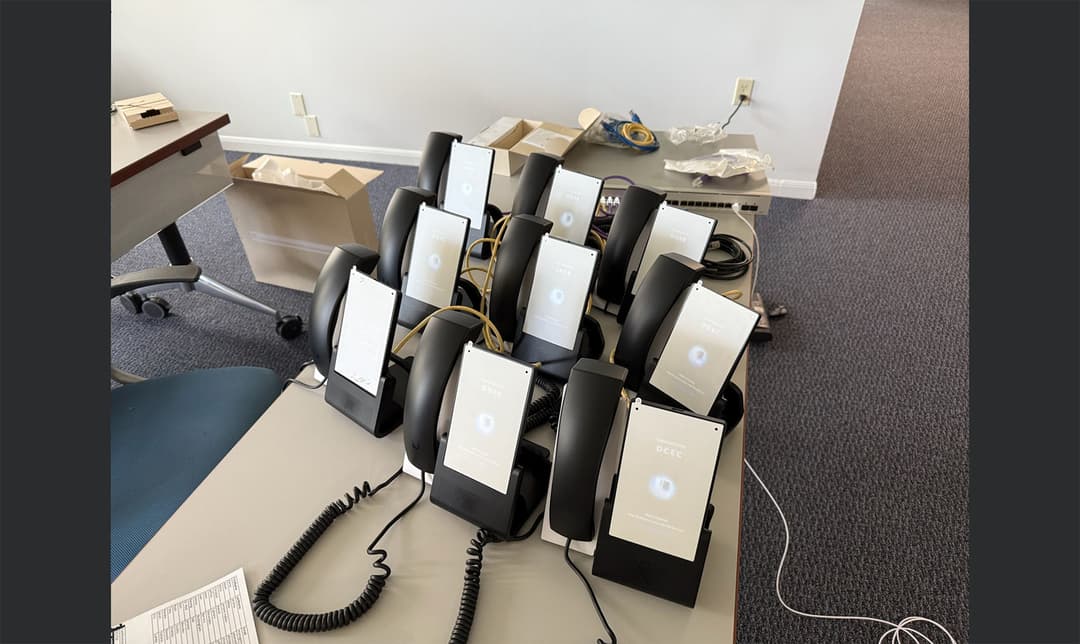
We manage the physical deployment phase end-to-end. We run, organize, and terminate all structured category data cabling strictly adhering to commercial installation best practices. All IP desk phones, conference stations, PoE switching arrays, and central backup power units are securely mounted, cross-connected, and thoroughly tested to guarantee absolute physical link integrity before activation.
6. Validation, Performance Testing, and Handover
Before the communication network goes live, we conduct rigorous verification testing to validate call quality scores (MOS), packet delivery, power stability, and failover latency metrics. Handover includes complete as-built documentation, localized configuration backups, verified extension maps, and clear knowledge-transfer sessions for your team.
Vetted Enterprise Solutions Without the Overhead
Historically, critics argued that open-standards SIP routing and local private branch exchange (PBX) operations required complex, command-line operating systems or subscription-heavy licensing middleware. However, massive hardware and network-native software advancements have fundamentally rewritten the landscape.
The latest generation of UniFi Talk communication appliances natively covers 85% to 90% of all commercial enterprise telecom and unified voice requirements. Unless you are designing secure voice trunking networks for highly specialized environments with extreme edge-case isolation mandates, paying for legacy, proprietary enterprise telecom matrices is an unnecessary capital drain. By deploying these modern communication gateways, we deliver advanced multi-line call routing, uncompromised voice clarity, and resilient remote telecommunications at a fraction of the traditional cost.
The Ubiquiti Advantage (UniFi Talk System)
Driven by this market trajectory, we architect your distributed commercial phone systems around the modern Ubiquiti UniFi Talk ecosystem.
- Zero Recurring Platform Licensing Fees: Ubiquiti delivers uncompromising digital voice processing with absolutely no ongoing software subscriptions. There are no monthly platform subscriptions, no hidden seat fees, and no per-device software activation taxes.
- Absolute Data Sovereignty: Your entire telephone topology and local device configurations remain strictly under your sovereign physical and operational control. Communication routing metrics are processed completely on-site.
- Radically Reduced TCO: By completely eliminating recurring platform fees and seat-licensing taxes, your business secures massive long-term financial savings on both initial deployment and ongoing voice lifecycle maintenance.
Next-Generation Automated Capabilities
Ubiquiti packs highly sophisticated, enterprise-grade telecommunications and voice routing features into an intuitive visual software layout.
- No Rollover Line Restrictions Natively: Every deployed UniFi Talk line natively supports unlimited concurrent calls out of the box. A group of ten operators can make and receive active external calls simultaneously using a single shared phone number.
- Centralized Multi-Site Telephony Architecture: This technology establishes a cloud-managed routing fabric where offices in different cities securely synchronize directory profiles, enabling free internal extension-to-extension dialing.
- Intelligent Telephony Asset Tracking: Continuous infrastructure monitoring provides real-time state tracking, allowing your team to monitor continuous telephone line delivery and instantly receive automated alerts the moment a device encounters a fault.
- Automated Call Transcription and Logging: The platform can actively generate text logs of incoming calls and voicemail recordings, streamlining administrative follow-ups and data archiving.
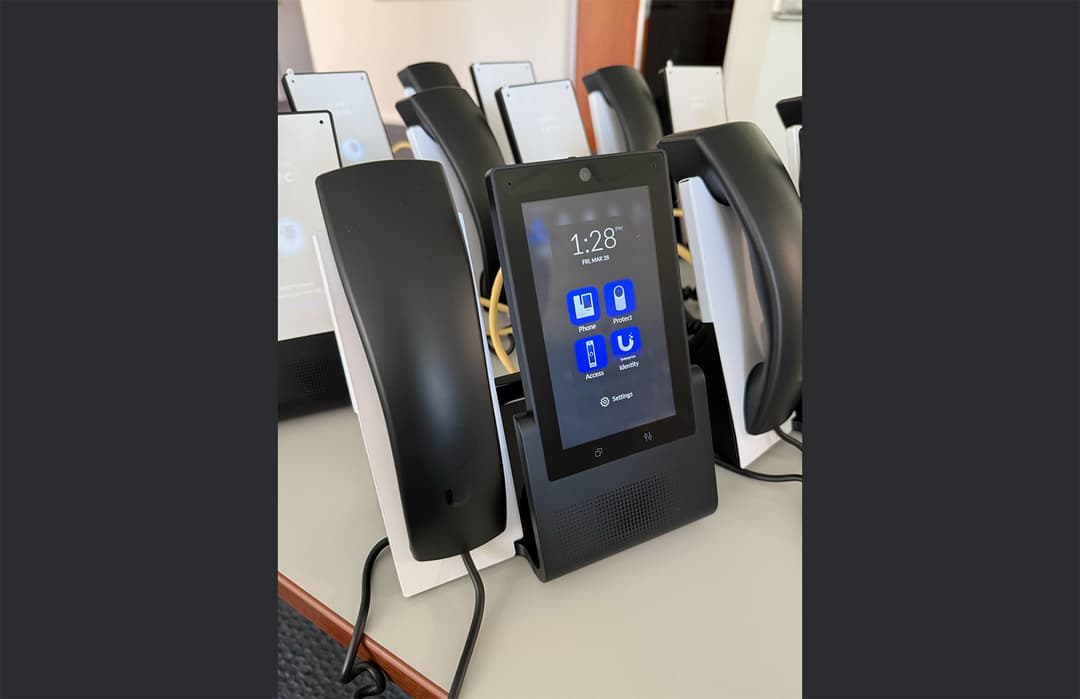
- Cross-Product Security Ecosystem Convergence: Deployed phones interface directly with your physical security infrastructure. Personnel can receive push notifications from UniFi Access readers, view real-time security camera footage, and unlock commercial facility doors with a single tap on the phone interface.
Hardware Sourcing & Functional Versatility
We install Ubiquiti's highest-tier commercial hardware lines engineered specifically to handle immense call concurrency:
- UniFi Talk Phone Max: A premium executive-tier desktop multimedia terminal showcasing a large high-resolution touchscreen interface, dynamic video call support, and premium handset components.
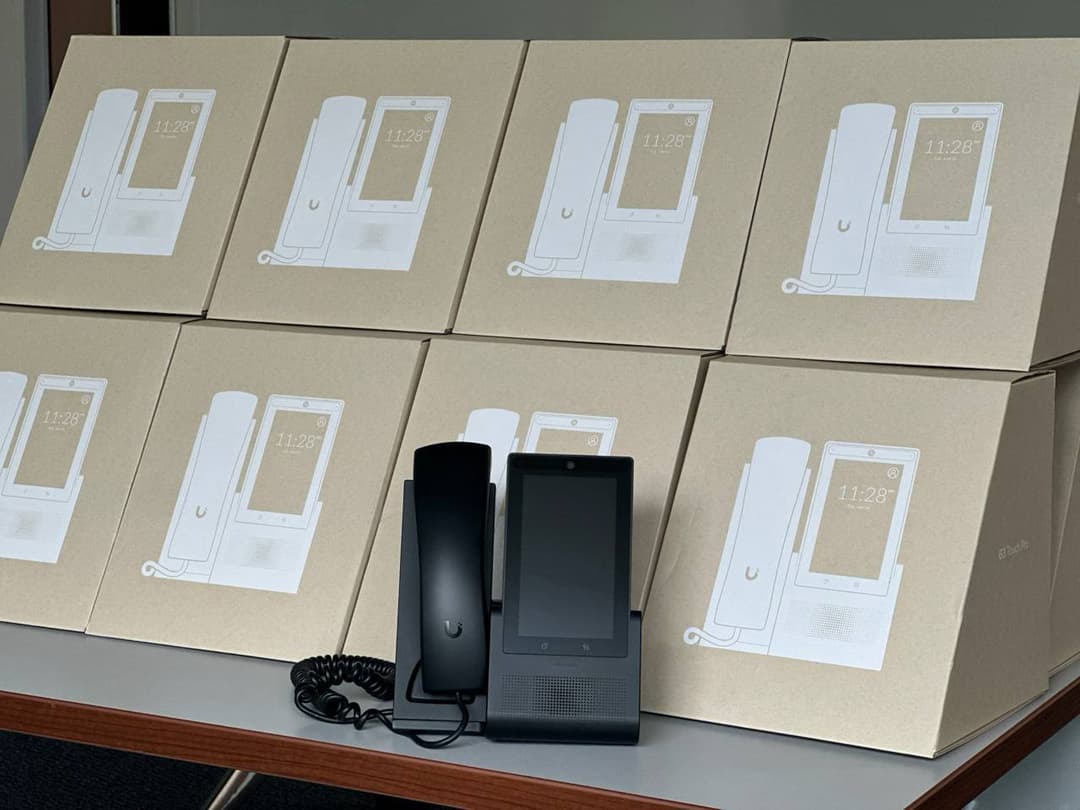
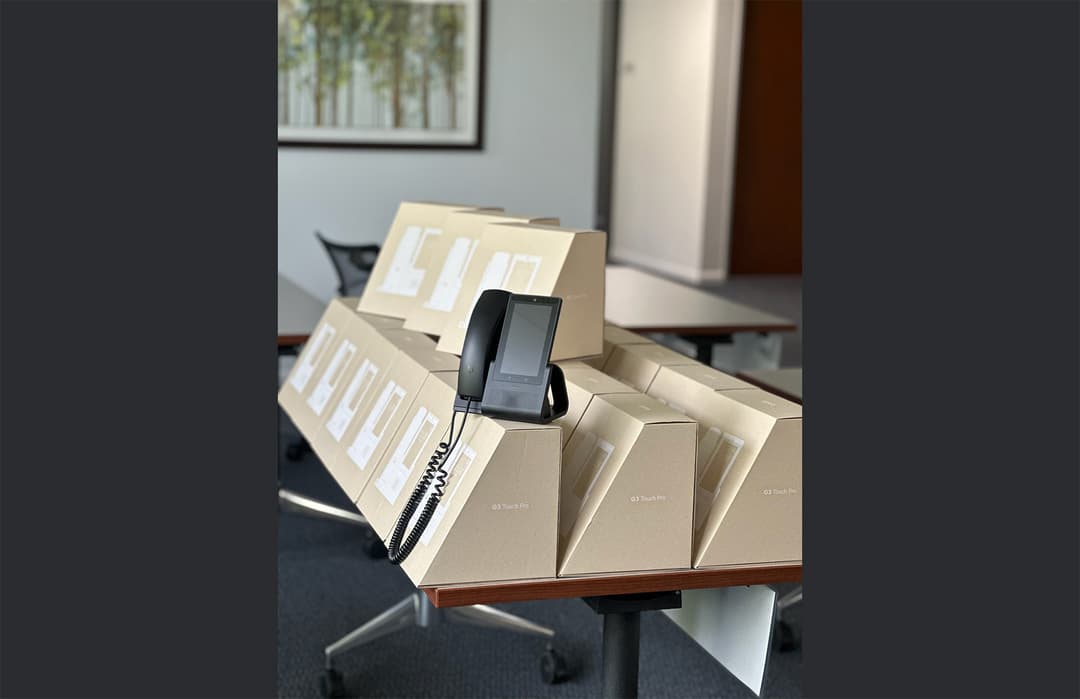
- UniFi Talk Phone Touch: An enterprise-grade smartphone interface adapted directly into a desktop terminal layout, featuring an open visual canvas and rapid interactive touch tracking.
- UniFi Talk Phone Ultra: A compact, high-efficiency commercial IP desk phone engineered specifically for mass-deployment environments, including workstation desks and reception rows.
- UniFi Talk Phone Flex: A versatile, space-conscious communication terminal designed for high-traffic public access areas, warehouse floors, and wall-mounted placement.
Flexible Subscription and Deployment Configurations
To optimize your total hardware costs, the platform segregates the terminal hardware options into two distinct deployment categories.
- Subscription Locked Hardware: Ideal for configurations where users require an individual, unique phone number assigned directly to their workstation desk. These offer a significantly lower initial hardware acquisition cost.
- Subscription Unlocked Hardware: Ideal for shared office spaces and team environments where users only share group numbers. Unlocked devices do not require a directly assigned number, allowing multiple phones to share a single inbound telephone line seamlessly without individual per-device subscription requirements.
Bridging the Support Gap: The YesTechie Integrator Advantage
When a disruptive technology platform like Ubiquiti eliminates recurring vendor platform fees, it changes how technical support is delivered. Ubiquiti builds the hardware, but the responsibility of calculating low-voltage power requirements, structuring code-compliant category pathways, balancing bandwidth QoS parameters, and maintaining network health falls entirely on the integrator.
YesTechie fills this exact operational gap. You run the system yourself without forced monthly software taxes, and you only pay YesTechie for on-demand hourly service dispatches when an unexpected infrastructure challenge arises. For enterprise operations requiring guaranteed system uptime, we offer flexible SLA monthly plans ensuring rapid deployment of identical replacement nodes directly from our local inventory.
National Enterprise VoIP & Telephony Integration
While our physical engineering headquarters operates in Los Angeles, YesTechie architects and deploys commercial communication infrastructure for enterprises across the United States. We partner with distributed logistics networks, multi-site corporate offices, and massive commercial campuses that require flawless, high-concurrency voice operations.
From pulling certified category cable and engineering strict QoS firewall rules to deploying hundreds of SIP-enabled desk phones, our certified field technicians deliver end-to-end physical execution. We bypass legacy telecom monopolies to build resilient, license-free communication foundations that scale directly alongside your business.
FAQ
Does UniFi Talk integrate with standard enterprise third-party platforms like Zoom?
Yes. UniFi Talk hardware can be configured to integrate with Zoom Phone deployments. Our engineering group handles the advanced configuration and routing rules to connect your hardware endpoints with standard Zoom Phone lines, ensuring reliable call processing.
What core hardware infrastructure is required to deploy a UniFi Talk phone system?
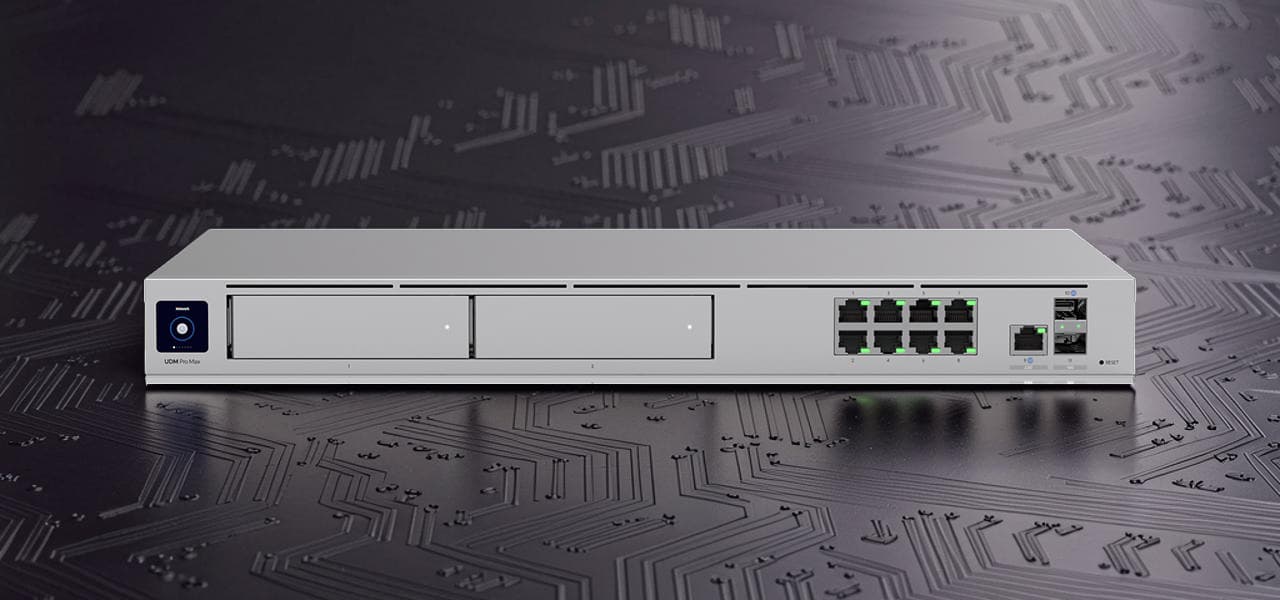
For local PBX setups, your facility requires a compatible UniFi Console. We suggest a UniFi Cloud Gateway to leverage the built-in internet gateway and next-generation firewall. To preserve call recordings and voicemail archives locally, a local hard disk drive (HDD) must be installed within the console container.
Can we utilize UniFi Talk phones with an existing third-party PBX solution?
Yes. For third-party PBX setups, you must bring your own PBX server environment and configure your UniFi Talk phones using standard SIP credentials. The devices are fully compatible with any PBX system that adheres to standard SIP protocols.
How does the system accommodate international users and existing SIP relationships?
UniFi Talk seamlessly integrates with third-party SIP providers. The system includes pre-configured integration templates for prominent international SIP providers, simplifying the registration framework for multinational businesses.
Are there any recurring software licensing fees or per-user platform taxes required?
Absolutely not. Ubiquiti and YesTechie do not charge hidden software licensing fees or per-user activation taxes. You purchase the physical hardware assets and retain full, permanent access to the platform utilities.
How are number porting requests handled when transitioning to the new system?
You can submit formal number porting requests directly through the visual application framework to migrate your existing corporate numbers seamlessly. Our engineering team assists in validating rate centers and coordinating with your legacy carriers to ensure zero communication downtime during the structural cutover.
How do you prevent voice calls from dropping when employees download large files?
We implement strict Quality of Service (QoS) protocols at the core routing level. By categorizing voice packets as highest-priority traffic, the network automatically throttles background downloads and reserves dedicated bandwidth specifically for SIP sessions, ensuring pristine audio quality regardless of overall network congestion.
Can we use our existing data cabling for new IP phones?
In most cases, yes. Our engineers will run a physical cable audit using advanced testing tools to certify your existing infrastructure. As long as the current runs meet Category 5e or Category 6 standards and deliver clean Power over Ethernet (PoE), we can seamlessly utilize them for your new voice endpoints.
What happens to our phone system if the local power grid goes down?
We engineer communication nodes with uninterruptible power supply (UPS) backups. Because the phones receive power directly from the central PoE network switch, protecting the core rack ensures the entire phone fleet remains active during localized blackouts.
Can our warehouse workers use paging and intercom features through these phones?
Yes. The platform natively supports broadcast paging groups and multi-device intercom functionality. Administrators can trigger facility-wide announcements directly from a desktop terminal or route audio through integrated UniFi PA systems to reach noisy manufacturing floors.
Do we need a dedicated server room to run the UniFi Talk system?
No. The entire PBX controller software runs natively on your UniFi Cloud Gateway. This compact, rack-mounted enterprise router eliminates the need for bulky, dedicated telecom server hardware, severely reducing both your physical footprint and power consumption.