Network Installation


We deliver enterprise-grade network infrastructure solutions engineered to sustain high device density, guarantee maximum uptime, and support long-term operational scaling. Whether you are moving into a new facility, retrofitting an older commercial building, or connecting a multi-site enterprise, our team designs, deploys, and optimizes wired and wireless networks tailored to your specific traffic requirements. From high-capacity corporate headquarters to industrial warehouses, we build resilient, high-throughput network foundations.
The YesTechie Engineering Standard: Carrier-Grade Foundations
Our team brings Internet Service Provider (ISP) level expertise to commercial network architecture. We treat your office, factory, or warehouse as a critical data hub, mapping out logic and traffic constraints before a single device is mounted. We isolate high-bandwidth security assets, establish ironclad network segmentation, and eliminate performance bottlenecks at the source. Because we assess infrastructure through a vendor-agnostic lens, we match the hardware stack directly to your technical requirements, balancing raw performance with cost-efficiency.
What the Service Entails: Step-by-Step Infrastructure Breakdown
Commercial network installation is a highly structured, engineering-driven process that converts business operational needs into a stable, documented physical layout. Unlike residential installations, commercial environments must manage thousands of concurrent client connections, isolate guest traffic, meet compliance mandates, and maintain strict uptime SLAs.
1. Discovery and Needs Assessment
We begin by evaluating your current physical layout, benchmarking bandwidth utilization, and auditing application requirements. For businesses operating under regulatory frameworks, we map out compliance obligations, including CMMC DoD, HIPAA, PCI-DSS, or SOC2, directly into the initial design phase. This thorough evaluation ensures your core network architecture natively protects sensitive data without requiring expensive hardware retrofits later. We perform initial site walkthroughs and localized RF scans to identify structural and signal propagation challenges prior to generating blueprints.
We explicitly avoid generic calculations by listening to your team to understand your exact operational realities. Our engineers evaluate real-time client density (the physical volume of concurrent users per square foot) and audit the specific throughput demands of your business applications, ensuring the core infrastructure is engineered for your unique traffic peaks rather than a theoretical benchmark.
2. Strategic Network Design Phase
This phase establishes the technical blueprint of your facility to prevent costly deployment errors and maximize hardware efficiency.
- Logical Topology: We define the core, distribution, and access layers, utilizing a collapsed core architecture when optimized for specialized deployment footprints.
- Physical Cable Plant Design: We plan and map structural cabling pathways to optimize data transit and eliminate signal degradation. Instead of applying a generic layout, we calculate distance, bandwidth loads, and power requirements to deploy the optimal cabling infrastructure for your facility, selecting the most efficient grade of shielded copper for horizontal workstation runs and high-wattage PoE++ devices, and deploying multi-mode or single-mode fiber optic backbones for zero-latency distribution between server rooms based on each project's distinct parameters. All links are structured, terminated, and documented in strict adherence to commercial labeling standards with verified link integrity.
- High-Availability Core Architecture: We engineer multi-chassis link aggregation (MC-LAG) and link aggregation control protocol (LACP) topologies across your network core. By establishing redundant physical switching paths, we eliminate single points of failure and ensure that local network traffic automatically reroutes without downtime if a core switch fails.
- Gateway and Firewall Redundancy: To protect your internet edge, we implement hardware gateway redundancy protocols, including Virtual Router Redundancy Protocol (VRRP), to deploy automated active-passive or active-active cluster pairs. If your primary security gateway or firewall experiences a hardware outage, a secondary node instantly assumes control, maintaining a seamless stateful failover with minimal disruption to active network traffic. Combined with uninterruptible power supply (UPS) battery backups, we guarantee that critical operations survive localized infrastructure failures.
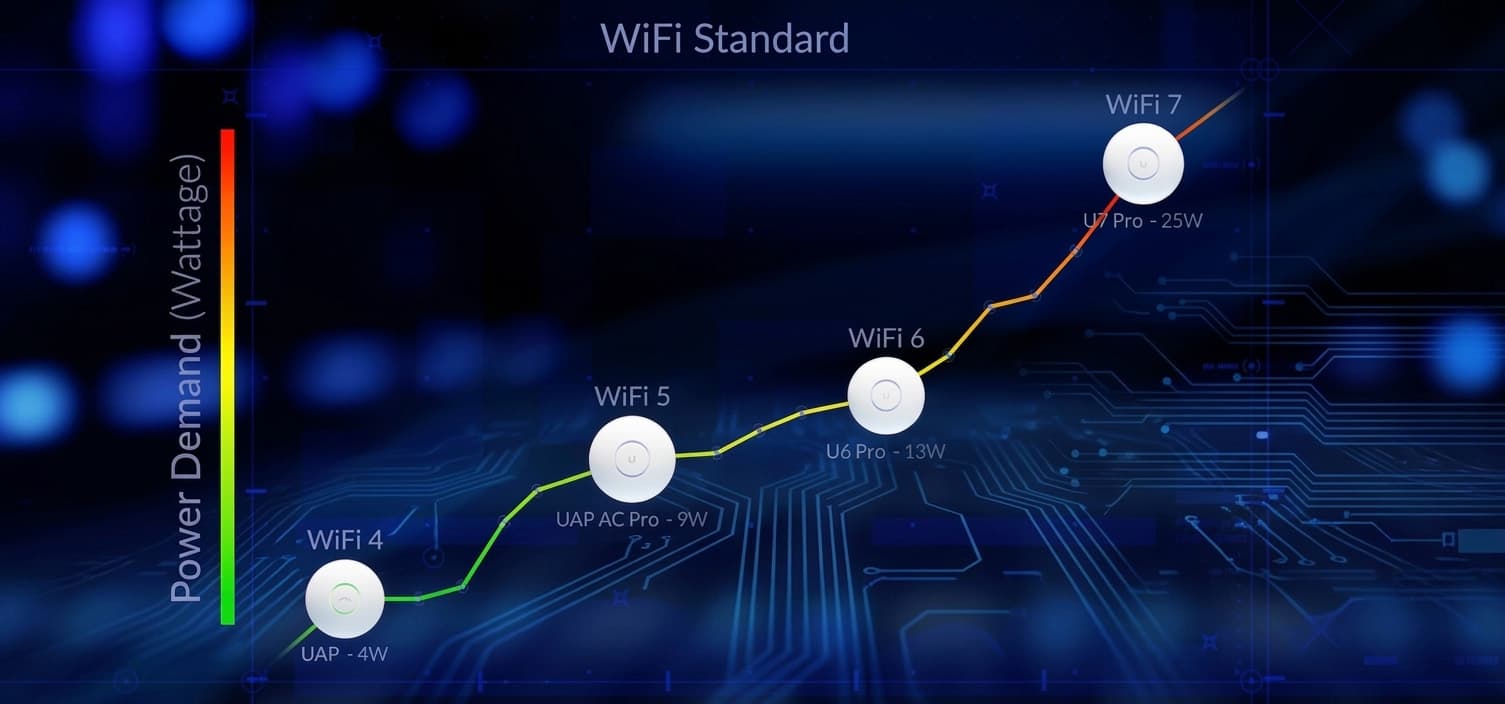
- Integration and Future-Proofing: We ensure seamless intersection with existing corporate systems, including VoIP communication, ERP applications, and cloud platforms, selecting high-power PoE components to easily support future hardware upgrades.
3. Expert Wireless Planning and Design
Modern workplaces are heavily dependent on wireless connectivity. Poor planning here is the primary cause of operational friction and user complaints.
- RF Site Surveys: We execute comprehensive active and passive radio frequency (RF) site surveys utilizing professional enterprise diagnostic tools. This allows our team to map live signal strength, evaluate environmental noise floors, and detect structural interference metrics before any hardware deployment begins.
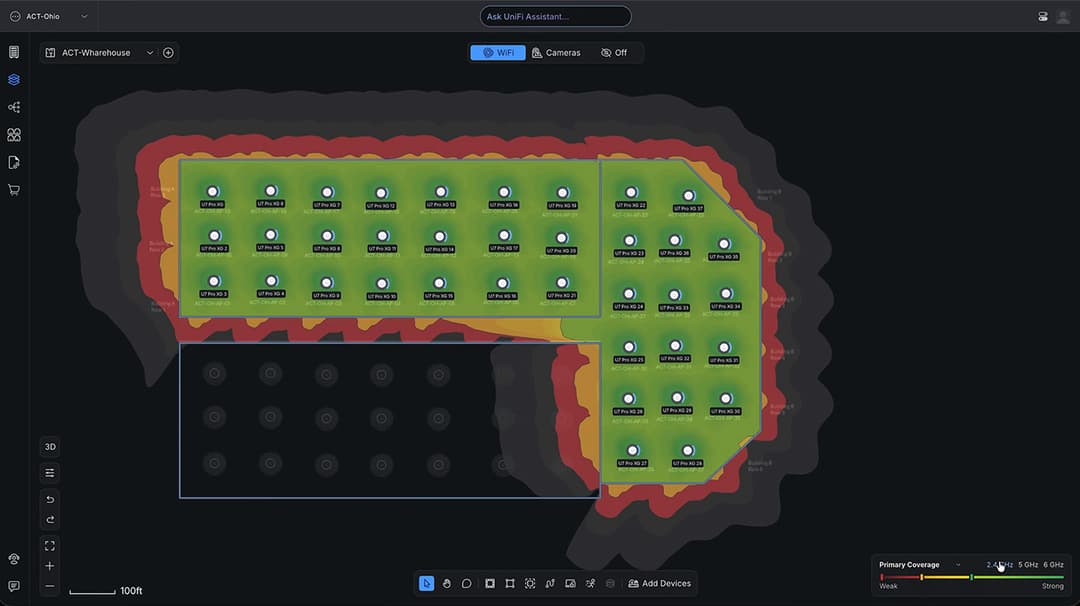
- Predictive Modeling: We simulate access point placements directly across your digital blueprints using advanced RF heat-mapping software. By calculating signal attenuation through specific structural materials such as concrete, steel, and heavy drywall, we define the precise ceiling, wall, or outdoor mounting coordinates required to achieve uniform, uninterrupted coverage.
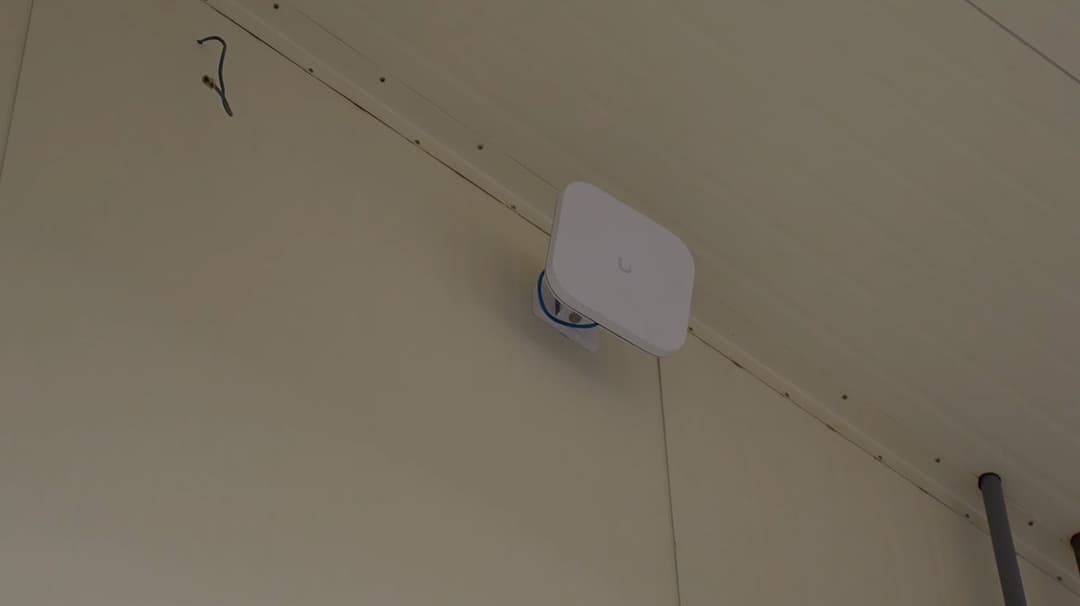
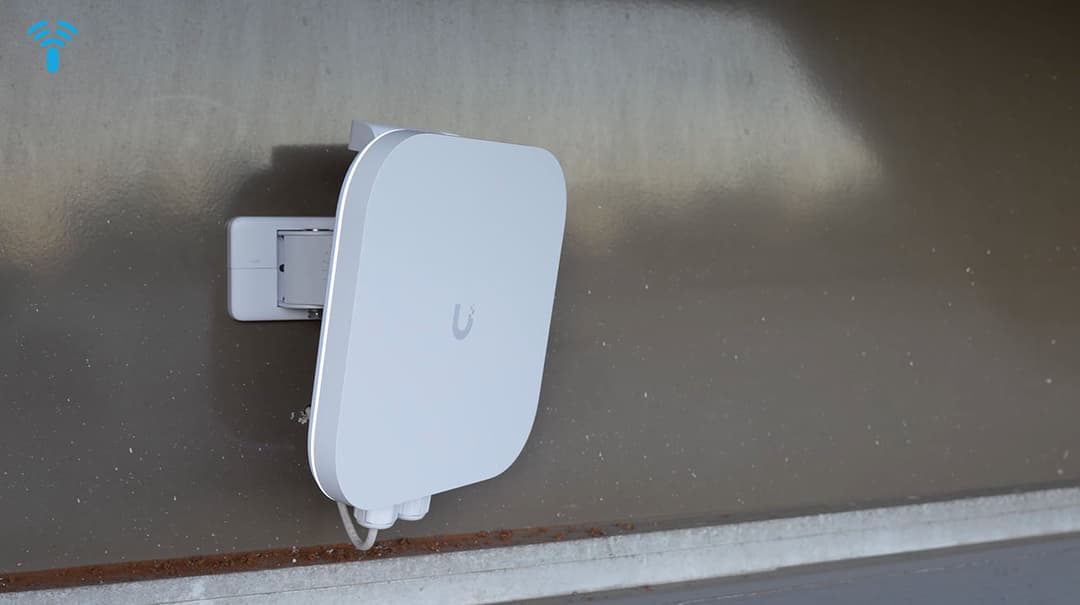
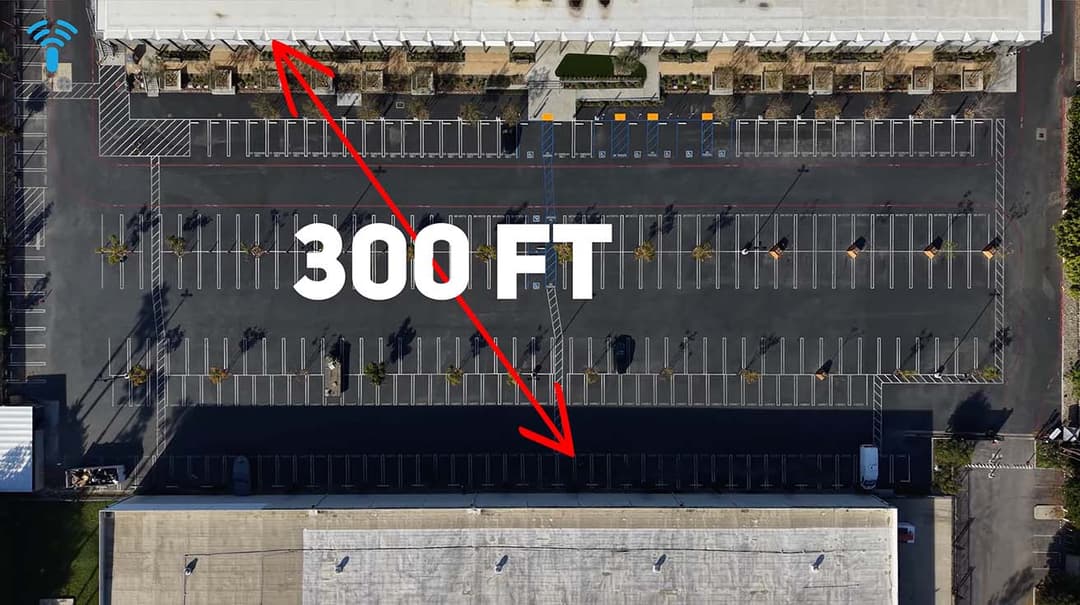
- Capacity and Frequency Engineering: We design wireless architecture optimized for the latest Wi-Fi 7 standard. We configure active band steering and client load balancing to manage high-density zones efficiently. Where traditional cabling is structurally impossible, we engineer resilient mesh backhaul links to maintain uninterrupted coverage without compromising overall throughput.
- Wireless Security Architecture: We deploy strict enterprise security frameworks. This includes WPA3-Enterprise encryption, 802.1X RADIUS authentication, and completely isolated guest networks governed by secure captive portals.
4. Routing and Core Infrastructure Design
Routing and security infrastructure serve as the central brain of your environment, governing how data passes securely and efficiently across your organization according to strict industrial standards.
- Layer 3 Routing Strategy: We engineer stable routing topologies using static or dynamic enterprise OSPF protocols designed specifically for high-velocity multi-site and campus-wide synchronization.
- Enterprise SD-WAN Deployment: We design and implement Software-Defined Wide Area Network (SD-WAN) architectures to connect distributed corporate offices, logistics hubs, and cloud environments. This configuration enables dynamic path selection, automated traffic steering across multiple WAN links, and centralized policy enforcement to optimize application performance at scale.
- Advanced Firewall and Zero-Trust Architecture: We enforce strict micro-segmentation by deploying next-generation firewalls (NGFW) and access control lists (ACLs) to establish a Zero-Trust network environment. By isolating corporate data, guest networks, and IoT assets into separate virtual zones, we ensure that every internal and external connection is continuously verified and tightly controlled.
- Traffic Engineering and QoS: We deploy strict Quality of Service (QoS) configurations to guarantee that time-sensitive business applications, including real-time video conferencing, corporate VoIP lines, and localized database synchronization, always receive bandwidth priority under heavy network loads.
- WAN Edge and Failover: We protect daily operations against external provider outages by engineering the internet edge with multi-ISP failover strategies, high-throughput Site-to-Site VPN tunnels, and secure remote-access gateways.
5. Sourcing, Physical Installation, and Deployment
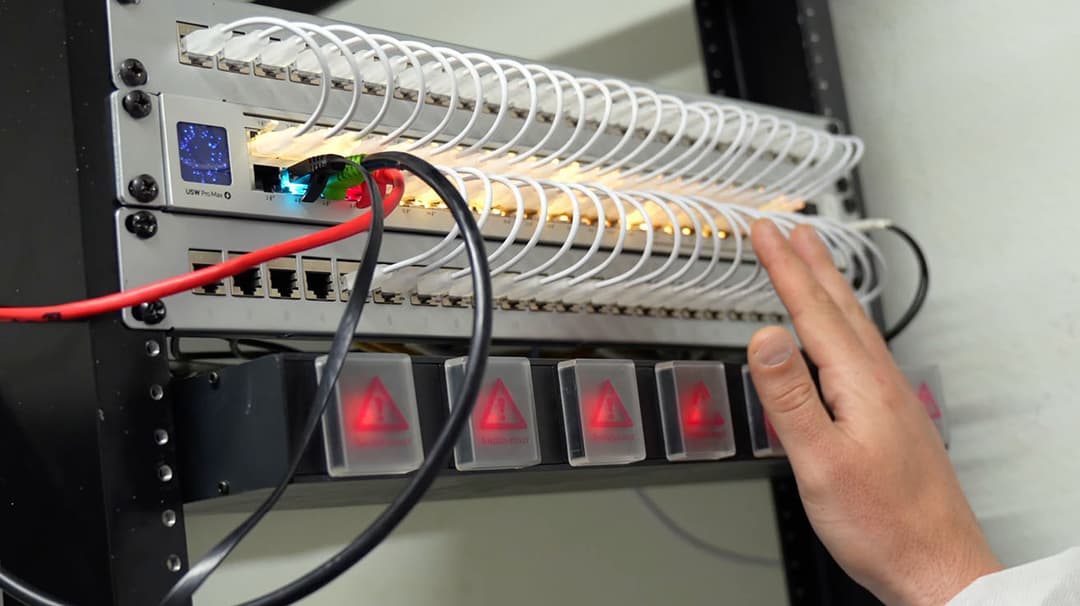
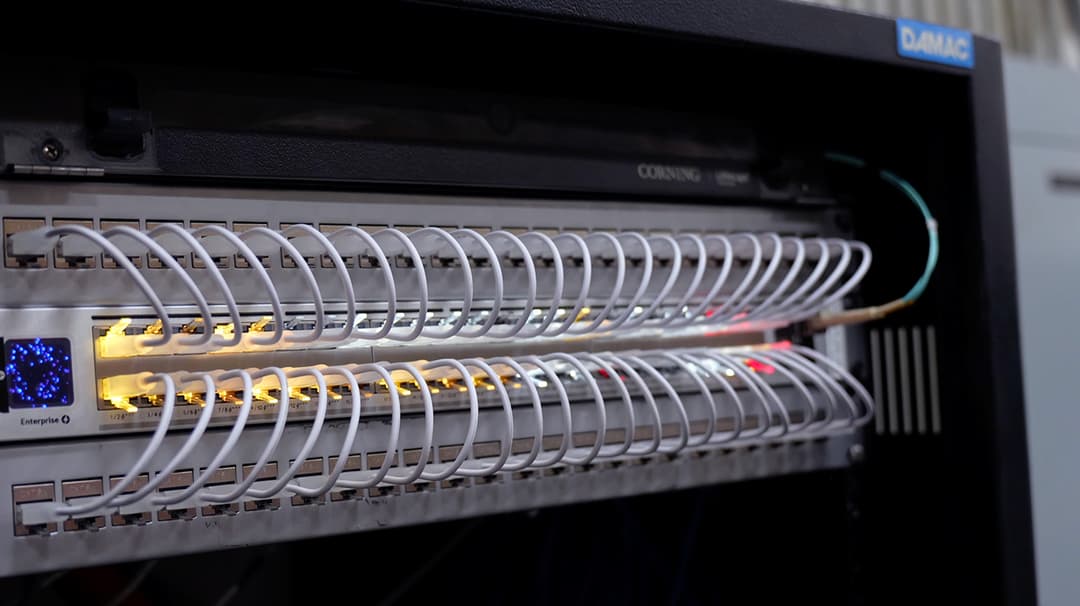
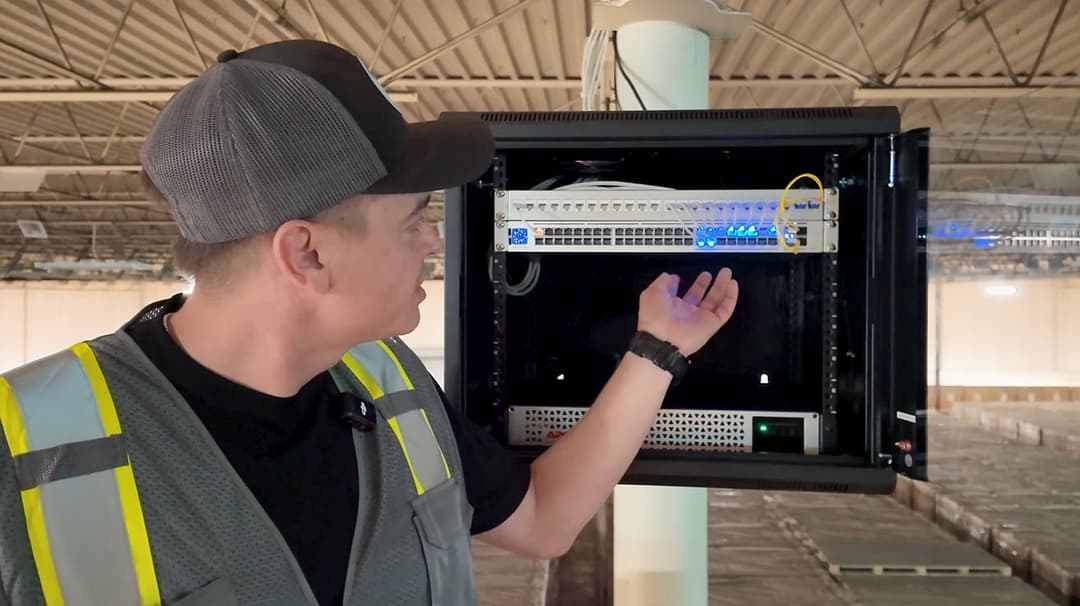
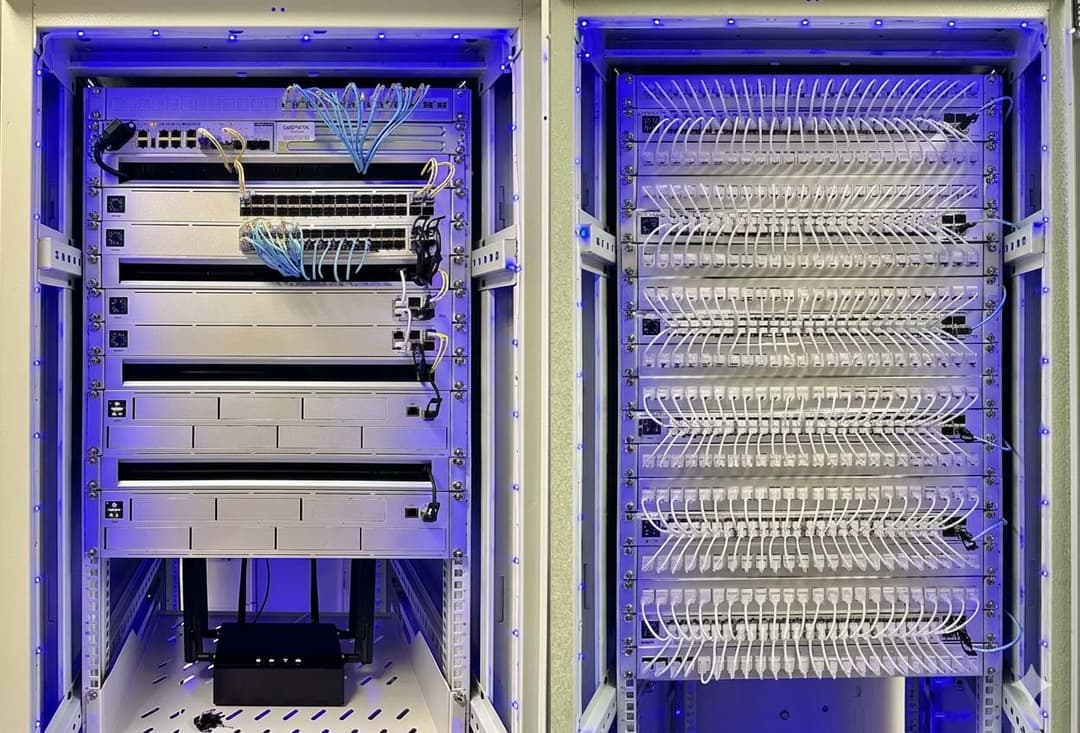
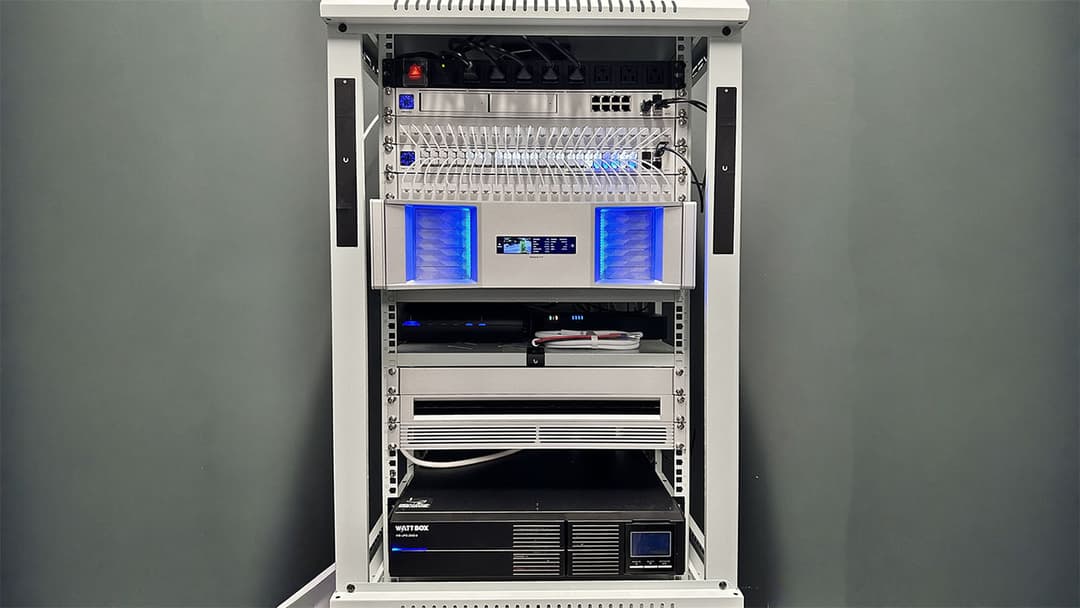
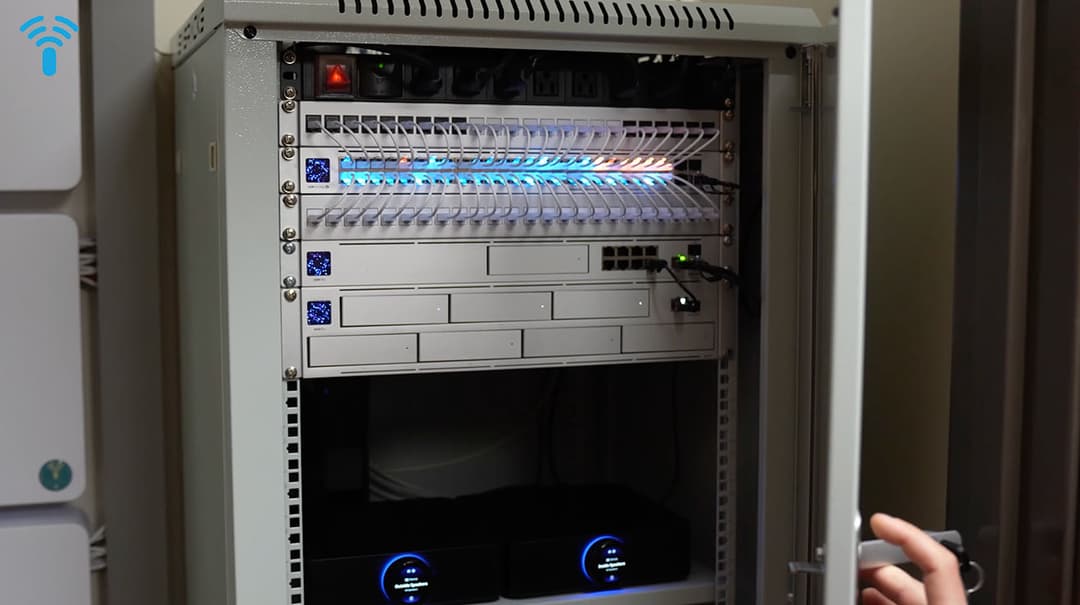
We manage the physical deployment phase end-to-end. Our engineers source high-performance hardware tailored to your specific technical requirements and operational budget. We run, organize, and terminate all structured cabling strictly adhering to commercial installation best practices for neatness, safety, and optimal bend radii. All switches, routers, security gateways, and wireless access points are securely mounted in enterprise racks, cross-connected, and thoroughly tested using link validation equipment to guarantee absolute physical link integrity and copper connectivity before activation.
6. Validation, Performance Testing, and Handover
Before the network goes live, we conduct rigorous verification testing to validate throughput, latency, jitter, and packet loss metrics across your infrastructure. We perform active wireless validation walkthroughs with live client devices and execute physical failover tests to confirm that redundancy mechanisms respond dynamically. Handover includes complete as-built documentation, localized configuration backups, and clear knowledge-transfer sessions for your team.
Our Approach: Vetted Enterprise Solutions Without the Overhead
We evaluate every commercial infrastructure project on a case-by-case basis. We analyze your workflows, user density, and long-term scaling targets to source the ideal hardware stack.
Historically, critics argued that the UniFi ecosystem lacked true data-center-grade routing capabilities. However, massive hardware advancements over the last two years have fundamentally rewritten the landscape. Today, the latest generation of Ubiquiti Enterprise Firewall appliances and high-capacity routing solutions natively cover 85% to 90% of all commercial enterprise network requirements.
Unless you are designing infrastructure for highly specialized environments with extreme edge-case isolation mandates, such as a military defense facility or an international airport, paying for legacy platforms is an unnecessary capital drain. By deploying these modern security gateways, we deliver advanced multi-gigabit throughput, deep cryptographic inspection, and robust network environments at a fraction of the traditional cost.

The Enterprise Value: Breaking the Subscription Loop
Traditional enterprise networking systems force businesses into a continuous cycle of operational expenses. You are typically required to pay ongoing software licensing fees and recurring per-device subscriptions just to keep your hardware functioning.
UniFi completely breaks this model:
- Zero Recurring Licensing Fees: You purchase the physical hardware, and you own the software permanently. There are no monthly subscriptions, no hidden maintenance fees, and no per-device activation charges.
- Radically Reduced Total Cost of Ownership: By eliminating recurring platform fees, your business secures massive long-term financial savings on both initial deployment and ongoing lifecycle maintenance.
Simplified Management for Non-IT Operations
If your primary business operations do not center around technology, you likely do not want to employ a dedicated, high-level command-line network engineer just to manage your daily network changes.
The UniFi platform shifts complex enterprise networking away from archaic command-line entry into an accessible, highly visual web GUI and mobile interface. A manager or local administrator can easily oversee multi-site deployments, adjust port profiles, or provision new users without dealing with convoluted programming scripts.

Next-Generation Automated Capabilities
Ubiquiti packs highly sophisticated, enterprise-grade data management and security features into an intuitive software layout, giving medium-sized enterprises access to capabilities that are often overly complicated on legacy platforms:
- Deep Packet Inspection (DPI): The native firewall engines handle continuous, real-time cryptographic traffic analysis. This allows us to establish advanced security rules that identify, filter, or block data at the specific application level to protect your business assets.
- Centralized Multi-Site SD-WAN Architecture: For businesses operating across distributed corporate offices, separate logistics hubs, or multi-state facility networks, we leverage next-generation hardware to deploy full Software-Defined Wide Area Networks (SD-WAN). Instead of managing isolated networks or configuring unstable, manual VPN links, this technology establishes a centralized, cloud-managed routing fabric. Your offices in different cities securely synchronize configuration profiles, dynamically steer traffic across multiple internet links, and allow your administrative team to manage cross-country routing and global security policies from a single, unified interface without any ongoing software licensing fees.
- Object-Oriented Networking (OON): This paradigm eliminates the manual labor of writing repetitive, low-level firewall scripts for individual devices. We define modular "objects" (such as a specific device group or network branch) and apply broad security profiles directly to them. The system automatically handles the back-end distribution across your switches and gateways simultaneously.
- Intelligent Alarm Manager: We set up continuous infrastructure monitoring that instantly flags operational anomalies. The system alerts your team via automated notifications the moment it detects port errors, ISP packet loss, high latency spikes, or secondary WAN failover events.
- Automated AI WiFi Doctor: This native software optimization tool actively protects your wireless environment. It continuously monitors airtime congestion and automatically adjusts wireless channel distribution and access point transmit power behind the scenes, ensuring clean client roaming without requiring manual engineering interventions.
The Truth About the Enterprise Market: Exposing the Legacy MSP Model
To understand why some traditional Managed Service Providers (MSPs) and legacy network administrators speak negatively about license-free hardware, you must examine the economics of the IT industry. For over thirty years, traditional network vendors have protected a closed sales system. Under this paradigm, an end-user cannot simply purchase enterprise-grade switching or routing equipment directly. Businesses are forced to go through a certified MSP partner.
This model rewards middlemen, not business owners. Traditional MSPs secure up to a 40% recurring commission on every software license, per-device subscription, and mandatory support contract they sell you. If a vendor bypasses this system and goes direct to the user, it threatens the MSP’s primary revenue stream. The aggressive push for subscription-heavy hardware is driven by financial interest, not engineering superiority. YesTechie rejects this rent-seeking philosophy. We believe your infrastructure belongs to you, and you should never pay an ongoing tax just to keep your network ports active.
Hyperscale Hardware Sourcing
We install Ubiquiti's highest-tier commercial hardware lines, built and engineered specifically to handle immense client density and heavy data loads:
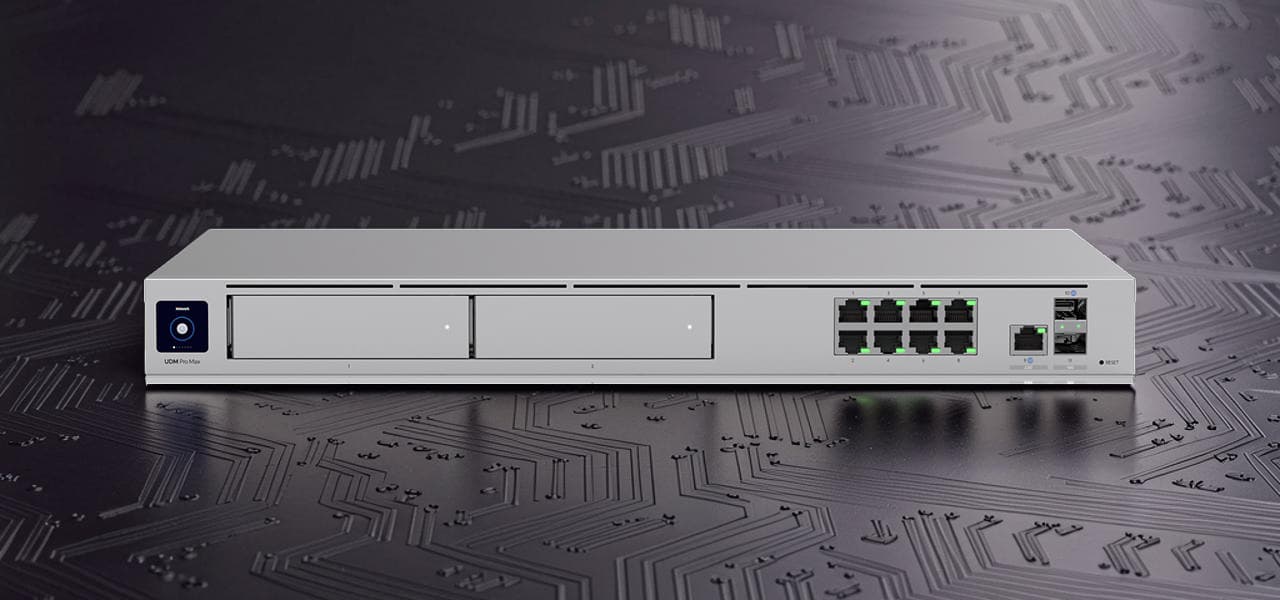
- Next-Gen Routing Performance: For high-capacity nodes, we deploy advanced routing engines like the Dream Machine Beast (UDM-Beast). Built on next-generation chipsets, these units deliver massive processing gains, enabling comprehensive, multi-gigabit firewall inspection and DPI throughput without introducing network latency.
- High-Volume Switching: We deploy modular Layer 3 Enterprise Campus and Pro Max switching hardware featuring Etherlighting. These units are engineered to comfortably sustain high-bandwidth data aggregation and distribute high-wattage PoE++ power across your facility.
- High-Density Wireless Access Points: We integrate commercial Wi-Fi 7 access points capable of supporting thousands of concurrent client connections, maintaining stable data rates even in dense, signal-heavy commercial environments.
Bridging the Support Gap: The YesTechie Integrator Advantage
When a disruptive technology platform like Ubiquiti eliminates recurring vendor fees, it also changes how technical support is delivered. Legacy brands bundle expensive, factory-managed support contracts into your mandatory software licenses. Ubiquiti builds the hardware and software, but they do not provide direct on-site troubleshooting or engineering support for your daily business operations. The responsibility of calculating PoE wattage budgets, configuring complex OSPF routing, and maintaining system health falls entirely on the integrator.
YesTechie fills this exact operational gap with complete contractual flexibility. We do not lock you into proprietary contracts or forced monthly software taxes. Instead, we adapt our support layer entirely to your operational reality:
- Self-Managed with On-Demand Support: If your business has internal staff capable of managing daily operations via the visual GUI dashboard, you do not need a monthly contract. You run the system yourself, and you only pay YesTechie for on-demand hourly service dispatches or technical phone support when an unexpected infrastructure challenge arises.
- Dedicated SLA monthly Plans: For enterprise operations that require guaranteed uptime, continuous network monitoring, and rapid hardware deployment, we offer flexible monthly plans. If a critical component or switch fails, our Service Level Agreement guarantees that we will deploy an identical replacement node directly from our own inventory, keeping your operations online without traditional vendor delays.
Proven Footprint Across Demanding Industries
Commercial networking is never a one-size-fits-all deployment. We have engineered and installed high-load wired and wireless infrastructure across a diverse range of specialized business sectors:
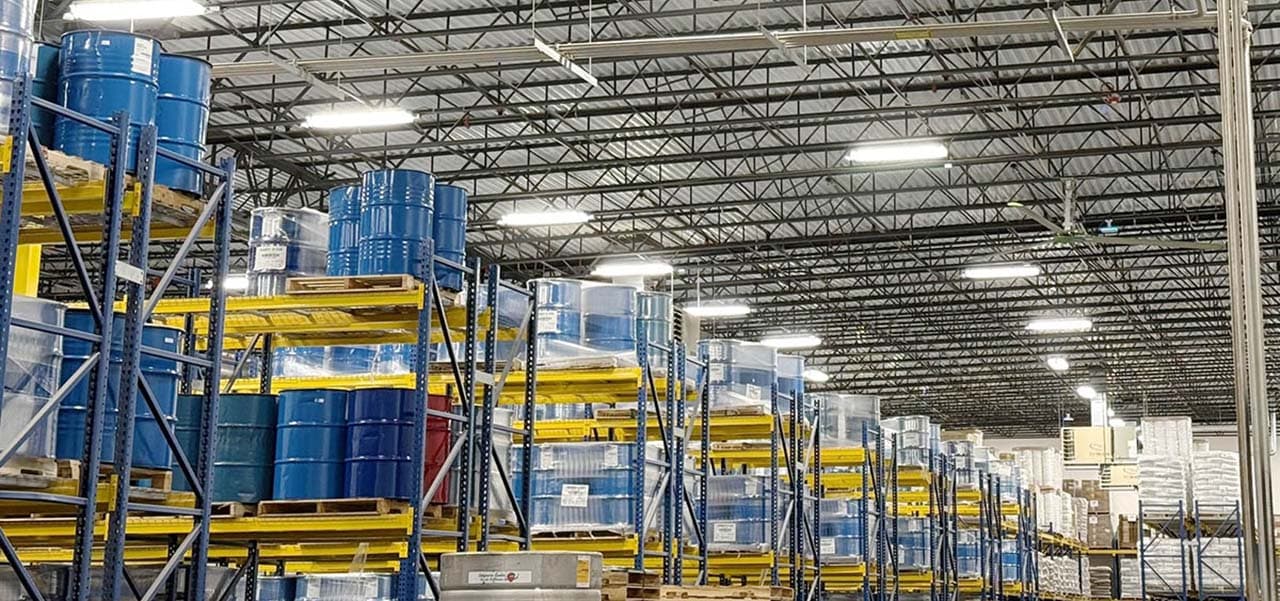
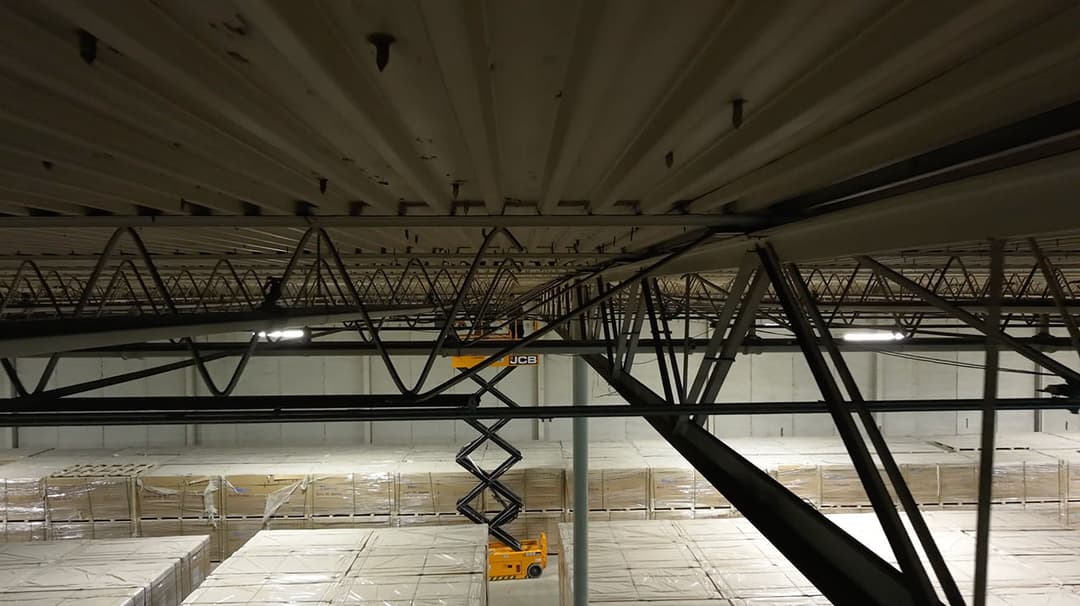
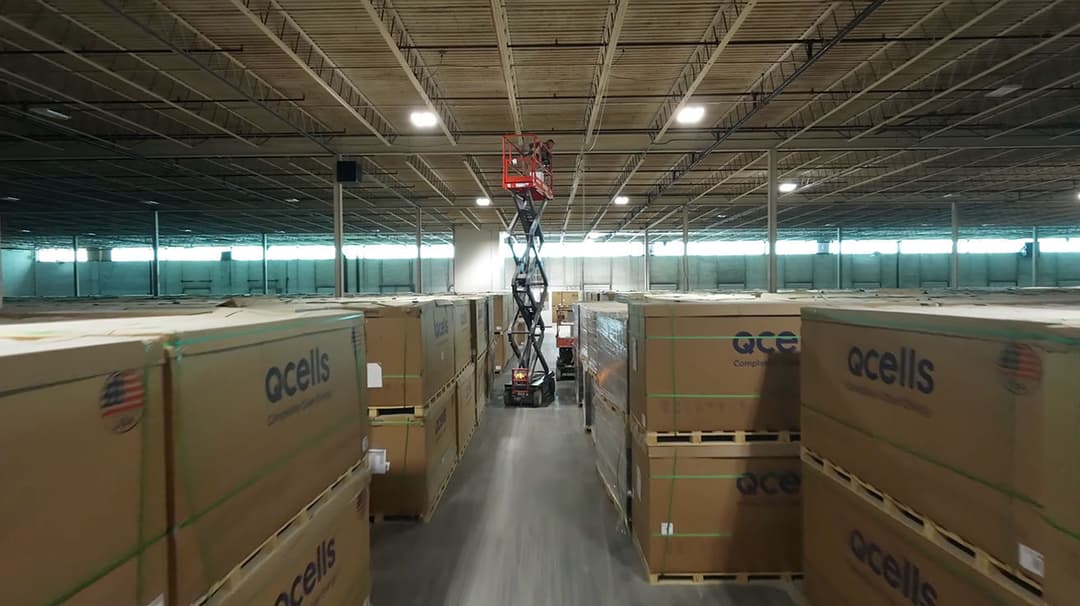
- Industrial Warehouses and Logistics Hubs: Where massive physical space requires precise fiber backhauls, long-range wireless links, and ruggedized hardware configurations that withstand harsh conditions.
- High-Density Commercial Environments: Where hundreds of active client devices must connect simultaneously within confined workspaces without dropping active connections.
- Data-Intensive Video Production Studios: We engineered high-throughput, low-latency network pipelines for demanding media environments, including creative hubs like Blueground Video Production, where transferring massive, uncompressed high-resolution video files requires absolute bandwidth stability under relentless daily loads.

A commercial network is an evolving foundation for your business operations. We build your system to easily scale alongside your headcount and operational growth. To ensure your infrastructure remains completely secure and efficient long after the initial deployment, we back our physical installations with dedicated technical support. Explore our Managed IT service to learn more about our proactive maintenance plans, continuous monitoring, and automated firmware management.
If you are moving into a new commercial facility, resolving bottleneck issues on an existing network, or planning a multi-site expansion, contact us today to schedule a comprehensive technical layout assessment.
Nationwide B2B Deployment & Enterprise Integration
While our engineering headquarters operates out of Los Angeles, the YesTechie integration team deploys hyperscale access control and physical security infrastructure for commercial enterprises across the United States. We partner exclusively with organizations where perimeter safety, identity management, and physical security are not just basic support functions. They are the critical foundation of daily business operations.
Our physical deployments span massive manufacturing facilities, multi-state logistics hubs, data-intensive media production companies, and distributed corporate enterprises. We do not operate as simple low-voltage installers. We architect converged, license-free access control systems designed to remain absolutely stable under relentless daily loads, ensuring reliable security at all times and seamless scalability alongside your long-term operational growth.
Schedule Your Infrastructure Audit
If you are moving into a new commercial facility, planning to unify fragmented legacy access panels, or require a strict technical audit of an unstable corporate environment, our engineers are ready to architect a high-performance solution tailored exactly to your operational reality.
Contact the YesTechie engineering team today to schedule your comprehensive site assessment and secure your enterprise deployment blueprint.
FAQ
Do we have to pay monthly software licensing fees to keep the network running, and what happens if we need technical support?
No. If we deploy a UniFi infrastructure for your facility, you purchase the physical hardware and own the management software permanently. There are no vendor lock-ins and no artificial network shut-offs. Since Ubiquiti passes infrastructure control directly to the end-user, they do not bundle factory support contracts. YesTechie bridges this support gap by offering completely flexible coverage models. You can manage the intuitive visual dashboard internally and engage our team strictly for on-demand hourly help, or you can opt for a dedicated monthly SLA plan where our local engineers handle proactive maintenance, firmware testing, and immediate hardware replacement from our own inventory.
Will my staff need specialized IT training to manage daily network access?
Not at all. We configure intuitive web and mobile management interfaces. Your administrative team can easily adjust port profiles, generate secure guest Wi-Fi passwords, or monitor camera feeds directly from their smartphones without needing an engineering background.
Can you integrate the new network with our existing ISP and hardware?
Yes. We operate as a vendor-agnostic integrator during the initial design phase. We will seamlessly integrate with your existing fiber drops, configure multi-ISP failovers, and build upon your current infrastructure if it meets modern performance and security standards.
How do you handle network security and compliance like HIPAA or SOC2?
We map out your compliance obligations before running a single cable. We enforce strict micro-segmentation, VLAN isolation, and Zero-Trust firewall rules to ensure sensitive corporate data is completely separated from public guest networks and IoT devices natively.
What happens if a core switch or router goes offline?
We design our enterprise networks with high-availability topologies. If a primary core switch or security gateway experiences a hardware failure, our automated MC-LAG and VRRP configurations ensure a secondary backup unit instantly takes over. This maintains active network sessions and keeps your business operational without noticeable downtime.
Will upgrading to a new network disrupt our daily business operations?
No. We execute a phased, zero-downtime migration strategy. Our engineers pre-configure your routing logic, VLANs, and firewall rules off-site. We deploy the new physical infrastructure parallel to your existing network, executing the final active cutover only during strictly scheduled, non-operational maintenance windows to ensure complete business continuity.
Is the physical cabling you install capable of supporting future technology like Wi-Fi 7?
Yes. We strictly avoid deploying outdated copper standards. Our infrastructure designs utilize premium CAT6A cabling for horizontal runs and multi-mode or single-mode fiber optic links for the structural backbone. This physical foundation natively supports 10 GbE throughput, ensuring your facility is fully prepared for high-density Wi-Fi 7 access points and multi-gigabit switching without requiring future cable replacements.
Can you securely connect multiple office locations into a single unified network?
Absolutely. We deploy advanced Software-Defined Wide Area Network (SD-WAN) architectures and high-throughput Site-to-Site VPN tunnels. This allows distributed corporate offices and remote logistics hubs to share a centralized, encrypted routing fabric. Your employees can access shared corporate servers and databases across different cities exactly as if they were sitting in the same building, all managed directly from one unified console.