Structured Cabling

The physical layer is the most overlooked point of failure in any network architecture. A high-performance router or security gateway is useless if the underlying cable plant suffers from crosstalk, impedance mismatch, or thermal degradation. We do not just run wires; we architect the physical infrastructure that serves as the resilient backbone for your corporate data, physical security, and unified communications.
Whether you are building out a new high-density corporate office or retrofitting an expansive industrial warehouse, we engineer cable pathways that guarantee continuous 10Gbps+ performance, future-proof PoE++ delivery, and full compliance with local building ordinances.
The YesTechie Infrastructure Standard: Licensed and Bonded Excellence
Structured cabling is fundamentally a part of commercial construction. Pulling miles of cable requires altering physical pathways, penetrating fire-rated walls, and operating heavy machinery at scale near critical facility infrastructure. Partnering with uncertified or uninsurable contractors introduces massive financial and operational risks to your property.

YesTechie delivers absolute peace of mind through strict industry compliance and professional accountability:
- Full Licensing and Insurance: As a licensed C-7 low-voltage contractor, our team is completely bonded and insured. We assume total liability for the integrity of your facility during the installation process, protecting your physical assets from accidental structural damage or operational disruption.
- Strict Code Compliance: We design and install all cable pathways in strict alignment with the National Electrical Code (NEC) and TIA/EIA standards. We balance load distribution properly to reduce physical bottlenecks and prevent heat buildup in high-density PoE++ cable bundles. Our adherence to municipal fire safety codes ensures your facility passes city inspections and fire marshal audits without costly delays or penalties.
- The Universal Asset Coding (UAC) System: We eliminate infrastructure confusion. Every individual drop, patch panel port, and wall jack is systematically marked using our strict logical naming convention. This creates an organized, transparent map of your entire facility layout, allowing your administrative or technical staff to easily manage line changes without troubleshooting delays.
What the Service Entails: Core Engineering Phases
Commercial structured cabling is a disciplined engineering process that converts architectural layouts into an organized, high-throughput data matrix.
Phase 1: Pathway Engineering and Media Selection
We analyze your operational workflows, expected device densities, and structural constraints before a single spool of cable is deployed.
- Fiber Optic Backbone Integration: To eliminate bottlenecks between core server infrastructure and remote hardware clusters, we deploy high-bandwidth single-mode or multi-mode fiber optic backbones. We bridge your Main Distribution Frame (MDF) directly to all Intermediate Distribution Frames (IDFs) across your campus, ensuring zero-latency distribution.
- Advanced Copper Selection: For horizontal workstation runs and high-wattage power-over-Ethernet (PoE++) assets, we install premium Category 6A (Cat6A) cabling. In demanding industrial or manufacturing environments featuring high electromagnetic interference (EMI), we deploy fully shielded Cat6A solutions to maintain absolute signal integrity.
- Environmental Material Optimization: We evaluate structural spaces to properly specify Plenum (CMP) or Riser (CMR) rated cables, ensuring strict adherence to environmental fire safety and airflow mandates.
Phase 2: Precision Installation and Termination
Poor physical termination is the leading cause of intermittent packet loss and network drops. Our field engineers apply service-provider discipline to every connection.
- Structured Termination: We utilize high-quality RJ45 keystone jacks and commercial patch panels, maintaining proper termination limits and precise bend radii to prevent physical stress on the media.
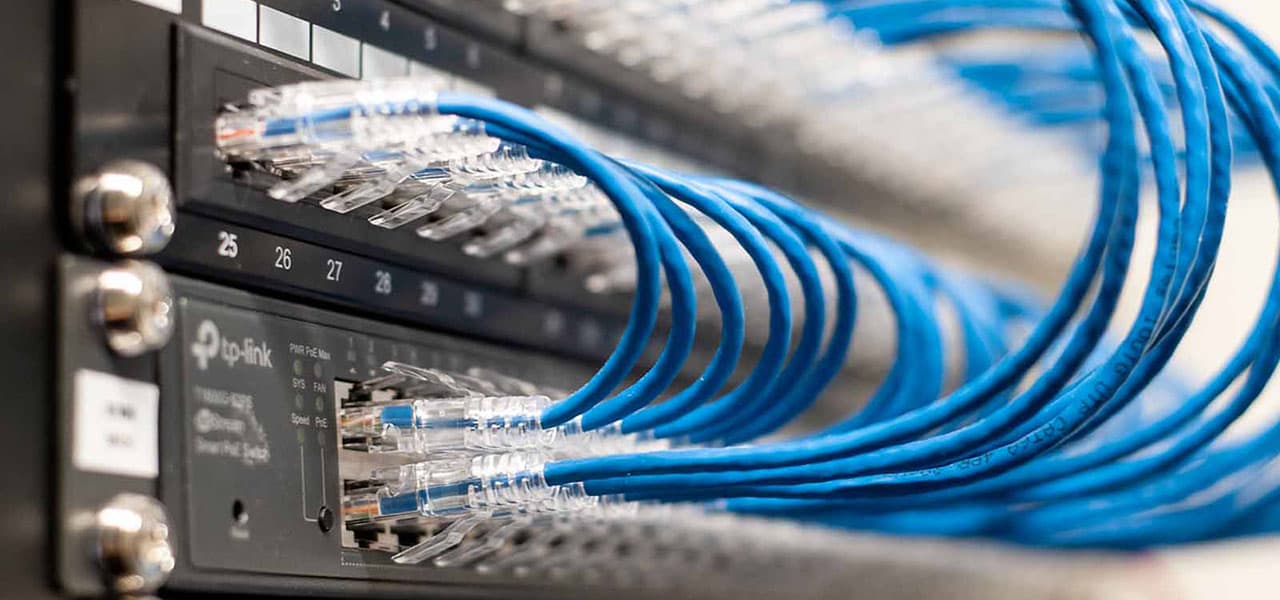
- Rack and Closet Organization: We build clean, highly accessible server closets and distribution frames. All cables are neatly bundled, organized by traffic type, and managed at the rack level to maximize passive aerodynamic cooling for your active switches and hardware.
- Pathway Security: We secure all cabling runs using dedicated J-hooks, custom conduits, and specialized fire-stop systems wherever lines penetrate fire barriers, preserving the architectural safety of your building.

Phase 3: Digital Link Validation and Handover
We do not guess if your physical infrastructure functions; we verify every connection using advanced industrial diagnostic equipment.
- Rigorous Link Testing: We test every individual drop for physical continuity, proper wire maps, signal-to-noise ratio (SNR), and near-end crosstalk, ensuring each link meets strict enterprise bandwidth performance benchmarks.
- As-Built Documentation: Upon completion, you receive a complete logical and physical layout package. This digital handover file contains your closet-to-desk assignment charts, comprehensive port mapping, and certified link verification results.
- Future-Proof Readiness: Our validation process confirms that your physical cable plant is fully prepared to support next-generation technologies, including high-density Wi-Fi 7 access points and multi-gigabit hardware switches out of the box.
Vendor-Agnostic Foundations and Lifecycle Integration
What sets YesTechie apart is our systemic approach to infrastructure. While standard low-voltage contractors focus strictly on pulling wire, we focus on the long-term hardware architecture that will live on top of it.
Our cabling services are completely vendor-agnostic. We engineer your physical layer to exceed the performance specifications of any enterprise hardware platform on the market, ensuring complete flexibility for your future technology choices.

Once your physical layer is validated, we are fully equipped to deploy the active layers of your business tech stack. Explore our Network Installation services to see how we build routing and wireless systems over our cabling infrastructure, or view our Managed IT Services to learn how we provide proactive maintenance and remote optimization for your complete business technology footprint.
Nationwide B2B Deployment & Enterprise Integration
While our engineering headquarters operates out of Los Angeles, the YesTechie integration team deploys hyperscale cable infrastructure for commercial enterprises across the United States. We partner exclusively with organizations where network stability, optical transport, and physical security are the critical foundations of daily business operations.
Our physical deployments span massive manufacturing facilities, multi-state logistics hubs, data-intensive media production companies, and distributed corporate enterprises. We do not operate as simple low-voltage installers. We architect converged, high-throughput physical layers designed to remain absolutely stable under relentless daily loads, ensuring reliable connectivity and seamless scalability alongside your long-term operational growth.
FAQ
Why is it important to use a licensed low-voltage contractor for structured cabling?
Structured cabling is a regulated construction trade. A licensed C-7 low-voltage contractor possesses the verified training to perform installations safely and in full compliance with local building codes. Furthermore, licensed contractors carry comprehensive insurance and bonding, meaning they assume full financial responsibility for your property during the installation, protecting your business from structural liabilities.
What is the difference between Cat6A and fiber optic cabling, and where are they used?
Cat6A is a high-performance copper cable capable of supporting 10Gbps data speeds and delivering power via PoE++ over distances up to 300 feet, making it ideal for connecting individual workstations, security cameras, and wireless access points. Fiber optic cabling uses light to transmit data over vast distances with zero interference and massive bandwidth capability. We utilize fiber optics to build the main backbones connecting your central server room to remote wiring closets across large facilities.
How do you ensure that our new cabling infrastructure complies with local fire codes?
We closely evaluate the airflow spaces within your building architecture. In spaces used for environmental air circulation, such as drop ceilings or raised floors, we install Plenum-rated (CMP) cabling, which features fire-retardant plastics that emit low smoke. For vertical shafts between floors, we utilize Riser-rated (CMR) cabling. All penetrations through fire-rated walls are sealed using approved fire-stop materials to prevent the spread of smoke or fire.
Can you upgrade the cabling in our facility without disrupting our daily operations?
We specialize in live-environment retrofits. Our project managers coordinate deployment schedules to perform disruptive pathway work or critical cutovers during off-peak hours or weekends, ensuring your employees experience zero downtime and your daily business workflows remain completely unhindered.
What kind of documentation do we receive once the installation is complete?
You receive a comprehensive Digital Verification Package. This includes complete As-Built documentation mapping every cable run, an organized port assignment chart corresponding to our Universal Asset Coding labels, and formal testing certificates verifying that every single network drop has been validated for performance, latency, and throughput capabilities.
Can your team clean up and organize an existing, messy server room?
Yes. We perform complete MDF and IDF remediation. Our engineers will audit your existing cable plant, remove dead drops, re-terminate disorganized connections, and install proper cable management hardware. We convert chaotic server racks into highly organized, properly cooled distribution frames.
Do you provide formal certification reports for the installed network cables?
Yes. We validate every single cable drop using advanced industrial diagnostic equipment. We provide comprehensive digital testing reports proving that your new copper or fiber links meet precise bandwidth, latency, and signal-to-noise ratio requirements before your active hardware is installed.
How do you handle cabling in environments with open ceilings or strict aesthetic requirements?
We deploy specialized pathway management hardware. For open-ceiling industrial architectures or creative studios, we utilize discrete J-hooks, custom conduits, and rigid cable trays. This ensures the physical infrastructure blends cleanly into your environment while maintaining strict bend radii and structural support for the high-throughput cables.
Do you offer warranties on your physical installations?
Yes. As a licensed C-7 low-voltage contractor, we back our physical layer deployments with a strict one-year workmanship guarantee. If any structural cabling or physical termination fault occurs, our team will remediate the issue at zero cost. For active network hardware, we offer custom SLA plans that guarantee immediate component replacement from our own inventory.
.jpg&w=3840&q=75)