Electric Fail Secure Locks for UniFi Access Commercial Projects | Selection & Demo Installation
One of the most persistent and practical inquiries our engineering team encounters after detailing a UniFi Access deployment centers entirely on physical door hardware: what electric locks do you actually specify and mount on commercial door frames?
While the UniFi Access console ecosystem handles digital credential verification, multi-tier user schedules, and real-time audit logs flawlessly, the physical locking mechanism remains the component that manually secures or clears a physical path. Specifying an incorrect lock class or mismatched voltage type for a particular door layout inevitably leads to municipal inspection failures, unstable perimeter defense, and costly structural field rework.

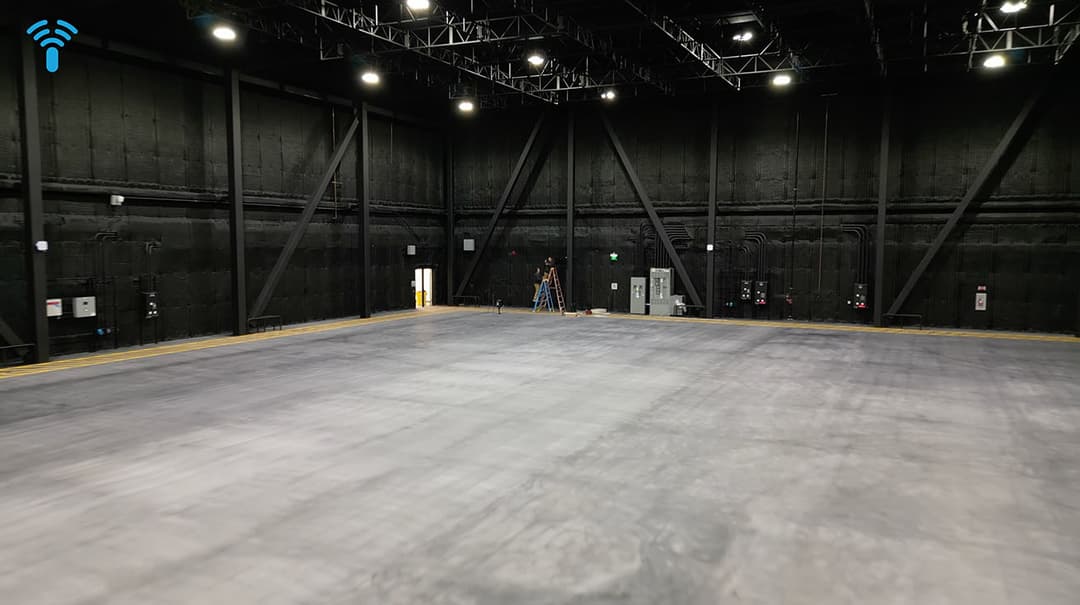
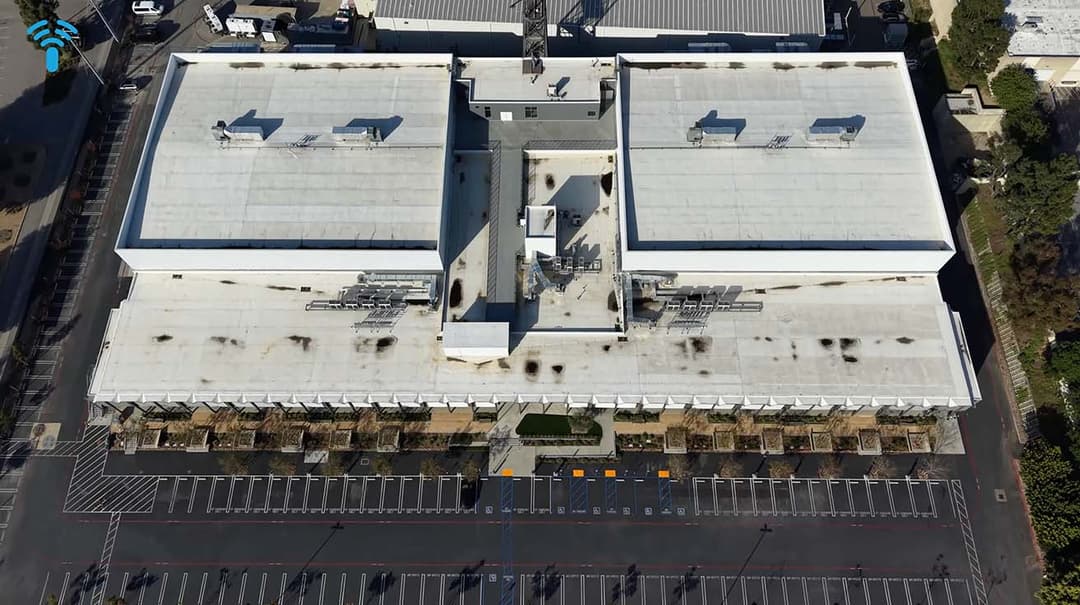
Our low-voltage field technicians finalized a comprehensive door electrification overview at a high-intensity video production studio in Los Angeles. This engineering case study strips away theoretical marketing claims to break down the field selection parameters, physical mounting requirements, and code-compliance decisions behind two specialized lock models we rely on across demanding enterprise spaces: a surface-mounted electric strike from ASSA ABLOY and an electrified mortise lock block from Command Access.
Project at a Glance
Site Overview
- Location & Client: High-Density Video Production Facility, Los Angeles, CA
- Industry Vertical: Entertainment / Media Production Assets
- Project Scope: Multi-Door Commercial Electrification & Comprehensive Turnkey Access Infrastructure
Core Access Control Infrastructure
- Central Control Management: UniFi Door Access Hub Enterprise Deployment
- Authentication Layer: UniFi Access Reader G3 Pro (PIN Code, NFC, and Smartphone Access)
- Power Distribution Strategy: Direct 12V DC Native Hub Integration (Zero External Transformers)
Surveillance & Physical Hardware Array
- Frame-Preservation Hardware: ASSA ABLOY Surface-Mounted Electric Strikes (12V/24V Dual-Rated)
- Door-Embedded Mechanisms: Command Access Electrified Mortise Locksets (12V Native Fail-Secure)
- Concealed Conductor Routing: Heavy-Duty Multi-Wire Electric Power Transfer Hinges
- System Compliance & Roadmap: 100% Fail-Secure Topology Ready for Near-Term Indoor Access Scale
Background and Electrical Requirements
This physical security build proceeded alongside a wider enterprise local area network setup across the media complex. The facility's architectural blueprint presented a common commercial mix of structural openings: high-traffic exterior paths utilizing escape panic bars, interior office suites built with standard mechanical lever handles, and thick hollow-metal or aluminum architectural frames that limited our cutting capabilities.

Because Ubiquiti designs exceptional digital access readers and software hubs but does not manufacture heavy-duty physical locking blocks, low-voltage integration teams must correctly pair compatible third-party lock hardware with the native power profiles of the UniFi ecosystem. The UniFi Door Access Hub Enterprise supplies a regulated 12V DC power output to drive connected lock coils. This 12V limitation is a major design bottleneck if your integrator mistakenly procures standard commercial hardware that demands a fixed 24V DC input, as a mismatched voltage profile will fail to trip the internal solenoids or burn out the relays entirely.
To maximize long-term system health and eliminate the dependency on secondary external power supplies, step-down transformers, or intermediate line relays, our engineers prioritize locks built with native 12V DC or dual-voltage (12V/24V DC) auto-switching coils. Both the ASSA ABLOY surface strike and the Command Access mortise locksets featured in this deployment pull cleanly from the UniFi hub’s native 12V lines, minimizing failure nodes and establishing a clean wiring footprint inside the network enclosure. Organizations requiring an uncompromised hardware blueprint typically hire certified Ubiquiti installers to ensure both electrical properties and device limits match factory engineering specifications.
Electric Strike vs. Electrified Mortise Lock: Which to Choose?
Selecting between an electric strike and an internal electrified mortise lock body depends almost entirely on the physical characteristics of the existing door frame, the pre-installed mechanical hardware, and the required structural durability.
An electric strike replaces or modifies the static metal strike plate anchored inside the stationary door frame. When a credential trips the access relay, the strike's internal hinged gate drops back electronically, allowing the stationary latch bolt of the closed door to clear the frame without the user needing to turn a handle. The door itself retains its original, standard mechanical lockset. This layout provides exceptional efficiency when retrofitting paths fitted with architectural panic exit bars, as the internal mechanical escape mechanism remains untouched.
Conversely, an electrified mortise lock body completely replaces the entire heavy mechanical lock chassis embedded inside the door cutout. The electronic solenoid is contained entirely inside the mortise casing. When an access reader sends the trigger signal, the internal gear assembly unlocks the exterior handle spindle, allowing a user to physically pull the lever downward to clear the path. This installation method provides significantly higher physical defense ratings and delivers a clean appearance because all functional wiring and strike hardware remain concealed inside the core of the door and frame.
Surface-Mounted Electric Strike Installation
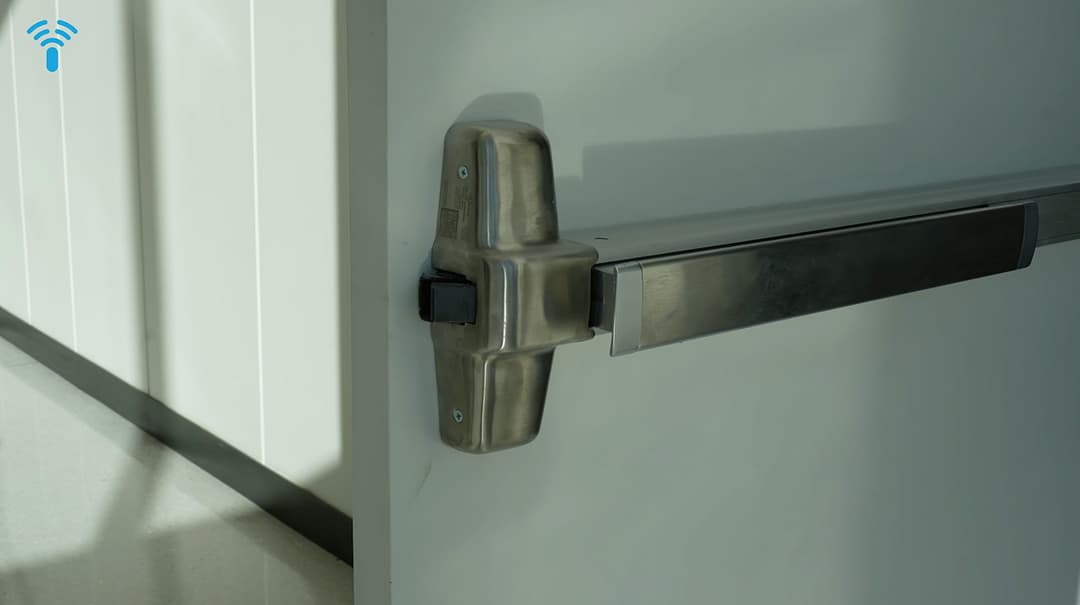
The first structural scenario we addressed involved a primary exterior egress door fitted with a heavy mechanical deadbolt on the exterior side and a horizontal panic push bar on the inside face. Fire safety regulations demand that anyone moving through an emergency exit must be able to clear the door instantly with a single physical motion.
The door was set up with a simple roller catch latch. To electrify this opening safely without altering the architectural integrity of the structural metal, we specified an ASSA ABLOY surface-mounted electric strike.
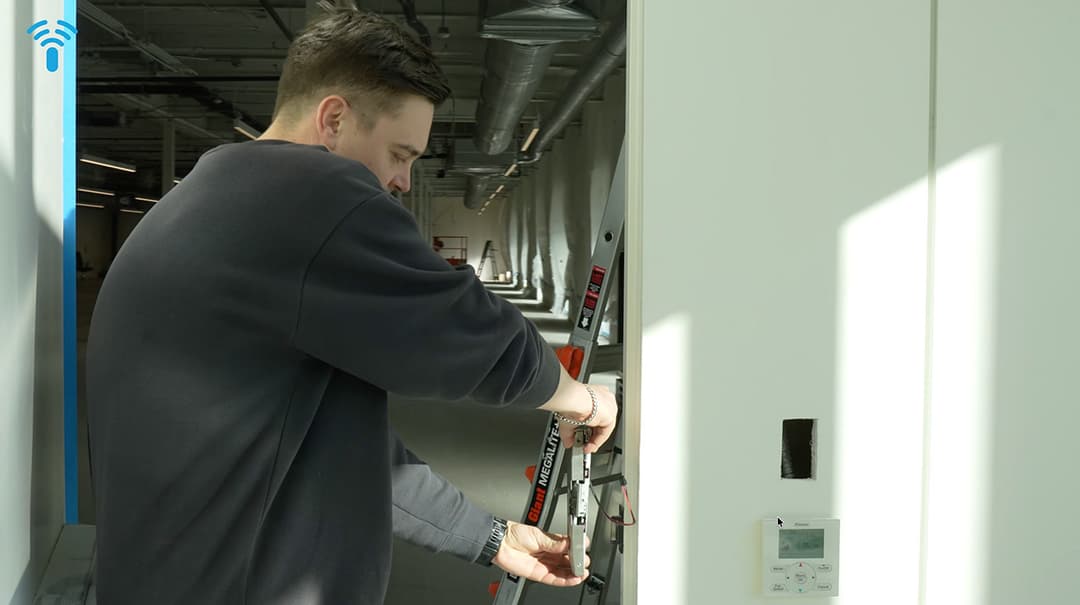
The "surface-mounted" profile is an important infrastructure advantage for retrofit environments. Standard electric strikes force field technicians to deploy angle grinders and cutting wheels to slice deep pockets into the hollow metal frame, which immediately invalidates the door's manufacturer's fire-rating and generates massive particulate mess inside a finished office. This ASSA ABLOY unit anchors directly onto the face of the existing frame, aligning flush with the extended latch bolt of the panic bar.
Wired directly at 12V DC into the UniFi Access Hub, the device functions with zero latency. If the building configuration ever scales or requires decommissioning down the road, the strike can be unscrewed completely, returning the frame to its original factory condition with minimal cosmetic patching. Our deployment teams leverage this exact frame-preservation strike layout during heavy commercial retrofits and high-security industrial warehouse infrastructure upgrades where modifying existing fire-rated structural steel is strictly prohibited by facilities management.
Electrified Mortise Lock Installation
The second structural layout required updating an interior suite entryway built with a standard commercial lever handle and a heavy, mechanical mortise pocket lock block. This path required a complete clean-slate upgrade to tie full access visibility directly into the handle assembly itself.
Our technicians removed the legacy passive mechanical chassis and retrofitted a specialized Command Access electrified mortise lockset directly into the pre-existing internal cutout. This hardware maintains a clean two-wire configuration, running natively on a 12V DC coil to match our central UniFi hub output.
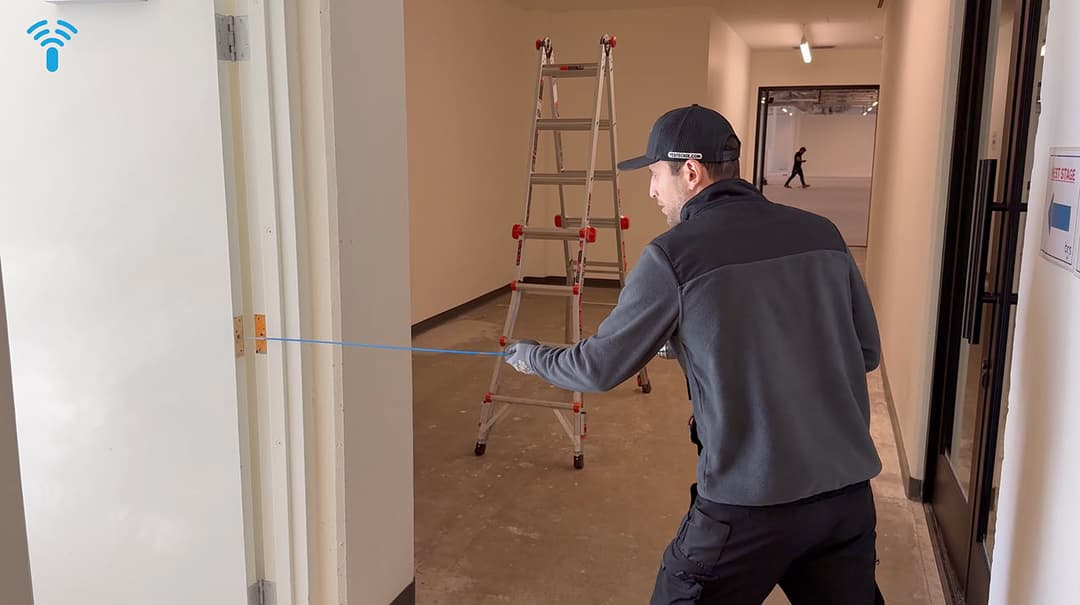
Routing continuous low-voltage conductors from a stationary wall frame into a moving, swinging commercial door body requires avoiding exposed surface conduit or loose wire loops, which can quickly pinch, break, or get intentionally cut during a security incident. We overcome this mechanical constraint by deploying specialized electrified power transfer hinges.
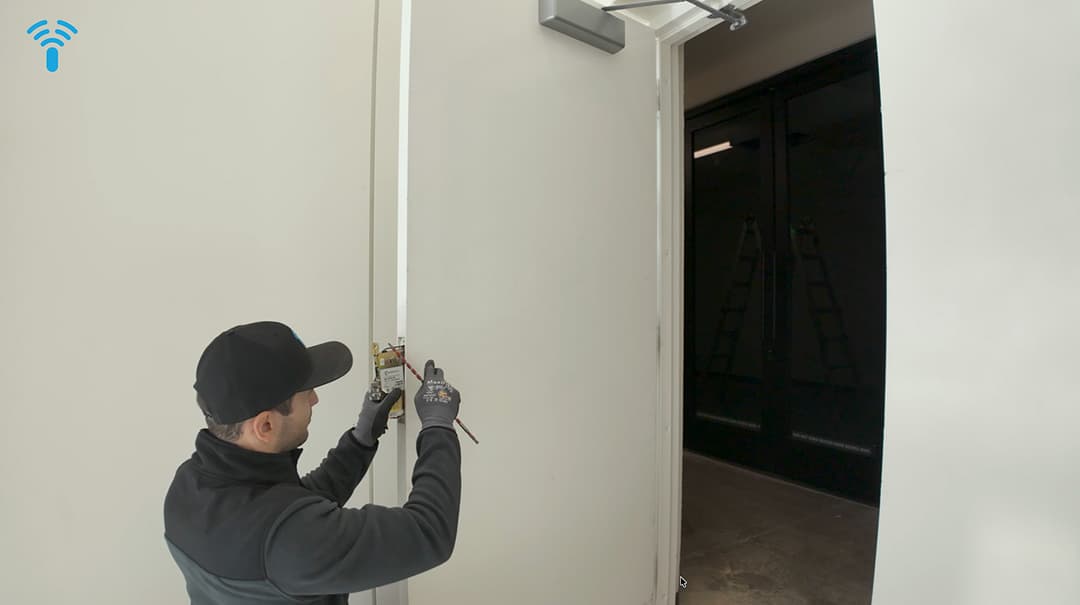
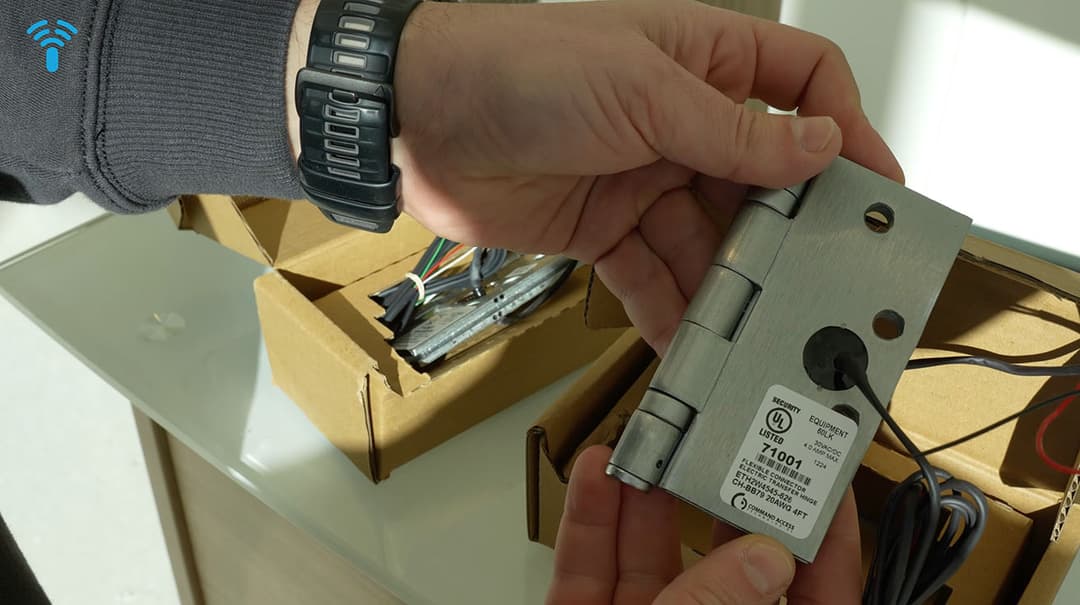
An electrified hinge houses concealed, high-flex internal conductors that travel directly through the center steel hinge knuckle. This allows the low-voltage lines to travel invisibly from the interior wall framing directly into the internal core of the door leaf. From there, our technicians drill a straight path through the door core to reach the mortise cavity. Once the lock trim and levers are re-secured, the door looks totally unchanged from its original presentation, leaving zero visible wires or exposed paths for an intruder to alter.
Fail-Secure vs. Fail-Safe: Why It Matters for Commercial Safety Codes
Every motorized or solenoid-driven lock operates in one of two configurations: Fail-Secure or Fail-Safe. Choosing the incorrect state is one of the leading causes of building inspection failure and structural liability.
- Fail-Secure (Power to Unlock): If the building undergoes a total power failure, a tripped circuit breaker, or an intentional wire cut, the lock remains completely locked from the outside. The internal spring coils require an active electrical pulse to drop the security gate. Entry is blocked, but mechanical egress remains functional from the inside.
- Fail-Safe (Power to Lock): If electricity drops, the internal mechanism instantly releases. The door automatically falls into a completely unlocked state, allowing unhindered physical movement in both directions until power is re-established.
Our integration firm defaults to a strict fail-secure configuration across the vast majority of our commercial door access control deployments.
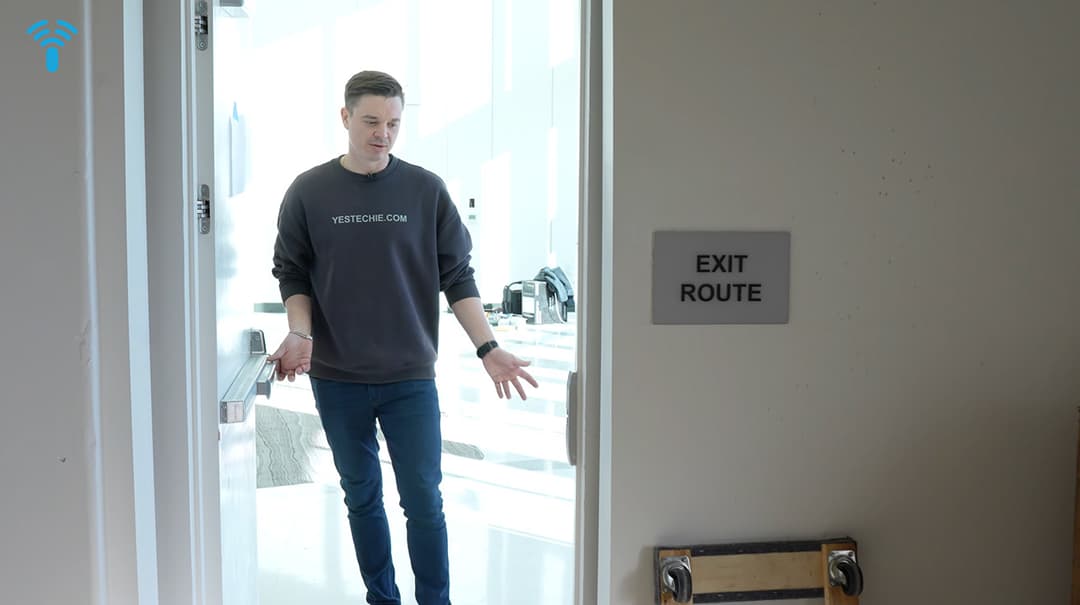
The rationale centers on maintaining physical protection during structural emergencies. Deploying a fail-safe strategy means that if an intruder cuts the building's main power lines or trips a standard exterior breaker box, every single access-controlled door on the property unlocks instantly, completely exposing the client's internal assets.
A fail-secure layout avoids this vulnerability. Because commercial panic exit bars and interior lever trims operate via direct mechanical linkages, a person standing inside the room can always depress the handle to leave the space instantly, completely independent of the lock's electrical state.
This intelligent approach provides uncompromised external defense during utility dropouts while remaining in compliance with municipal life safety regulations. We deploy this precise fail-secure architecture across high-compliance environments, ranging from double-door access control setups for corporate offices to industrial food production automation facilities.
System Demonstration & Field Verification
With both physical locks securely wired and linked to the master hub, our field testing verified instant operational response. When approaching the strike-equipped door, the external UniFi Access Reader holds a secure status indicator. Entering the validated PIN code into the reader capacitive glass activates the 12V relay, and the ASSA ABLOY strike plate releases instantly, allowing entry with zero physical drag.
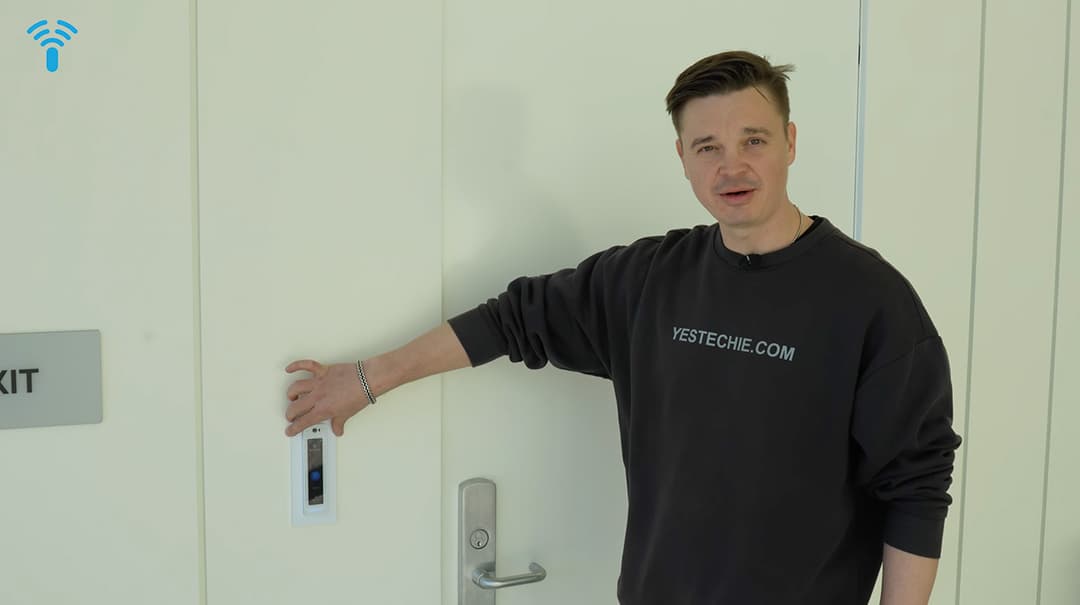
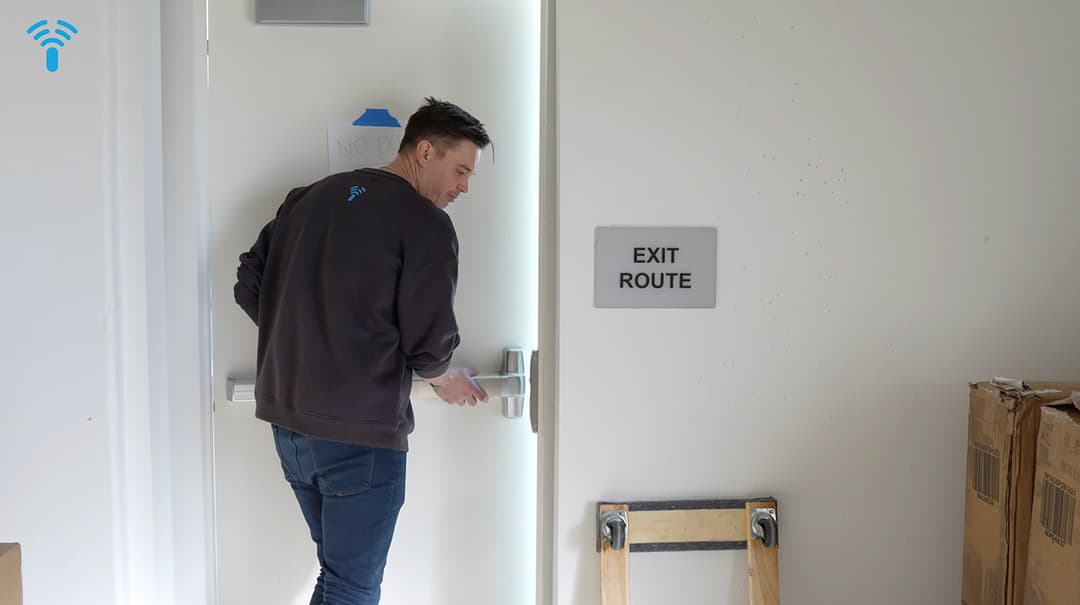
From the secure inside face, exiting requires no badges, tokens, or digital commands. Pressing the horizontal mechanical push bar pulls back the latch mechanically, letting the user exit instantly.
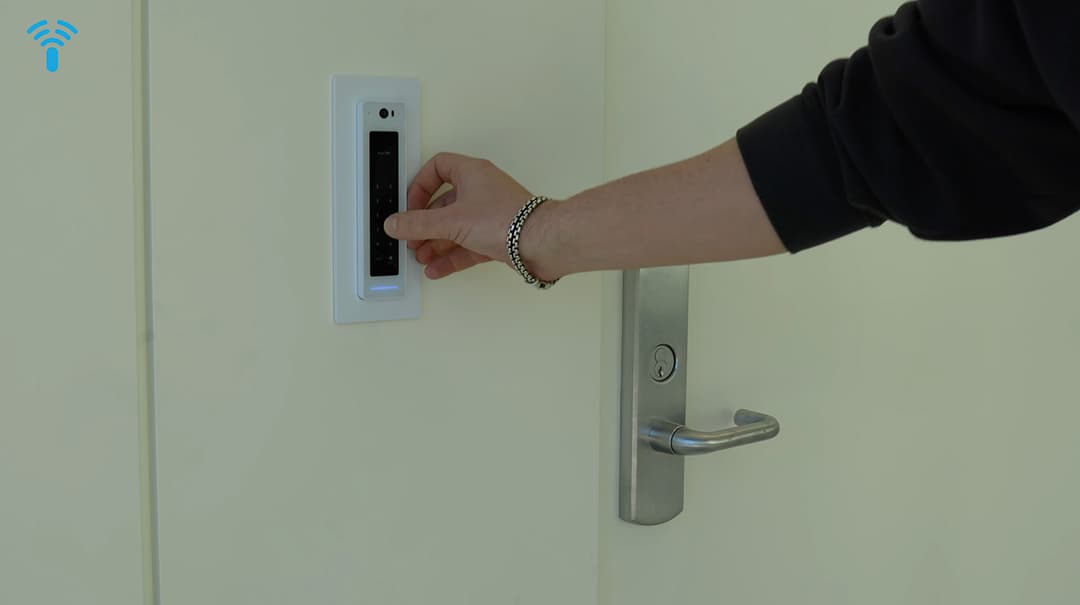
The electrified mortise lock handle operates under the same clean logic. Presenting an authorized credential to the wall reader instantly shifts the internal solenoid state, engaging the outside lever spindle so a visitor can turn the handle downward to enter. From the inside, the lever is permanently connected to the latch retract mechanism, ensuring exit paths remain unblocked during any fire emergency or power interruption.
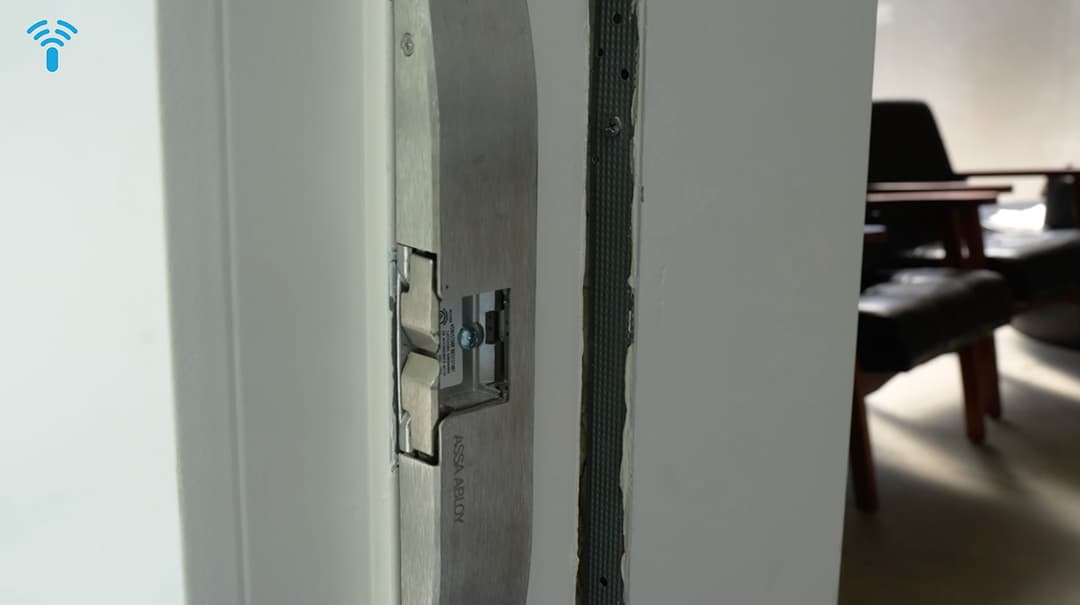
Final Project Assessment & Integration Lessons
The door automation deployment at this video production venue demonstrates a repeatable blueprint for deploying electronic locks without compromising structural fire ratings or building defense:
- Keep Component Voltages Consistent: Selecting 12V DC-rated or auto-switching dual-voltage hardware lets the field team run all locks directly off the UniFi Hub Enterprise terminals, eliminating secondary equipment enclosures and extra transformer points.
- Prioritize Structural Frame Integrity: Leveraging surface-mounted options avoids cutting steel frames on retrofit openings, saving installation labor time and keeping the door assembly's official fire rating intact.
- Isolate Power Transfer Paths: Relying on heavy-duty electrified hinges for mortise devices moves low-voltage power lines out of sight, protecting the wires from wear and deliberate tampering.
- Enforce Clean Access Rules: Grouping hardware configurations under a single UniFi Protect dashboard gives management real-time control over user groups, remote door release toggles, and unified threat level lockouts across multiple facility properties.
Whether you are configuring high-security warehouse loading lines or planning a multi-door corporate modernization, partnering with a certified engineering group ensures your hardware matches your network specs. To evaluate an upcoming security build or learn more about our architectural integration workflows, visit our dedicated commercial low-voltage services portal to schedule an on-site technical inspection and establish a solid, code-compliant foundation for your enterprise safety needs.
About YesTechie
YesTechie is a nationwide systems integrator, headquartered in Los Angeles, specializing in enterprise networking, physical security, access control, and AV automation. As certified UniFi integrators, we design and deploy complete security solutions built on Ubiquiti infrastructure for clients across entertainment, production, logistics, and commercial real estate.
Our door access control projects span offices, warehouses, studios, churches, schools, and multi-tenant facilities. We handle the complete scope from initial assessment through hardware selection, installation, and ongoing support. With experience across hundreds of doors and dozens of building types, we have encountered most door scenarios and developed proven solutions for each.

Partner Perspective
This installation was documented in collaboration with Pipl Systems, who joined us on-site to capture the lock selection and installation process. Oleg Bordiian, founder of Pipl Systems, shared his perspective on why this type of practical content matters for integrators and facility managers evaluating access control options.
“In access control systems, the lock is more than just hardware on a door, especially when it comes to electrified locks that must be properly integrated and reliably work as part of the overall security system.
One of the most common questions we get from viewers is simple and practical: "What electric locks do integrators actually use on commercial projects?"
That's exactly why we joined the YesTechie team, a certified Ubiquiti integrator, on a real job site. In this episode, they walk through several lock types they regularly install and explain which locks go on which doors and why.
The video features solutions the team uses day-to-day in commercial environments: a surface-mounted electric lock from ASSA ABLOY, an electrified mortise lock from Command Access - both integrated with Ubiquiti UniFi Access readers and hubs and installed on a real, working site.”
Read Oleg's full post on LinkedIn.
Ready to Deploy UniFi Access at Your Facility?
Selecting the right locks for UniFi Access can be tricky. Every door is different, and the combination of existing hardware, frame conditions, fire code requirements, and operational needs determines which lock type will work reliably. Getting it wrong means failed inspections, unreliable operation, or expensive rework.
We provide free on-site assessments for businesses considering UniFi Access deployments. Over the past three years, we have encountered nearly every door scenario and developed solutions that work and comply properly. Whether you have push bar doors, lever handles, double doors, or specialty applications, we can help you plan a deployment that works from day one.
Contact YesTechie to discuss your door access control project.
Want to see these specific commercial locks installed and tested in the field? Watch the full setup and live demonstration here:
FAQ: Commercial Lock Engineering & UniFi Compatibility
What specific criteria determine if an electric lock is compatible with the UniFi Access Hub?
The UniFi Door Access Hub Enterprise delivers a regulated 12V DC power output for connected lock hardware. To ensure direct compatibility, the specified lock must be explicitly rated to operate on a 12V DC configuration or contain a dual-voltage (12V/24V DC) auto-adjusting coil. Connecting a strict 24V DC industrial lock to the standard UniFi terminal will result in a failure to release, as the hub's native voltage lacks the strength to pull the internal locking mechanism.
Why is fail-secure deployment preferred over fail-safe options for enterprise properties?
Fail-secure locks keep the property fully protected if the building loses power, as the mechanism requires an active electrical charge to unlock from the outside. Because commercial panic exit bars and inner door levers release the locking latch through direct mechanical connections, building occupants can still leave the space instantly during an emergency. Fail-safe options drop all locking power during an outage, completely unlocking your exterior perimeters and exposing your property to unauthorized entry during a blackout.
How do technicians route low-voltage cabling into a swinging mortise lock door without visible wires?
Our installation teams install specialized electrified power transfer hinges. These heavy-duty hinges replace standard commercial door hinges and feature insulated internal wires routed through the steel hinge knuckle. Low-voltage cabling travels out from the wall framework, runs invisibly through the hinge center, and enters a drilled channel inside the door core to power the mortise lock body, leaving zero exposed lines to cut or damage.
Does mounting a surface strike damage or alter fire-rated commercial door frames?
No, and that is a primary advantage of the surface-mounted design. Standard cutout strikes require an installer to use cutting wheels to grind a large pocket directly out of the steel door frame, which voids the manufacturer’s fire certification. A surface-mounted strike anchors directly onto the face of the existing metal frame with standard fasteners, preserving the frame's factory fire rating while cutting down on installation mess.
Do UniFi Access lock arrays require the installation of separate, external power boxes?
If you choose physical locks that match the hub's native 12V DC output, separate external power enclosures are completely unnecessary. The UniFi Door Access Hub Enterprise delivers clean power to drive standard 12V strikes and mortise units directly from its own terminal blocks. Avoiding external power supplies simplifies your hardware footprint, reduces your equipment budget, and eliminates secondary failure nodes in the security closet.