UniFi Protect: Alarm Manager
Originally published July 27, 2025 | Fully Updated & Revised July 30, 2026
EXECUTIVE SUMMARY
A specialized hardware and software breakdown evaluating UniFi Protect Alarm Manager across multi-site commercial, industrial, and high-density event environments. Authored by Lead Systems Engineer Vladimir Chasovskikh, this technical paper analyzes multi-stage conditional logic (AND/OR parameters), AI-driven telemetry triggers, cross-camera PTZ automation, AI Horn active acoustic deterrence, and encrypted Webhook API integrations designed to deliver automated, zero-latency perimeter defense without recurring monthly software fees.
Imagine a security system that goes far beyond recording footage: proactively alerting you to loitering intruders, repositioning cameras to track suspects, activating audio deterrents, and reporting unauthorized access in restricted areas. With AI-driven capabilities and instant notifications, it minimizes false alarms. This is the power of UniFi Protect's Alarm Manager, a feature optimized for commercial environments like warehouses, manufacturing facilities, office buildings, and retail locations.
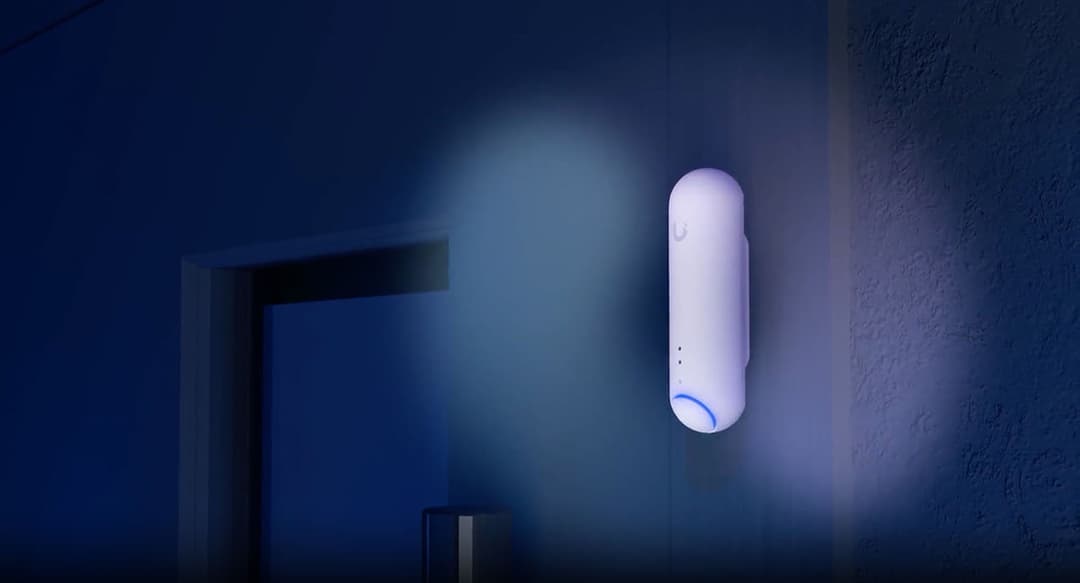
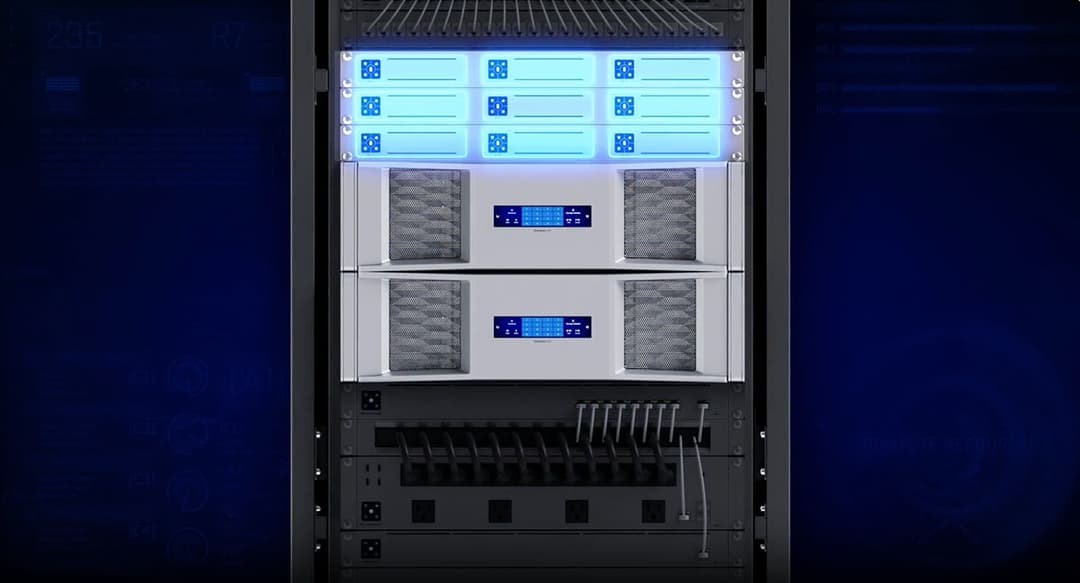
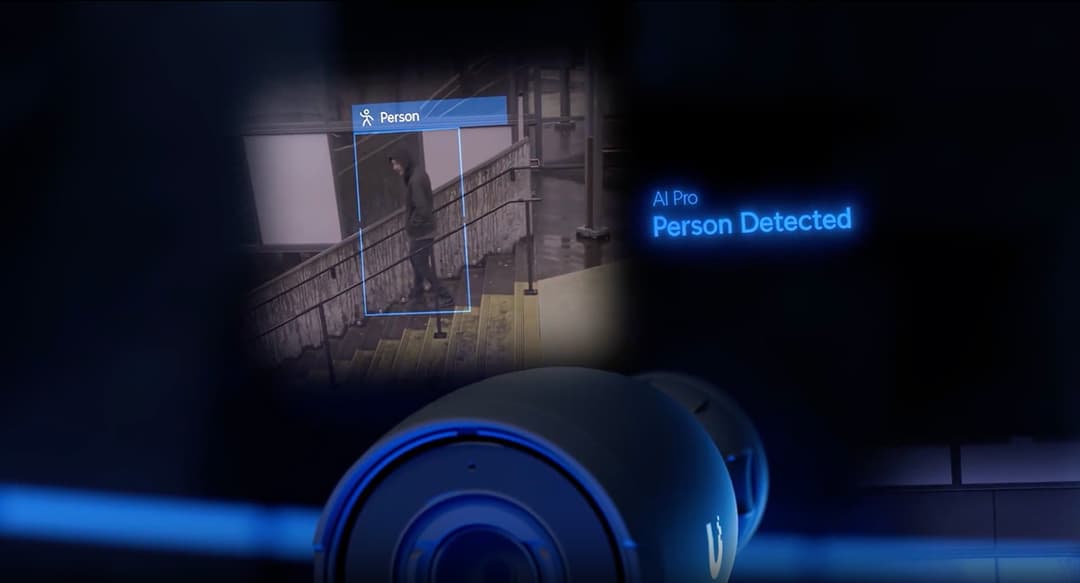
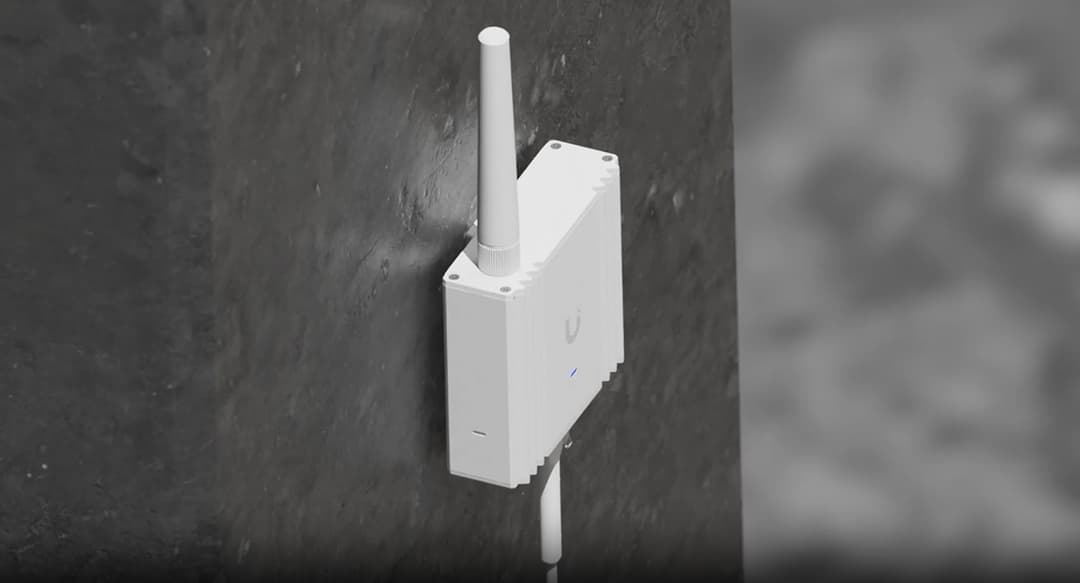
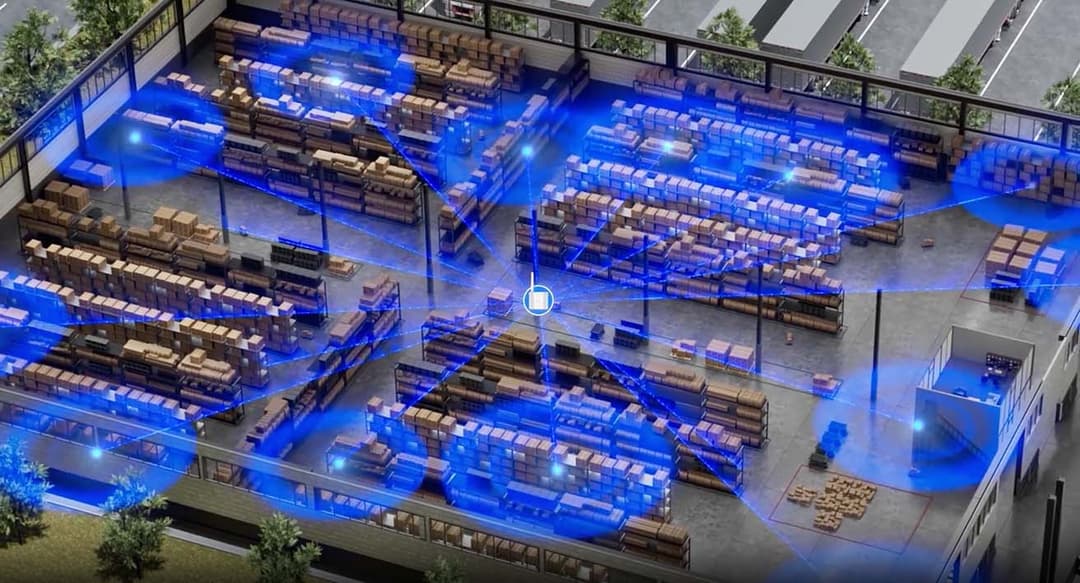
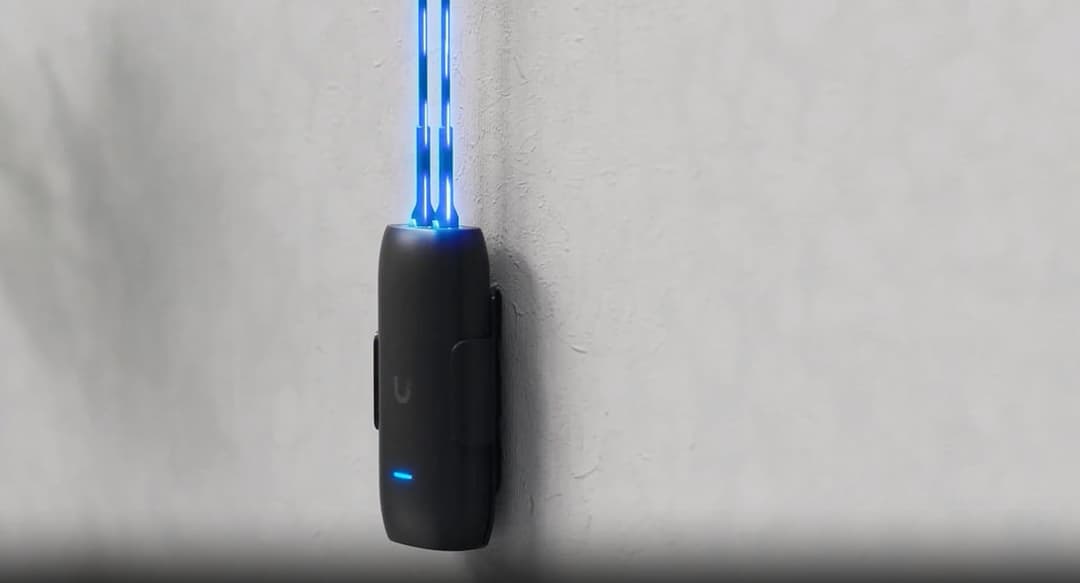
In commercial spaces like warehouses, factories, office buildings, and retail stores, security needs to be smart and reliable. UniFi Protect's Alarm Manager is a key tool that achieves this. It allows you to set up custom rules based on real-time data from cameras and sensors. For example, it uses AI to spot people, vehicles, or unusual activity, then sends alerts or takes actions automatically.

This feature runs entirely on your local UniFi hardware, like the UNVR, UNVR Pro, Enterprise ENVR, or UDM Pro Max, with zero monthly fees. It is part of the broader UniFi ecosystem, working seamlessly with doors, lights, and external tools. In busy environments, it reduces unnecessary alerts, enforces safety compliance, and keeps site operations running smoothly.
How Alarm Manager Works: Logic, Telemetry, and Edge AI
At its core, UniFi Protect's Alarm Manager employs simple yet powerful logic to transform your security setup into a smart, responsive system. It is based on an if-this-then-that approach, where events detected by cameras or sensors trigger automated responses. This helps businesses handle security without constant manual checks.

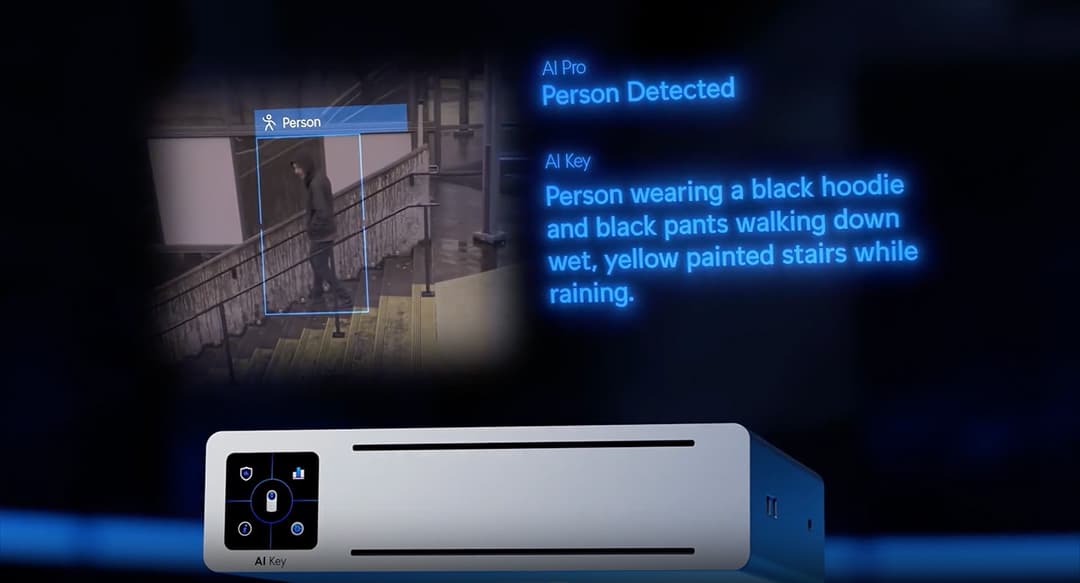
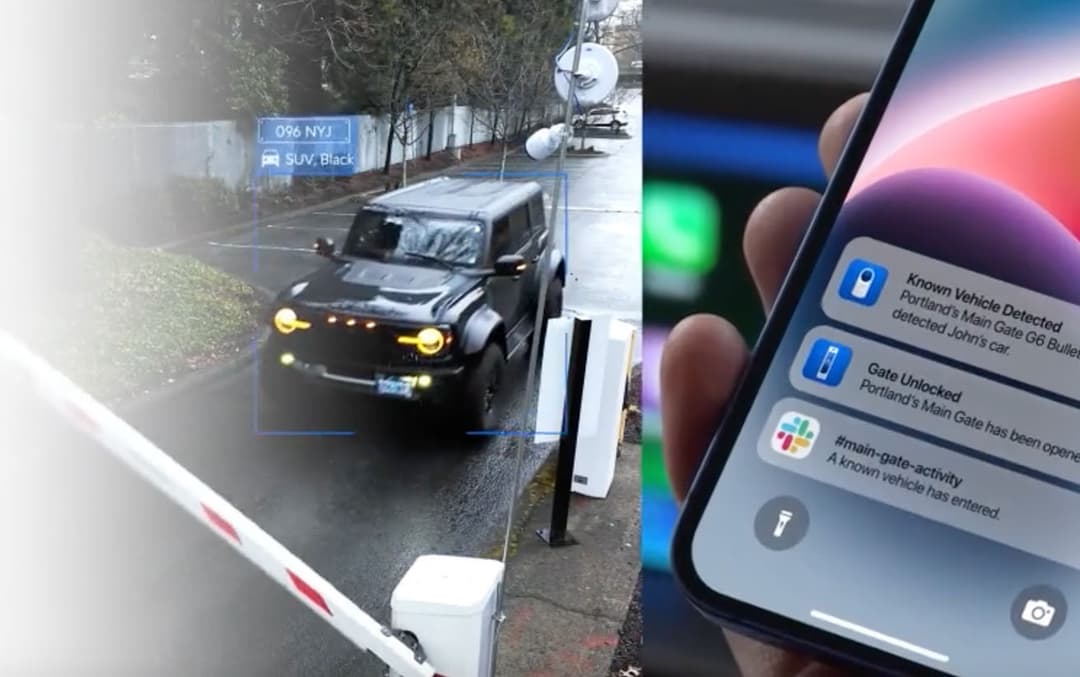
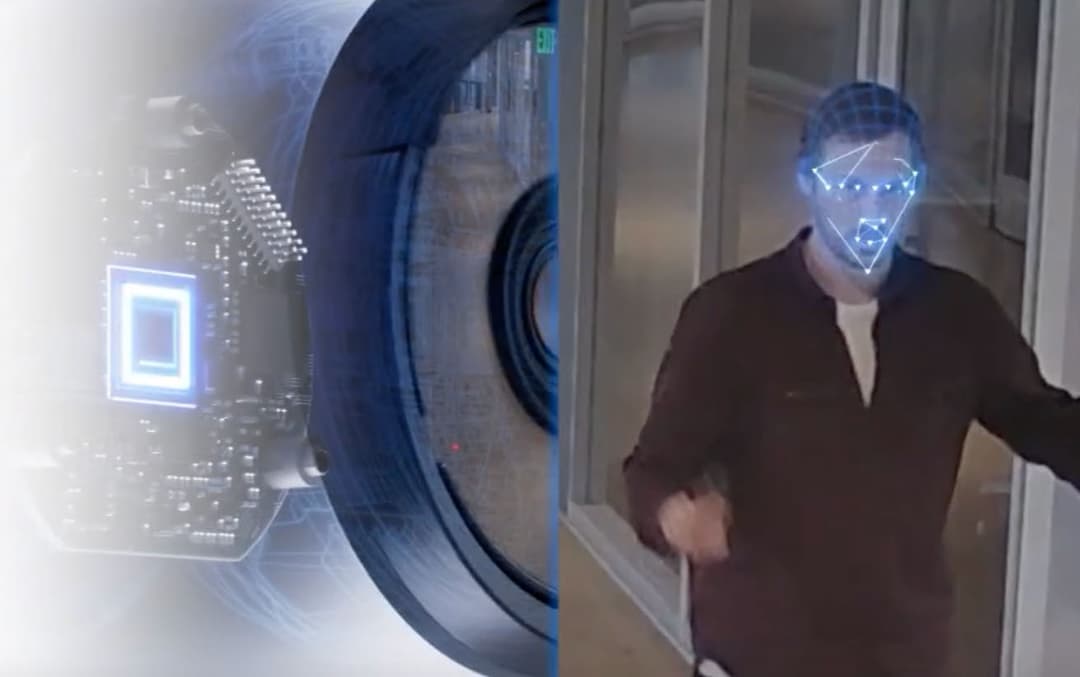
The process starts with triggers. These are real-time events captured by your UniFi cameras or integrated devices. For example, the system can detect motion, a person crossing a line, or specific AI-based details like an unknown license plate entering a restricted area. The Alarm Manager pulls data from camera feeds and sensors, using built-in AI to analyze what is happening. This AI is key because it adds intelligence. It does not just detect movement; it identifies whether it is a person, animal, or vehicle, and evaluates details like dwell time or zone presence. The system also recognizes faces, license plates, vehicle colors, and body types. This enables precise determination of authorized or unauthorized status, allowing tailored actions.
Next comes the rule logic. Once a trigger happens, the Alarm Manager applies custom conditions to decide if it is worth acting on. Advanced updates introduced multi-factor "AND" logic, so you can combine multiple factors. For instance, an alert might only fire if there is loitering AND it involves unknown faces. Or line crossing (entry/exit from parking) AND it is an unknown vehicle. This filtering significantly reduces false alarms by focusing strictly on meaningful events. The system also includes options to ignore repeated triggers within a set time (hysteresis loops), avoiding alert spam in busy commercial areas.

Finally, if the conditions are met, the Alarm Manager executes actions. These can be notifications (app pushes or emails) or automations (such as moving a PTZ camera to track the event or activating floodlights). It can even send and receive data via webhooks to and from third-party systems, unlocking endless possibilities for automation. Everything runs locally on your hardware, so it is fast, secure, and immune to internet dropouts.
In commercial settings, this logic scales seamlessly. For a factory, it might monitor machinery zones for unauthorized access, using AI to differentiate workers from intruders. In an office, it can track visitor movement across floors. The Alarm Manager introduces high-precision monitoring, making it ideal for escalating issues quickly while keeping operations smooth. Overall, it is not just reactive: it is proactive, leveraging AI and rules to anticipate and mitigate issues early.
Complete Technical Feature Index: Triggers and Actions
Here is the exhaustive list of triggers available within the platform, grouped by operational category:
Identification (ID):
- Faces: Unknown Faces, Known Faces, Person of Interest (POI), Specific Face.
- License Plate Recognition (LPR): Unknown Vehicles, Known Vehicles, Vehicle of Interest (VOI).
Objects:
- Person, Animal, Package, Vehicle.
Activity:
- Line Crossing, Loitering, Motion.
- Access Control & Doorbell Interactivity: NFC Card Scan, Fingerprint Scan (on Doorbell/Readers), Button Ring (from Intercom or Reader).
- Sound Recognition Engine: The system actively recognizes distinct acoustic signatures including Speaking, Baby Crying, Barking, Carbon Monoxide (CO) Alarm, Smoke Alarm, Car Horn, Glass Breakage, Siren, and Burglar Alarm.

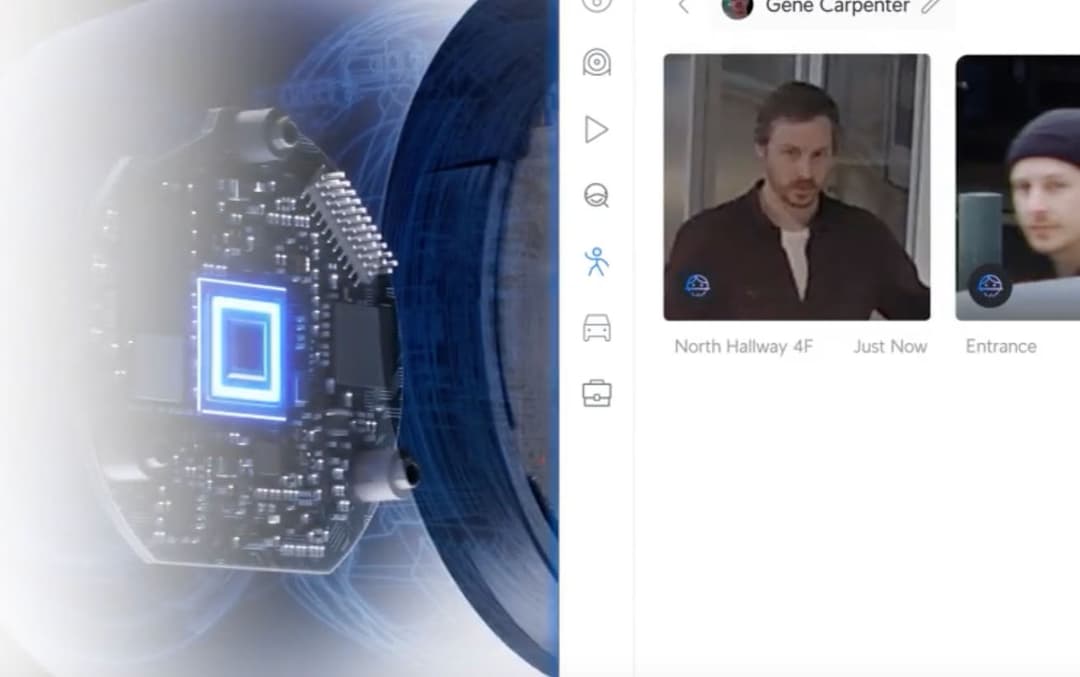
Webhooks:
- Can be activated by any 3rd-party system via API, opening massive opportunities for external integration and custom software logic.
Physical Sensors:
- Motion Sensor, Magnetic Entry Sensor for Door or Window Open/Close, Accelerometer for Garage Door Open/Close, Temperature Sensor, Humidity Sensor, Ambient Light Sensor, Alarm Sound Sensor, Water Leak Sensor.
System Events:
- Geofencing, Device Issue, Admin Access, Manual or Automated Deletion of Footage, Storage Disk Alerts.
AI Key Integration:
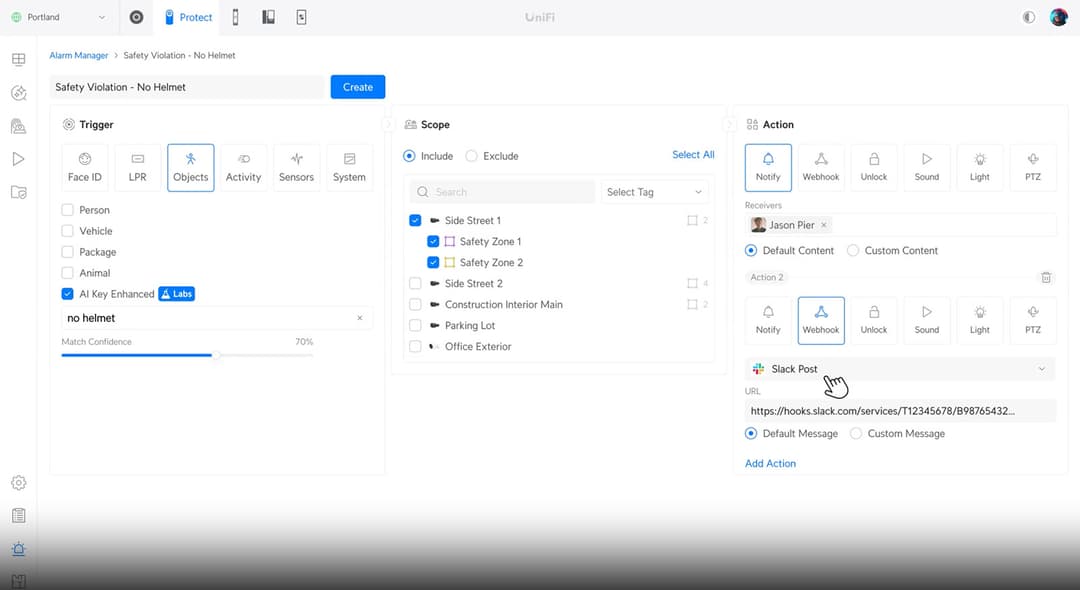
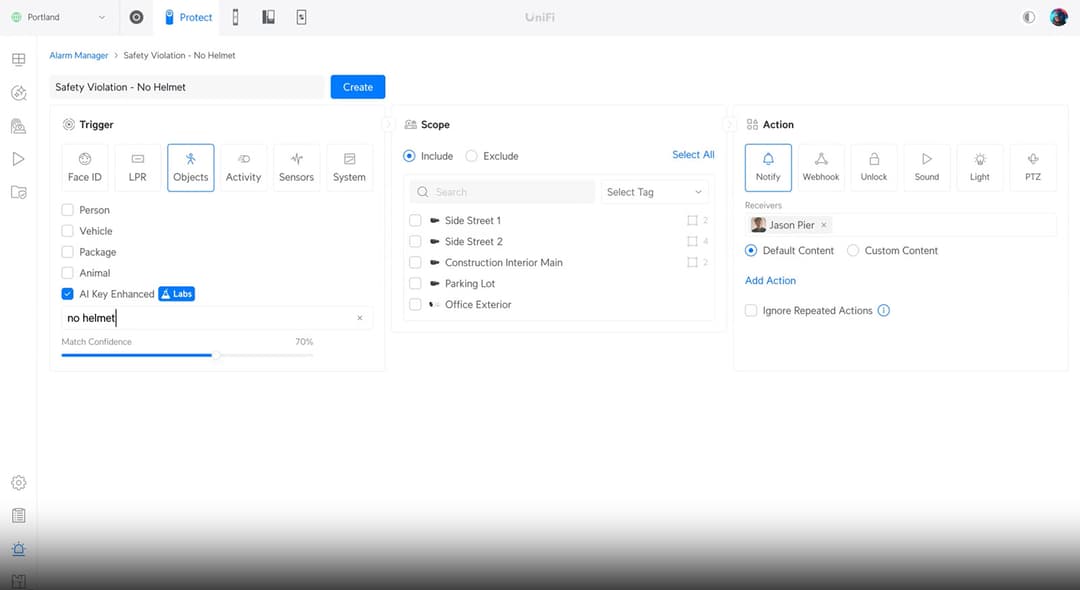
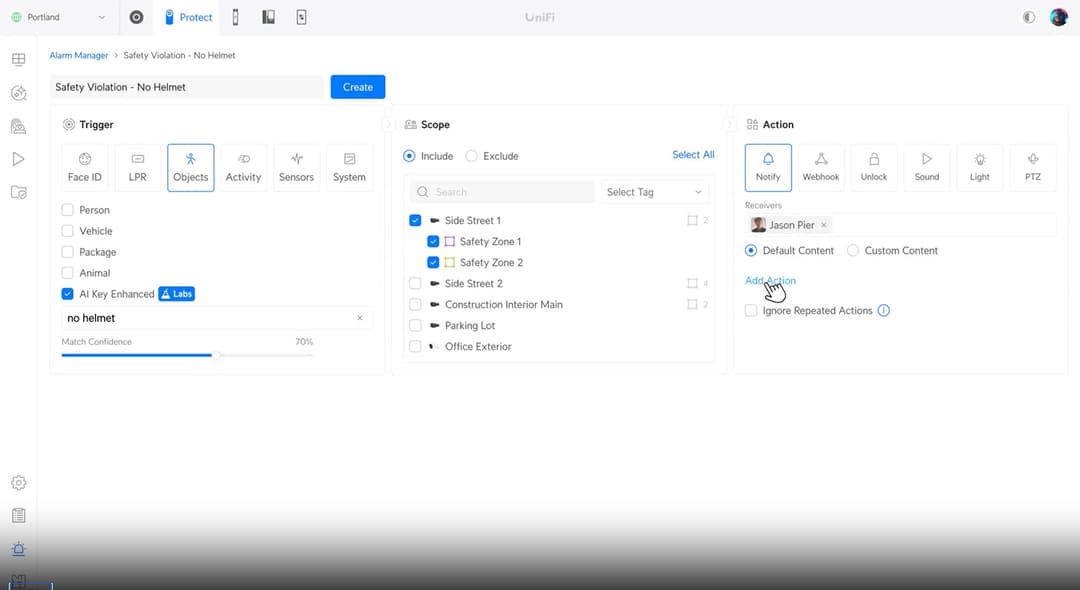
It is important to highlight the additional AI Triggers that become available when pairing the system with the UniFi AI Key hardware unit. These triggers unlock advanced analytics, such as detecting whether a worker in a warehouse loading zone is wearing required high-visibility reflective vests or hard hats (PPE compliance), triggering immediate warnings if safety gear is missing.
Available System Actions:
- Notify: Alert a specific user, designated user groups, or all site administrators simultaneously.
- Webhook: Send encrypted JSON data payloads to 3rd-party systems or central monitoring stations.
- Unlock/Lock Door or Gate: Automatically control doors and gates connected to UniFi Access Hubs.
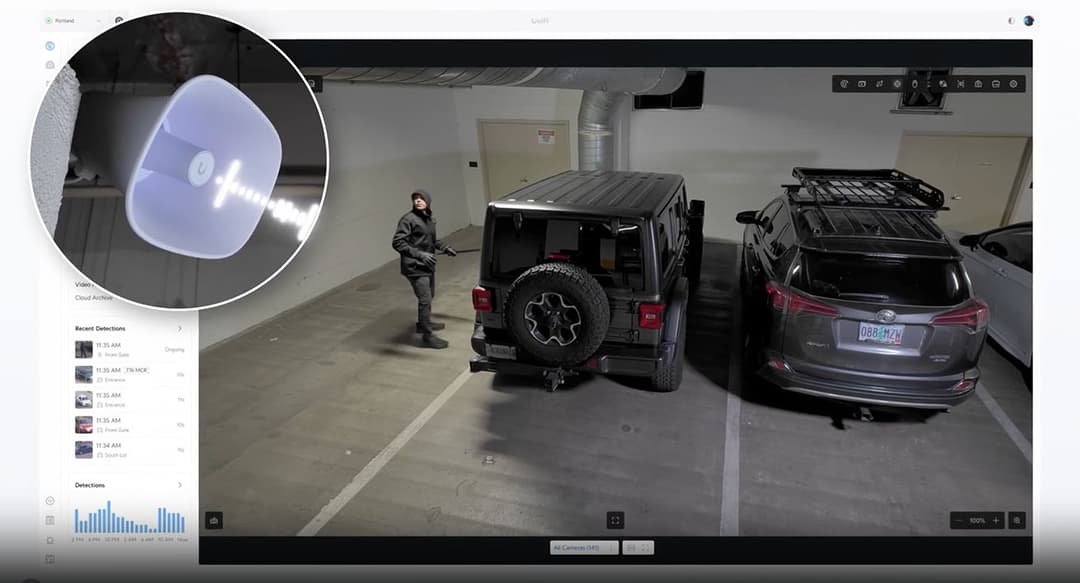
- Sound Alarm: Play custom audio files, police sirens, or pre-recorded verbal messages through Chimes or AI Horn Speakers.
- Light Activation: Trigger floodlights and integrated camera spotlights.
- PTZ Preset Positioning: Command PTZ cameras to instantly swing to specific spatial preset views and track subjects.
- Scheduling: Any combination of triggers and actions can be locked to custom operational timeframes and calendar schedules.

Field Evidence: Real-World YesTechie Deployments
To see how UniFi Protect Alarm Manager handles complex real-world security requirements, here are three field case studies engineered by the YesTechie team:
1. Industrial Perimeter Automation: 77,000 Sq Ft Warehouse (Los Angeles, CA)
The Challenge: Securing an expansive 77,000-square-foot industrial logistics facility with active loading docks and corporate offices. The client required automated perimeter tracking, 90 days of continuous 4K storage, and active threat deterrence without ongoing software seat fees.

Architectural Solution: I engineered a three-node perimeter array on every building corner. Fixed UniFi G6 Pro Bullet cameras provide continuous 4K video capture and run edge AI detection. When an unauthorized person crosses the perimeter line after hours, the Alarm Manager commands an adjacent UniFi AI PTZ Precision camera to swing to a spatial preset and lock onto the target. Simultaneously, the system activates an automated acoustic warning via an IP66-rated UniFi AI Horn Speaker and transmits an encrypted Webhook payload directly to an off-site central station monitoring center.

Measurable Outcome: Reduced false alarms by 95%, achieved a 30-second central station verification loop, and maintained 90 days of continuous local storage on an Enterprise ENVR with zero monthly licensing costs.
Field Tour: Watch the Full Perimeter Automation Walkthrough
2. Event Infrastructure & Active Defense: BlueGround Studios Arena (Los Angeles, CA)
The Challenge: Converting a massive warehouse into a high-density venue for concerts, film crews, and festivals like Reframe. The system required strict network isolation between guest Wi-Fi, editing subnets, and security backbones.
Architectural Solution: Our team installed a 25G-ready fiber backbone driven by dual Enterprise Gateways in High-Availability Shadow Mode. For perimeter security, we deployed UniFi G6 Turret units paired with AI Horn Speakers and panoramic G6 Pro 360 fisheye cameras over loading bays. Using Alarm Manager logic, if an unauthorized individual approaches the loading bay after hours, the AI Horn Speaker immediately plays a pre-recorded verbal warning. All camera data runs on an isolated Operational Security VLAN.

Measurable Outcome: Successfully supported thousands of concurrent festival attendees while maintaining 100% camera uptime, zero network drops across POS lines, and automated loading bay protection.
3. High-Security Facility: 12,000 Sq Ft Storage & Vault Hub
The Challenge: Modernizing a 12,000-square-foot logistics site suffering from parking lot blind spots, inconsistent Wi-Fi, and a complete lack of access control automation.
Architectural Solution: We installed an Enterprise ENVR with 24TB enterprise hard drives, 7 AI LPR cameras covering driveways, 17 AI Turret units inside, and 4 high-speed AI PTZ Industrial cameras. The Alarm Manager was calibrated for cross-camera tracking: if an AI LPR camera spots an unknown vehicle or an AI Turret detects loitering within 10 feet of the fence, the system commands the AI PTZ cameras to auto-track the subject across the entire lot while triggering AI Horn audio alerts.

Measurable Outcome: Achieved 100% perimeter visibility, reduced security staffing requirements by 30%, and automated perimeter threat tracking with zero human intervention.
From a network architecture standpoint, native Alarm Manager logic replaces expensive third-party video analytics middleware, turning raw surveillance feeds into a self-executing physical defense system.
UniFi Protect Alarm Manager vs Traditional & Subscription-Based Systems

For quick reference and mobile accessibility, here is the text-based breakdown of the UniFi Protect Alarm Manager vs. Traditional & Subscription-Based Systems comparison matrix shown in the image above:
UniFi Protect Alarm Manager Platform (Edge AI On-Premises)
- Event Detection Engine: Edge AI Neural Analytics (Human, Vehicle, LPR, Dwell Time, AI Audio Signatures).
- Response Automation: Native PTZ tracking presets, AI Horn sirens, door locks, and Webhook APIs.
- Software Licensing Model: $0 Monthly Fees (100% License-Free On-Premises Core).
- Processing Architecture: Sub-second local execution on UDM Pro Max or Enterprise ENVR hardware.
- System Integration Depth: Single-Pane native integration across Network, Protect, Access, and Intercom.
- False Alarm Mitigation: Multi-stage AND logic filtering, loitering duration thresholds, optical masking.
Traditional & Subscription-Based Systems (Cloud / Legacy)
- Event Detection Engine: Basic PIR motion sensors, pixel-change video motion, or cloud-bound AI processing.
- Response Automation: Passive recording, basic relay contact closures, delayed central station phone calls.
- Software Licensing Model: High recurring monthly fees per camera, per sensor, and cloud software seat.
- Processing Architecture: Cloud-dependent processing subject to internet latency, bandwidth, and outages.
- System Integration Depth: Fragmented third-party hardware siloes requiring complex relay wiring.
- False Alarm Mitigation: High false alarm rates or heavy cloud-processing costs to filter noise.
Architectural Breakdown: Why Local Edge Logic Outperforms Cloud and Legacy Siloes
Evaluating enterprise alarm systems requires looking beyond hardware specifications to analyze event-to-action latency, long-term operational costs (TCO), and system autonomy.
1. Deterministic Sub-Second Execution vs. Cloud Latency
Traditional cloud-based surveillance platforms (such as Verkada or Eagle Eye) route video metadata to off-site cloud servers before evaluating alarm triggers. In real-world security scenarios, this introduces bandwidth throttling, ISP-dependent latency, and catastrophic failure risks during internet outages.
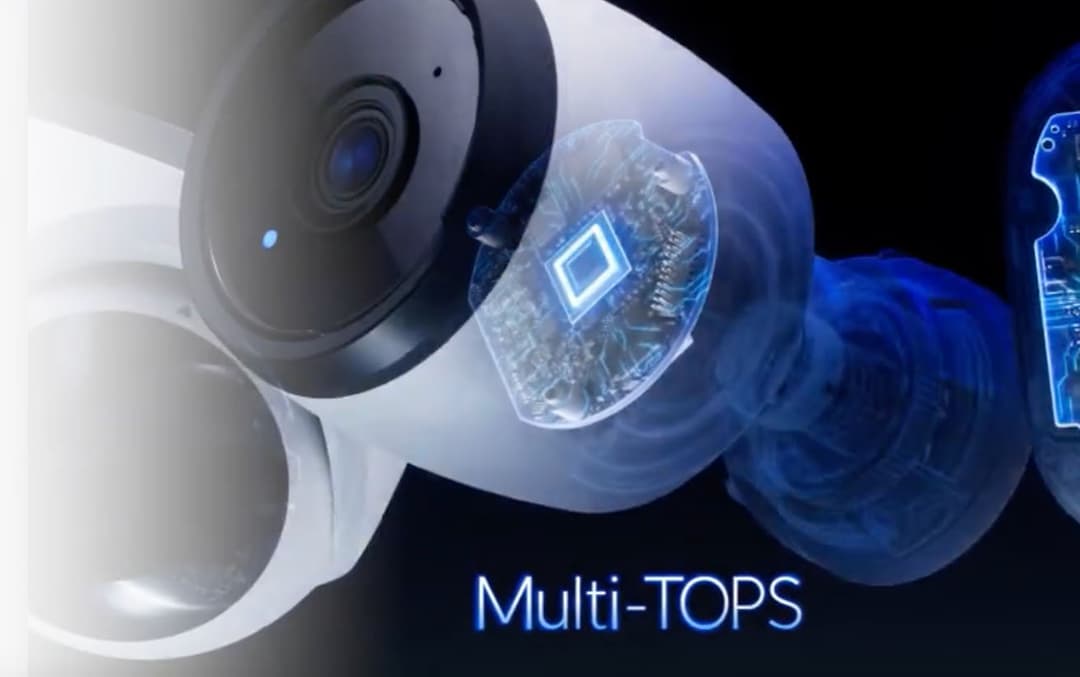
UniFi Protect’s Alarm Manager executes all neural-network classification, multi-condition evaluation, and hardware actions locally on enterprise consoles (such as the UDM Pro Max or Enterprise ENVR). By keeping processing on the local switching backbone, event triggers execute with sub-second latency (100–300 ms), ensuring PTZ tracking cameras swing and AI Horn deterrence sirens activate immediately when a line breach occurs.
2. Advanced Multi-Stage Filtering (AND Logic) vs. PIR False Alarms
Legacy alarm systems depend heavily on passive infrared (PIR) sensors or basic pixel-change motion detection. In industrial yards, these analog methods flood security teams with false alerts caused by wind, passing headlights, rain, or animals.
Alarm Manager solves this by introducing multi-factor conditional logic. Engineers can build strict parameters—such as requiring [Person Detection] AND [Loitering > 15 Seconds] AND [Time = After Hours] before an action fires. Furthermore, built-in re-trigger suppression timers (hysteresis loops) prevent repetitive notification spam during ongoing active incidents.

3. Single-Pane Interoperability vs. Fragmented Middleware
Standard commercial security installations historically required patching together separate systems: an analog alarm panel from one vendor, video cameras from another, and an access control platform from a third, linked via messy relay wiring or fragile software APIs.
UniFi Protect operates within a unified software stack. A single trigger detected by an AI LPR camera or Smart Sensor can simultaneously command an AI PTZ to track, trigger an AI Horn speaker to emit a siren, unlock a designated UniFi Access door, and transmit an encrypted JSON Webhook payload directly to a central monitoring station—managed entirely from one administrative interface.
4. Absolute TCO Control: License-Free On-Premises Core
While legacy and cloud platforms charge escalating monthly subscription fees per camera, per sensor, and per user seat, UniFi operates on a 100% license-free model. Commercial facility owners retain absolute data privacy, full remote monitoring capabilities, and complete access to software and AI updates without ongoing overhead, maximizing long-term ROI.
Conclusion: Proactive Enterprise Security Without Subscription Overhead
UniFi Protect's Alarm Manager advances integrated security by using AI-driven triggers, rule-based logic, and automated responses to provide robust, scalable protection in commercial settings like warehouses, factories, office buildings, and retail stores. It goes beyond traditional video surveillance by correlating events precisely and escalating responses, supporting operational efficiency and compliance with minimal manual oversight.
The flexible combinations of Alarm Manager configurations allow users to customize the system for various needs, from detailed access control to effective threat mitigation. Webhooks further enable automation, supporting integration with external platforms and APIs for tailored workflows.
In summary, Alarm Manager makes UniFi Protect an invaluable tool for enterprise security, running fully on-premises for low latency and complete data control, with no ongoing subscription fees. For those looking to fine-tune their setup, the engineering team at YesTechie offers deep experience in tailoring UniFi Alarm Manager to meet specific physical operational challenges.

Partner With YesTechie Engineering
Our certified Ubiquiti integrators design, deploy, and configure end-to-end commercial security arrays tailored to your specific physical layout and local codes. From high-capacity fiber backbones and Enterprise ENVR storage arrays to custom Webhook integrations and AI Horn calibration, we ensure your facility operates with absolute structural confidence.
If your facility relies on passive recording or is burdened by high monthly software subscription fees, contact the YesTechie engineering team today to schedule an on-site technical layout consultation and build an automated, license-free defense network.
Frequently Asked Questions (FAQ)
1. How do stationary UniFi cameras communicate with PTZ units inside Alarm Manager?
This cross-camera orchestration is managed natively in the Protect Alarm Manager interface. A fixed camera (such as the G6 Pro Bullet or AI Turret) runs continuous edge AI object classification. When it detects a human or vehicle entering a restricted zone, it transmits telemetry coordinates across the local network to an adjacent UniFi AI PTZ camera. This command forces the PTZ unit to interrupt its standard patrol, swing to the target coordinate, zoom in, and track the subject.
2. Does UniFi Protect Alarm Manager require a monthly subscription fee?
No. UniFi Protect operates on a completely license-free model. All AI analytics, Alarm Manager rule configurations, PTZ tracking loops, mobile push notifications, and Webhook integrations run locally on your UniFi hardware with zero recurring monthly fees.
3. Can Alarm Manager send alerts to professional off-site monitoring centers?
Yes. Using native Webhook integrations, the UDM Pro Max or UNVR Pro transmits encrypted JSON data payloads over HTTPS directly to third-party central station monitoring services the moment an alarm rule is tripped, enabling rapid police dispatch.
4. How does Active Deterrence prevent trespassers before a physical breach occurs?
Active Deterrence combines edge AI loitering detection with immediate acoustic responses. By linking AI cameras to UniFi AI Horn Speakers, the Alarm Manager automatically plays high-decibel sirens or pre-recorded verbal warnings (e.g., "Warning: This restricted area is under active video surveillance") the moment an individual lingers in a zone past a specified duration.
5. What happens to the Alarm Manager automation loops if the building loses internet connectivity?
Because all video analytics, rule processing, and hardware action commands execute locally on your internal UniFi gateway and switching layer, the automated security loops (PTZ tracking, AI Horn sirens, door locks) continue to function perfectly during an internet outage.