Breaking Free from Endless Subscriptions: Why Smart Enterprises Are Switching Video Surveillance to UniFi in 2026
Originally published March 9, 2026 | Fully Updated & Revised July 28, 2026
EXECUTIVE SUMMARY
A first-person technical and financial evaluation comparing license-free Ubiquiti UniFi Protect architecture against subscription-heavy physical security ecosystems (Verkada, Avigilon) at scale. Grounded in my multi-year field telemetry and structured intake surveys of over 200 corporate infrastructure clients, this paper analyzes 5-year Total Cost of Ownership (TCO) matrices, edge AI automations, local compute redundancy, and custom migration protocols.
Over my years designing, building, and auditing physical security networks for corporate clients, I have noticed a troubling trend among IT directors and chief security officers. What originally begins as a straightforward capital investment into enterprise surveillance quickly mutates into an unpredictable, compounding operating expense. This budgetary drain is driven by mandatory per-camera cloud licensing, forced software maintenance agreements, and rigid vendor lock-ins that penalize organizational growth.
When we founded YesTechie Corp, we did so with a zero-tolerance policy for engineering inefficiencies and predatory billing cycles. After reviewing multi-year telemetry data from our deployments and executing comprehensive onboarding surveys with our enterprise accounts, I decided to write this definitive breakdown. Modern on-premise hardware can now match or exceed cloud-dependent features without the perpetual subscription overhead. This document outlines how I architect these high-performance, subscription-free surveillance networks to maximize both operational uptime and financial return.
1. Compute Architecture: Cloud Dependency vs. Edge-Local Redundancy
Subscription-locked surveillance platforms heavily promote an "NVR-free" cloud-only architecture, pushing processing and long-term recording directly onto individual cloud-managed edge cameras. However, as an engineer, I view this architecture as a massive point of failure regarding network saturation and operational downtime during critical internet outages. When WAN connectivity degrades, cloud-native cameras frequently lose primary live-view capabilities, real-time alert distribution, and off-site synchronization unless you purchase an expensive localized backup appliance alongside recurring sub-licenses.
My architectural philosophy relies on high-performance local processing and localized storage arrays via Enterprise Network Video Recorders (ENVR). In the UniFi Protect framework, all critical security functions, including live rendering, multi-channel synchronous playback, and machine-learning analytic generation, operate 100% locally at the hardware level. Primary operations remain fully active during complete ISP failures, preserving local monitoring and continuous recording integrity.
.jpg&w=1080&q=75)
Field Evidence: High-Density Industrial Scaling at CCFF
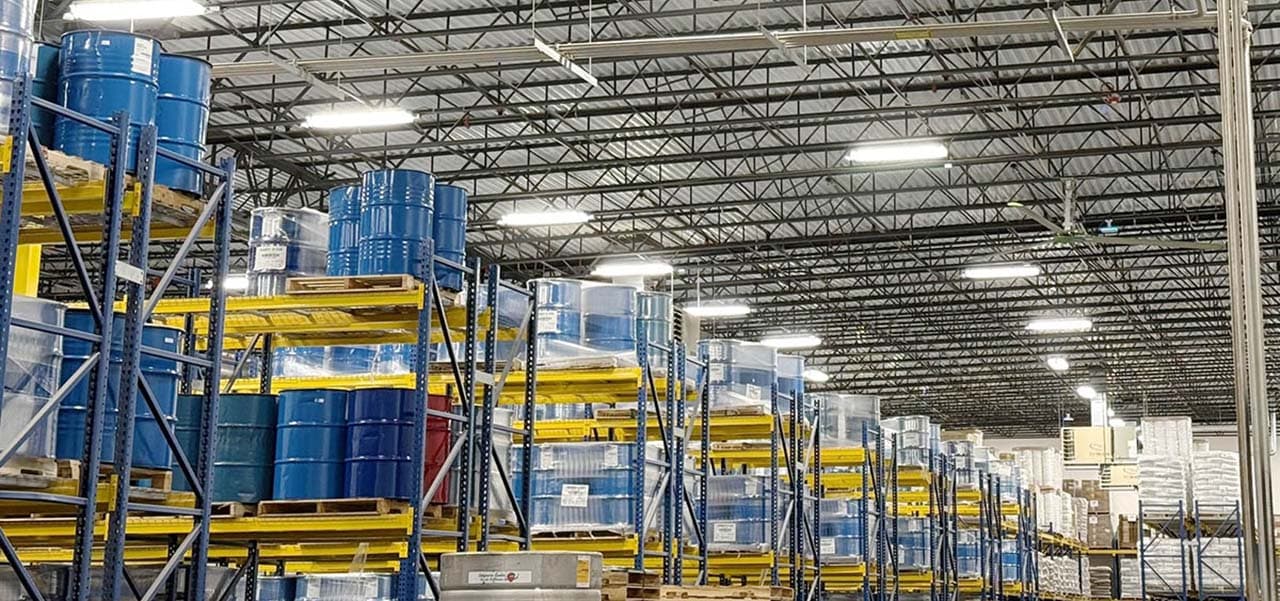
When I spearheaded the massive infrastructure modernization for the food processing manufacturer California Custom Fruits & Flavors (CCFF) across their facilities in Irwindale, CA and Greenwood, IN, I deployed 180 high-definition G6 Turret cameras. To manage this massive data throughput without saturating their corporate networks, my team and I installed two ENVR units per facility. Each unit was populated with 16 hot-swappable 24TB enterprise hard drives configured in a fault-tolerant RAID-5 array.
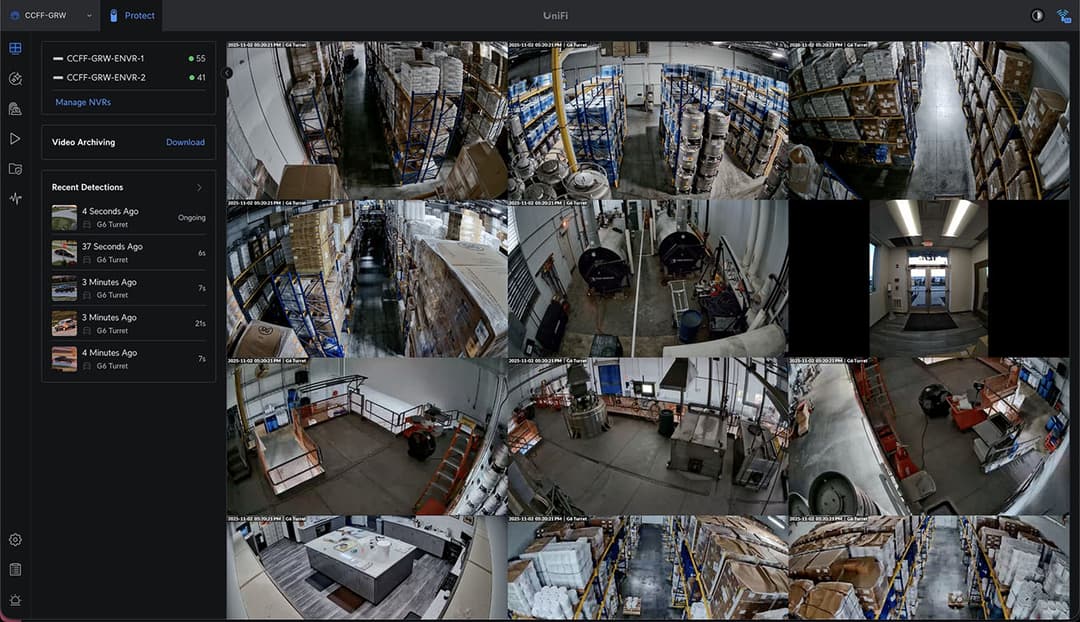
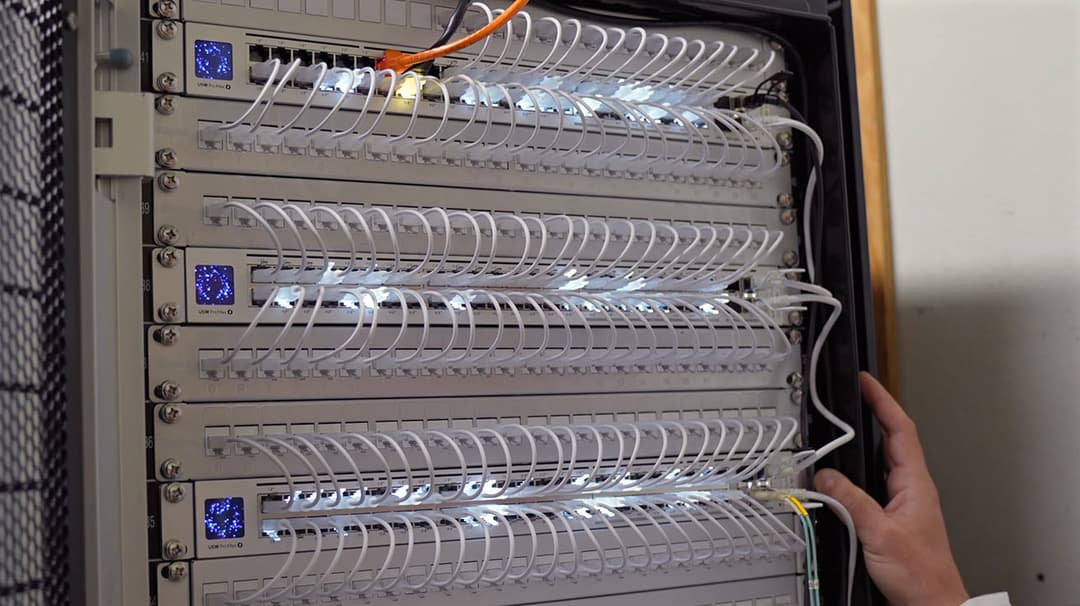
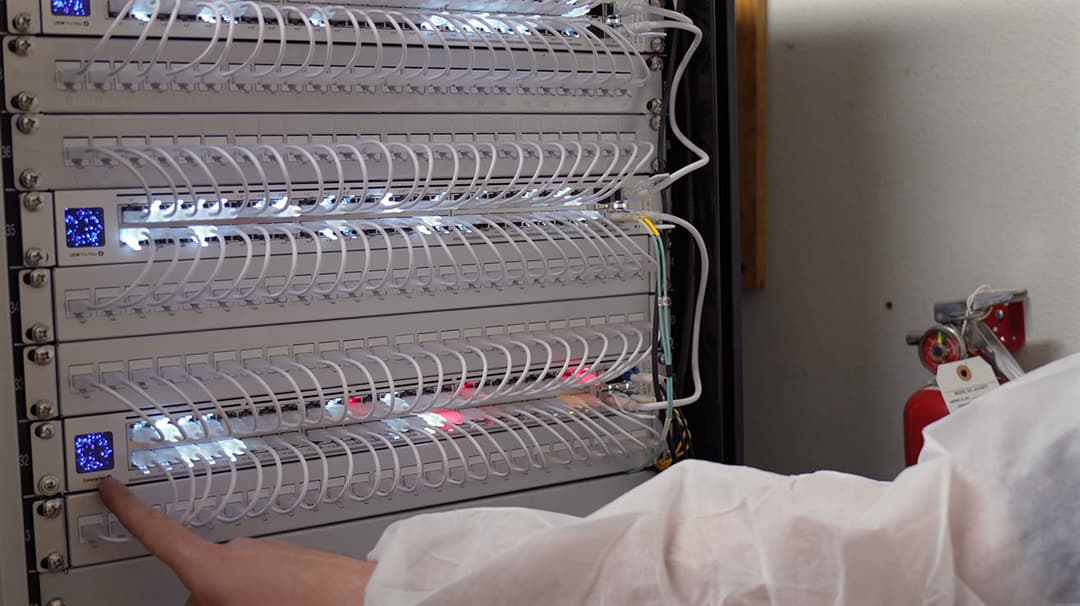
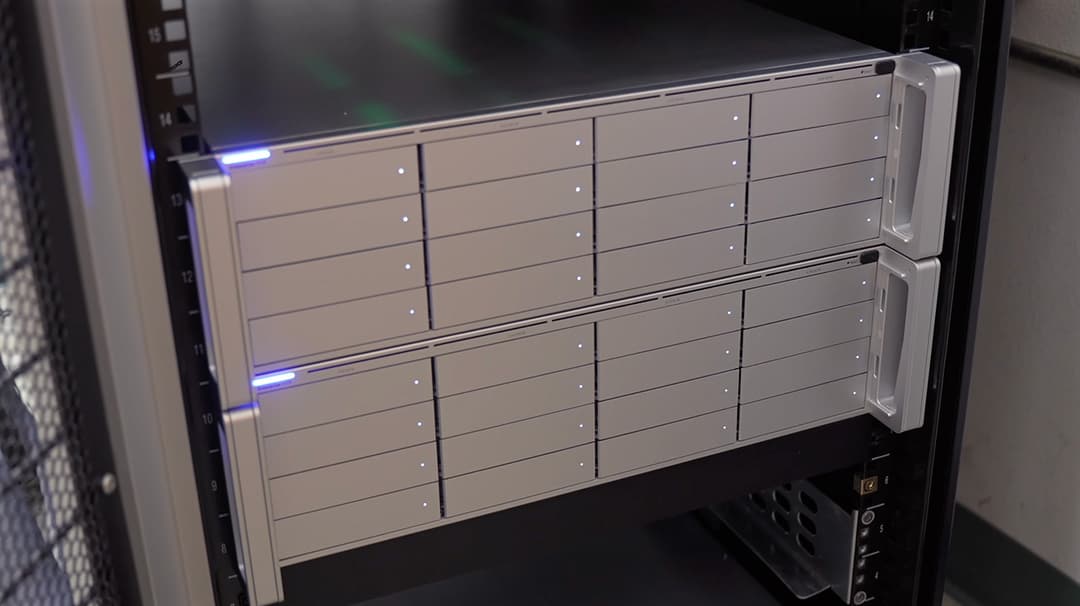
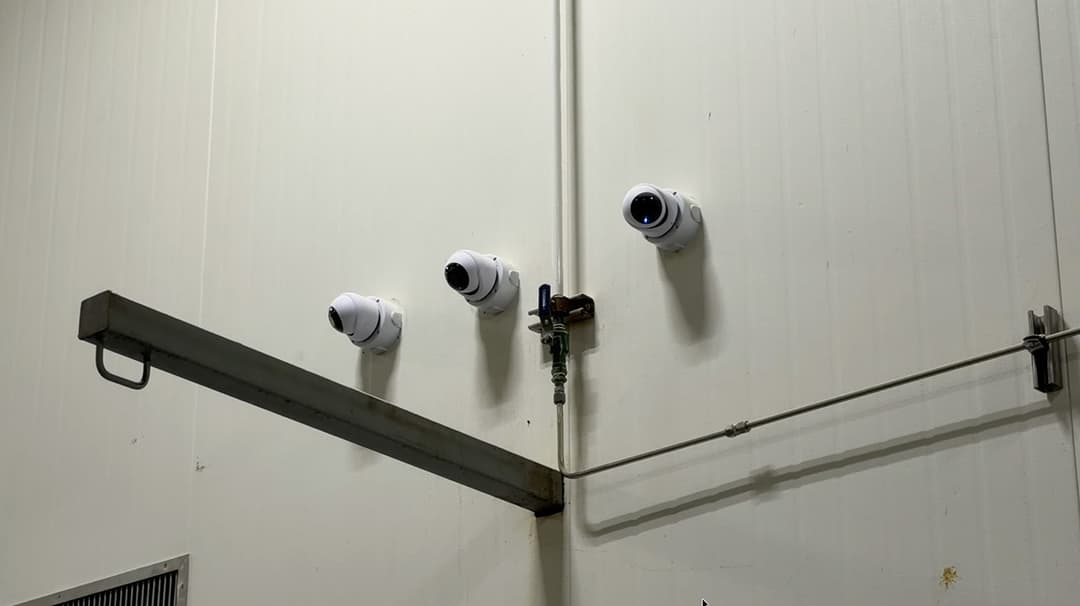
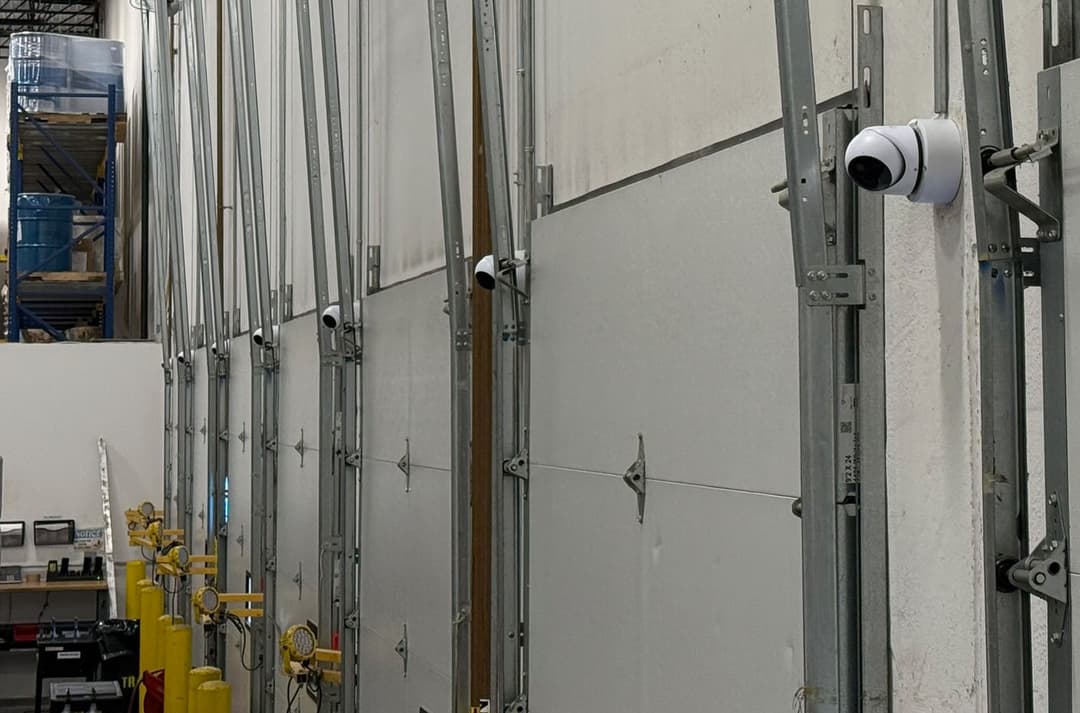
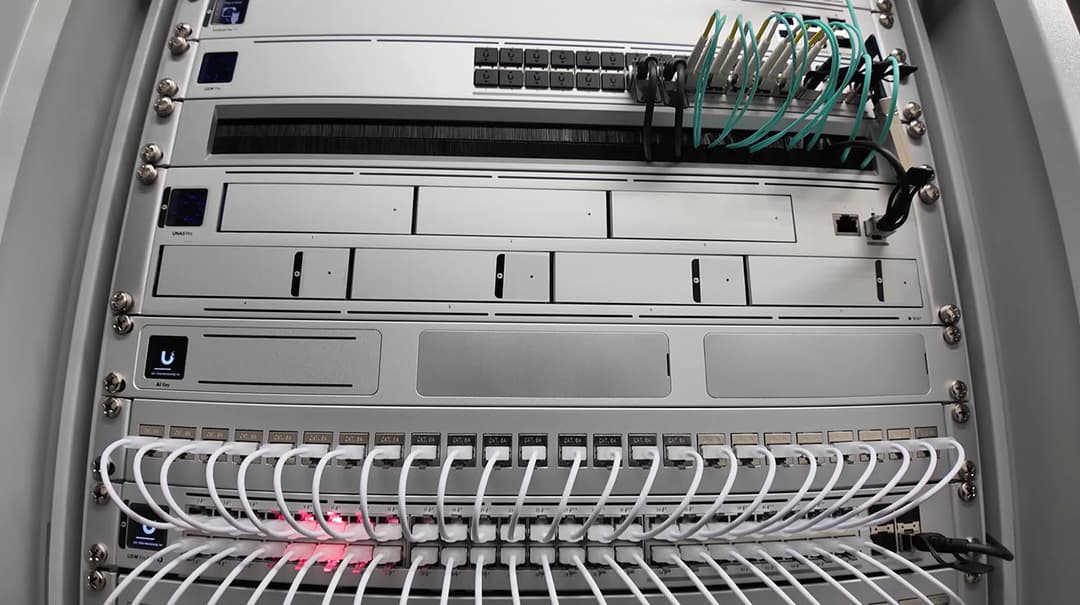
This setup achieved 384TB of raw local storage per unit, guaranteeing over 90 days of continuous 4K video retention to comply with strict food safety auditing standards. By utilizing high-availability Layer 3 networking via UniFi Enterprise Campus 48 PoE switches (delivering a 2150W PoE budget and 25G SFP28 uplinks), the architecture maintains sub-1ms internal latency while completely bypassing external cloud data consumption.
2. Computer Vision & Intelligent Perimeter Automation
I have consistently argued that computer vision analytics should not be held hostage behind a premium software subscription tier. Legacy platforms routinely charge extra for basic features like License Plate Recognition (LPR), facial categorization, and object zoning. In my deployments, edge-compute AI is treated as a standard, baseline capability embedded into the hardware.
UniFi Protect integrates machine-learning processing directly into the camera silicon and localized recording engines. This localized processing architecture executes complex pattern recognition without sending video feeds to external cloud servers, drastically decreasing response latency and removing any cloud attack surface for sensitive corporate data. Through the UniFi Protect Alarm Manager, I configure these AI detections to drive immediate hardware-level automations via dry-contact relays and input/output webhooks to interface with legacy sirens, access gates, or corporate notification systems.
Field Evidence: Automated Cross-Camera Tracking and Deterrence
At a 12,000-square-foot logistics hub and office compound, detailed in my High-Security Warehouse Case Study, I engineered a multi-tier AI surveillance matrix. The perimeter is protected by an integrated combination of 7 AI LPR cameras, 17 AI Turret units, and 4 Industrial AI PTZ cameras featuring 22x optical zoom.
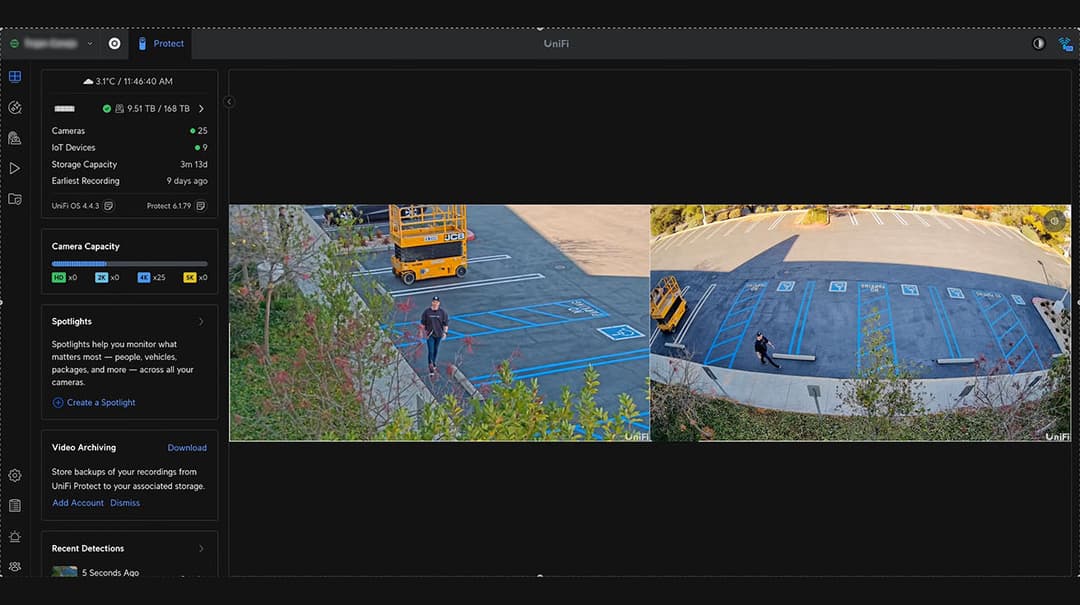
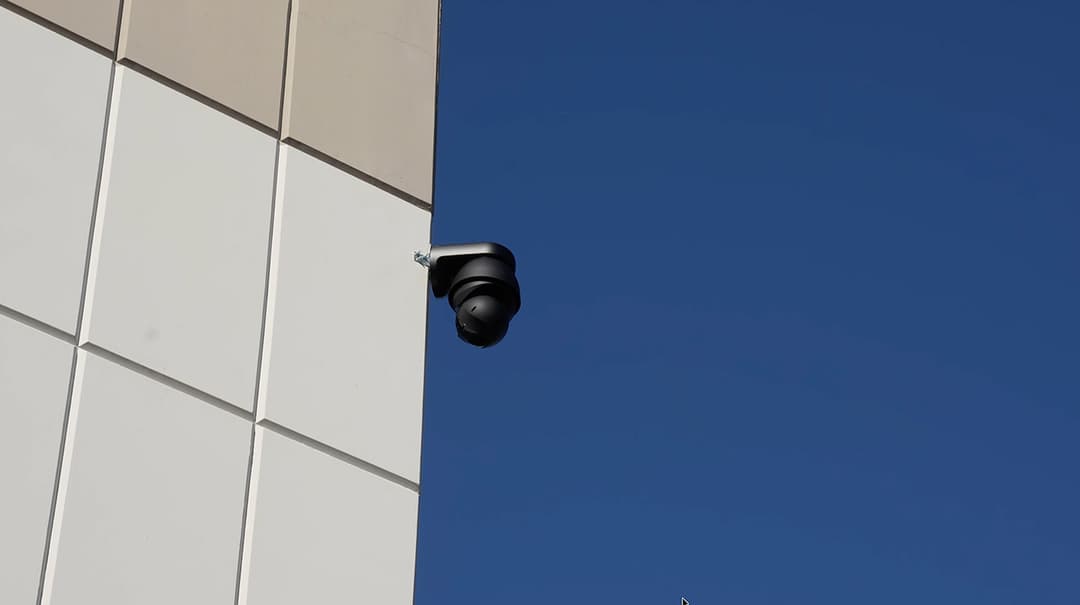
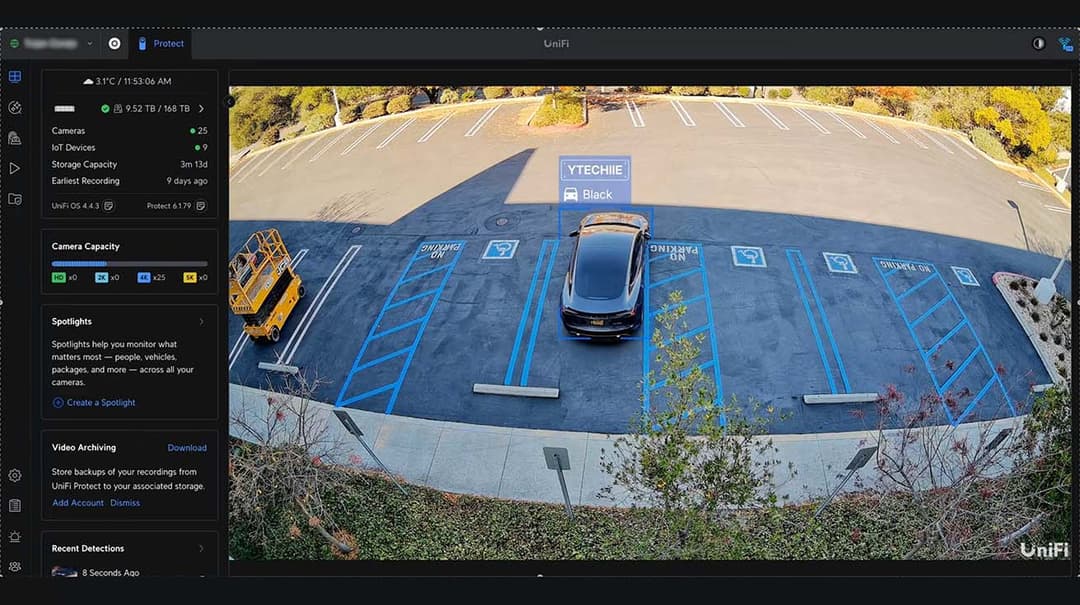
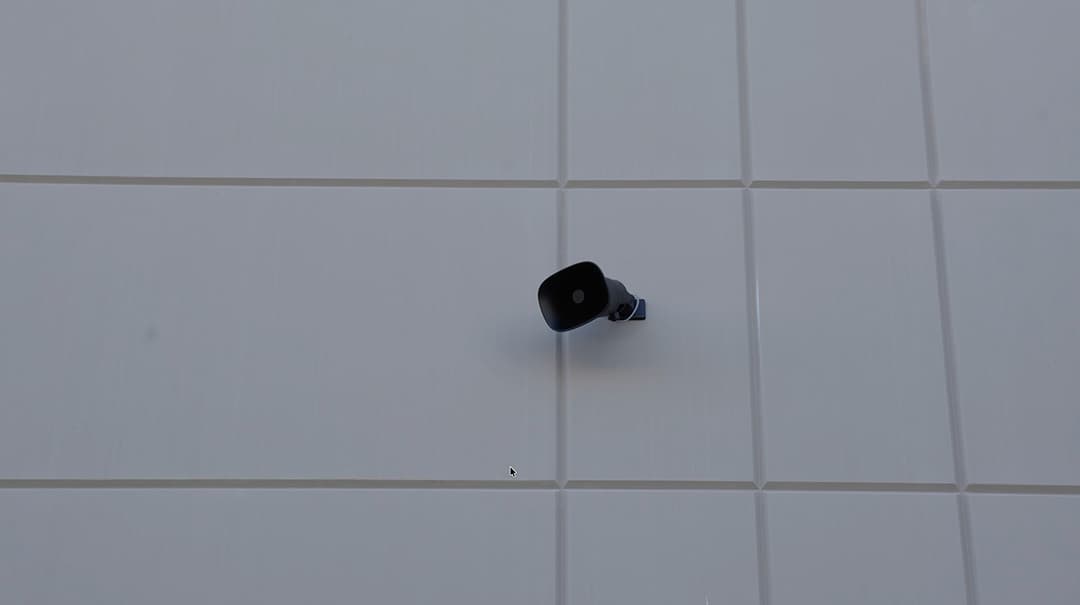
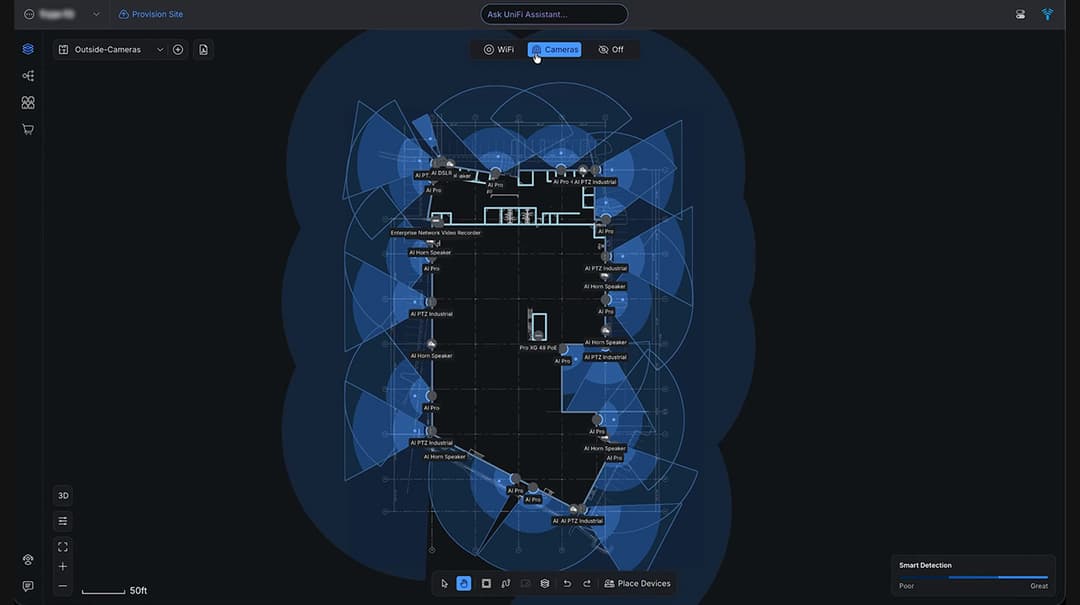
Using UniFi Alarm Manager, I mapped a coordinated tracking protocol: when an outer AI Turret identifies a peripheral security event, it triggers an automated coordinate command to the AI PTZ units. The PTZ cameras instantly pan, tilt, and zoom to track the target across the parking lots without manual operator intervention. Furthermore, the system detects unauthorized loitering within a strict 10-foot boundary, automatically triggering 120dB PoE-powered AI Horn Speakers to sound automated warning messages, reducing false alarms by 95% and lowering security staffing costs by up to 30%.
3. Entry-Management and Physical Identity Integration
One of the biggest mistakes I see in legacy security design is treating access control and video surveillance as isolated systems. Combining them is necessary to build reliable audit trails, but doing so under a subscription model typically doubles the required software licensing overhead. By consolidating access control and video surveillance under a single hardware ecosystem, entries are natively mapped to video logs. Every card swipe, door ring, or gate cycle is permanently bound to the corresponding high-definition camera stream at that exact microsecond, providing instant forensic validation during security audits.
Field Evidence: Architectural Preservation and High-Volume Access
During the historical preservation security overhaul at the Los Angeles Hompa Hongwanji Buddhist Temple, I deployed a centralized ecosystem managing 43 AI cameras alongside multi-point door access networks. To preserve the historic architectural heritage and avoid running visible lines, I engineered an invisible infrastructure strategy using three separate, hidden Intermediate Distribution Frames (IDFs) connected via fiber links, localizing cable runs to hidden Pro Max switches.
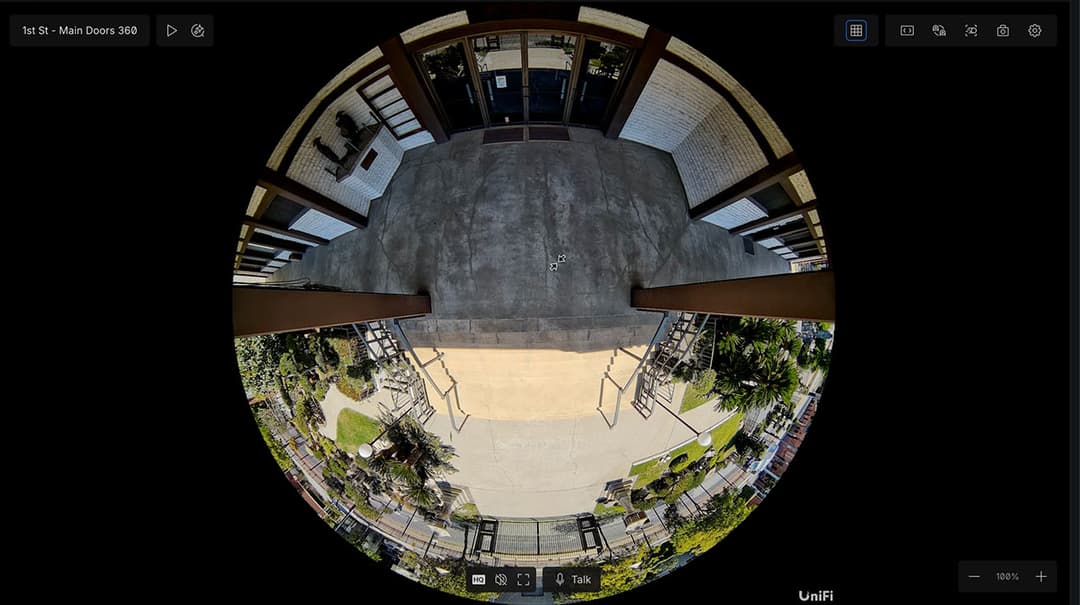
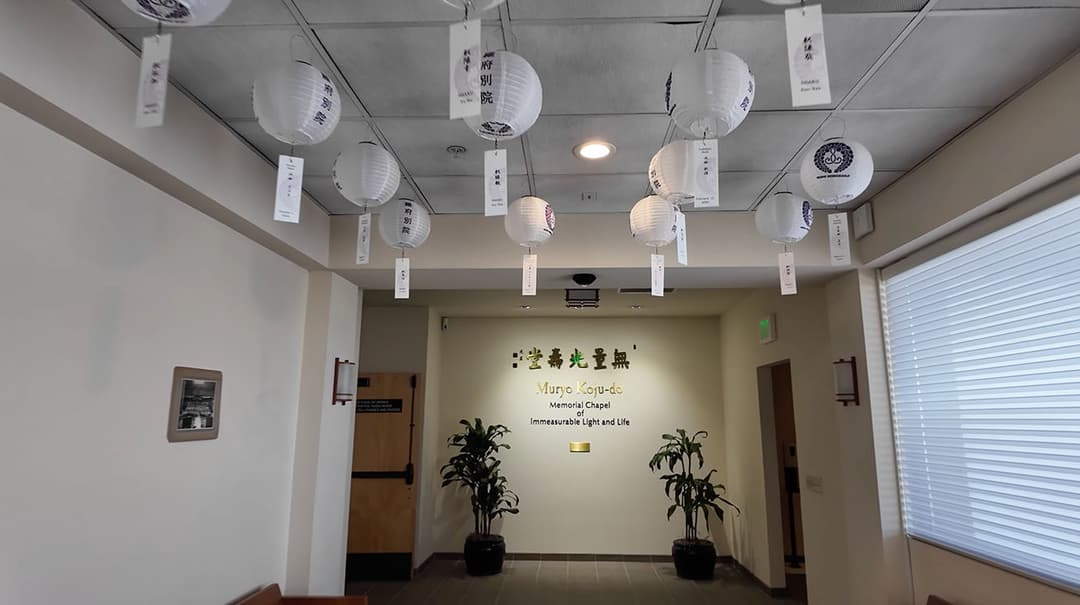
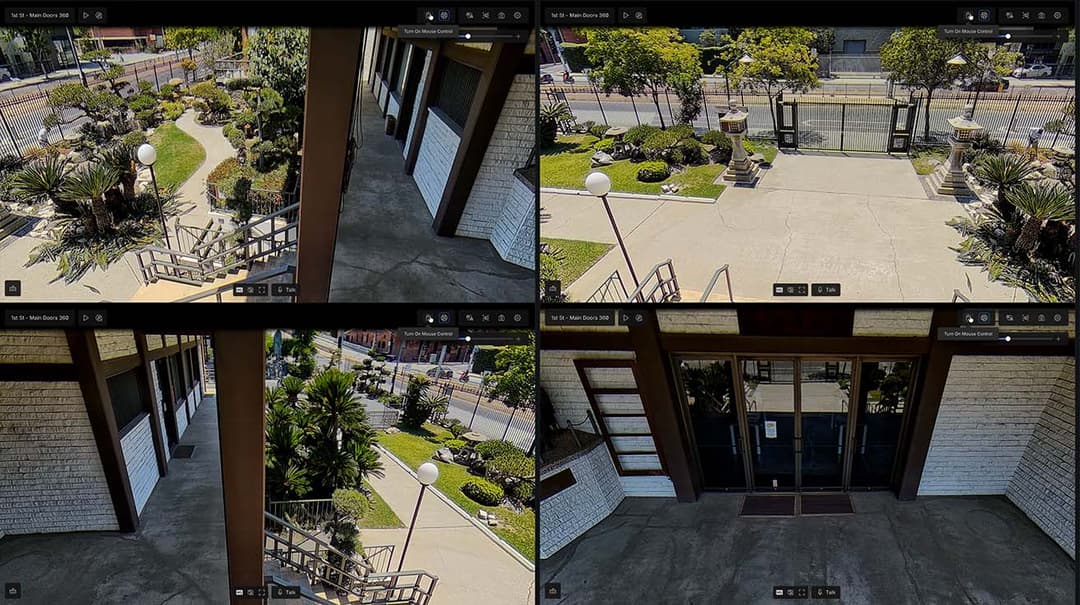
For entrance security, we deployed UniFi Access G3 Reader Pro units and a G3 Intercom at the main motorized vehicle entrance. Permanent staff navigate gates using automated license plate recognition, while daycare parents use scheduled PIN codes or temporary mobile credentials. In open architectural areas where multiple fixed units would clutter the space, I mounted a single UniFi G6 Pro 360 panoramic camera, providing comprehensive situational awareness across the central courtyard from a single minimalist footprint.
4. Overcoming Environmental and Scale Constraints
True enterprise integration requires solving extreme edge-case environmental barriers where generic cloud vendors fail. Subscription-locked hardware vendors often lack the full-stack networking product depth to address these infrastructure barriers, forcing the client to purchase disparate third-party networking gear.
Field Evidence: Overcoming Sub-Zero and Cellular Dead Zones
For example, our manufacturing deployment at CCFF required constant inventory tracking in deep-freeze cold storage spaces operating at -20°C to -40°C. Standard wireless hardware suffers extreme signal attenuation and hardware degradation under these conditions. I resolved this environmental barrier by installing weatherproof, industrial IP67-rated UniFi WiFi 7 Campus Access Points, optimizing performance via precise thermal heat-mapping tools to guarantee stable, low-latency mobile inventory scanning.
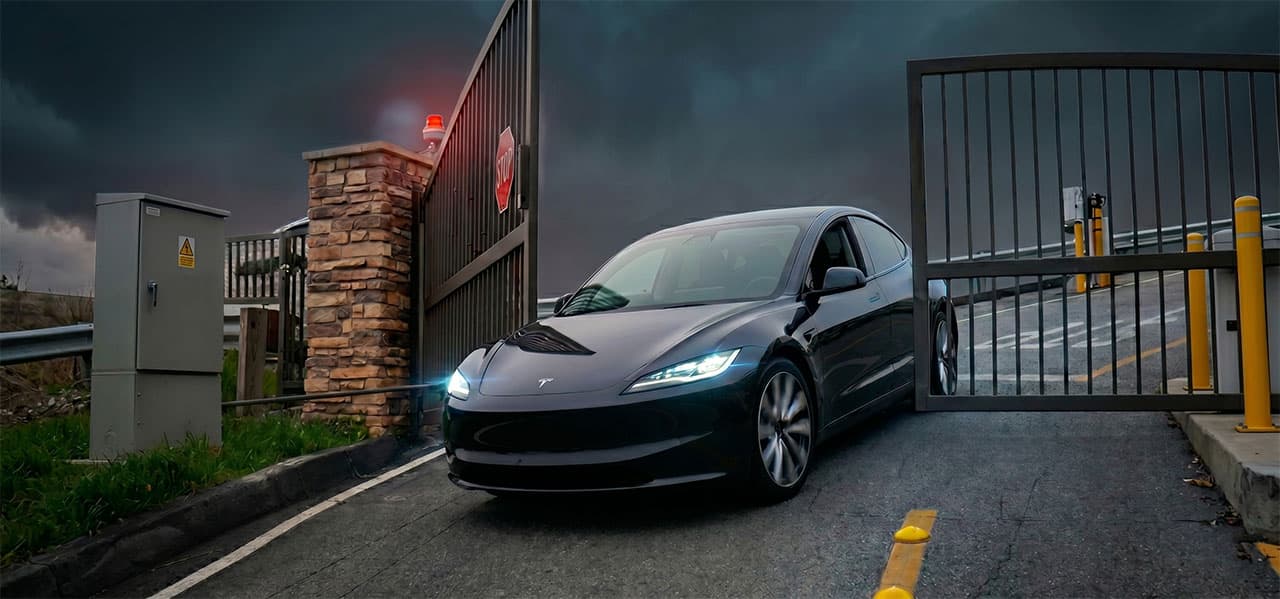
Similarly, in a large-scale project for a premium Gated Community in Malibu, California, the property faced a critical infrastructure barrier: deep canyon terrain with non-existent cellular service. Arriving delivery couriers and residents could not load cloud-based apps to trigger entry gates, resulting in constant perimeter traffic jams.
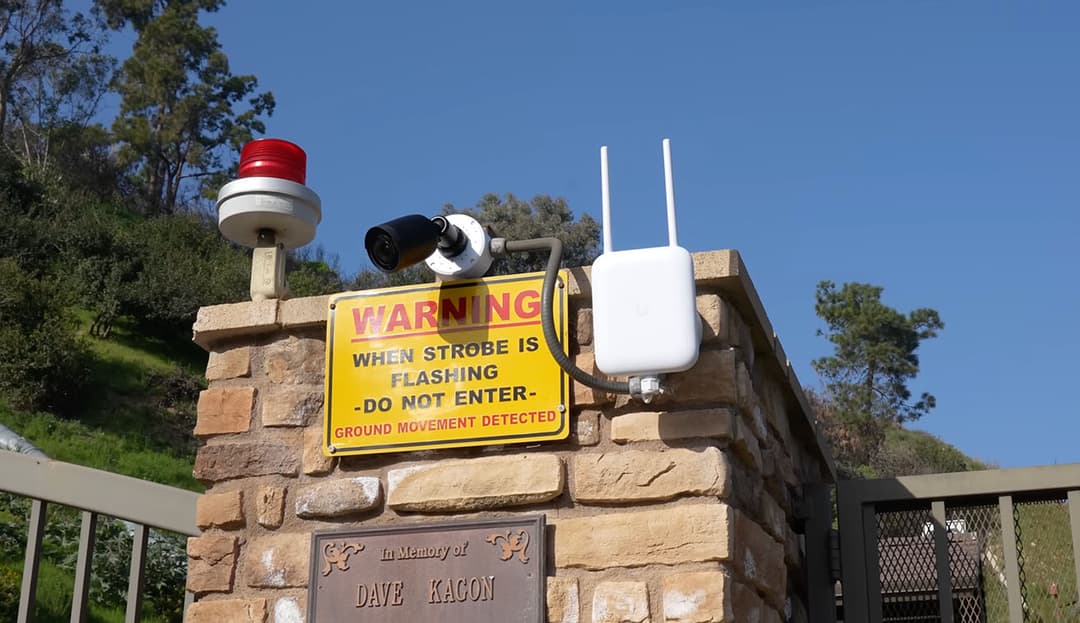

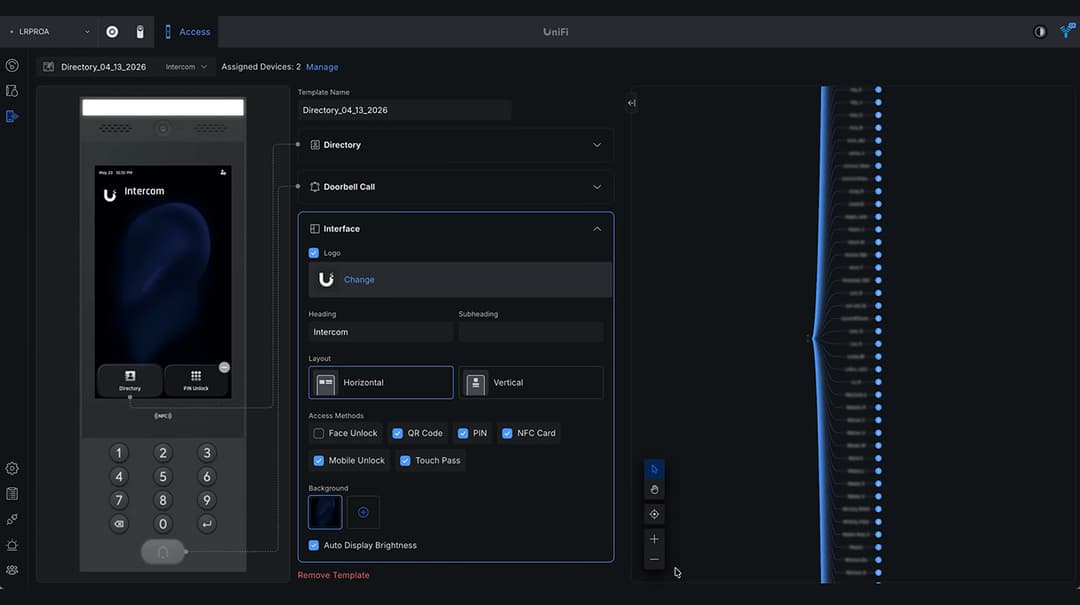

I engineered a specialized workaround by mounting high-speed UniFi U7 Pro Outdoor Access Points directly on the perimeter security structures. This projected a reliable, local wireless field over the approach lanes. Smartphones instantly pair with the secure Wi-Fi network, allowing the UniFi Identity app to validate credentials via Mobile Tap or execute visitor QR code scans at the UniFi Intercom faceplate in under two seconds. Furthermore, to resolve California's vehicle compliance variance (where luxury vehicles frequently omit front license plates), I engineered a dual-camera LPR array at each checkpoint. One G6 Pro captures the front angle, and an identical rear-facing camera records the back plate as the vehicle hits the approach threshold, ensuring a 100% verification rate.
5. The Financial Reality: A 5-Year Total Cost of Ownership (TCO) Analysis
The primary differentiator of a license-free corporate deployment is the long-term financial trajectory. In a subscription-based model, your total expenditure scales linearly with your camera count. As you add hardware, your annual recurring operating expenses multiply forever. Under the UniFi architecture managed by YesTechie, corporate expenditures are heavily front-loaded into tangible, owned assets, with ongoing software costs dropping to zero.
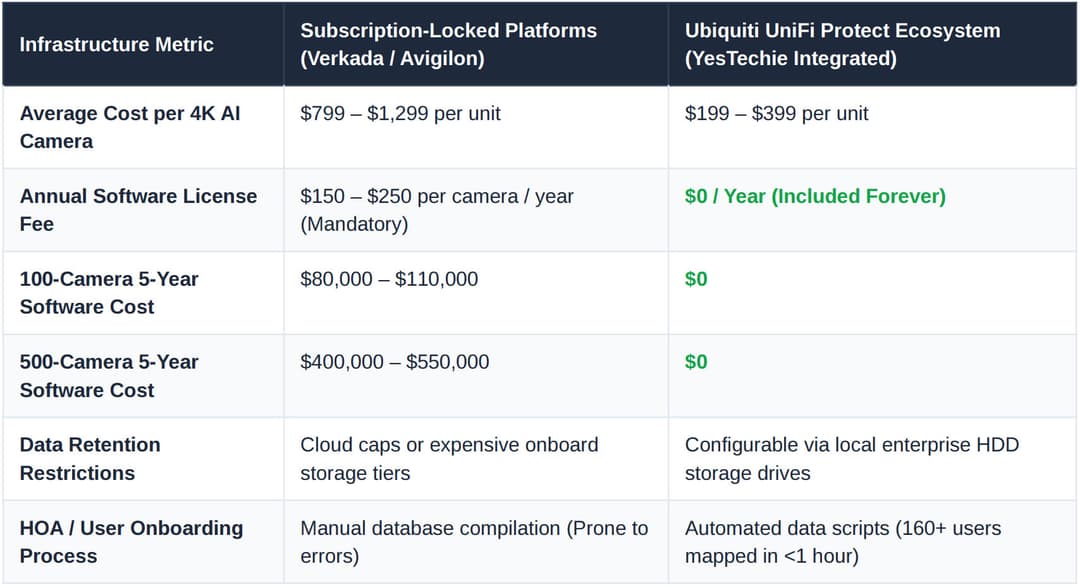
For quick reference, here is the text-based breakdown of the 5-Year TCO & Infrastructure Metrics comparison shown in the table above:
- Average Cost per 4K AI Camera:
- Subscription-Locked (Verkada / Avigilon): $799 – $1,299 per unit
- Ubiquiti UniFi Protect (YesTechie): $199 – $399 per unit
- Annual Software License Fee:
- Subscription-Locked (Verkada / Avigilon): $150 – $250 per camera / year (Mandatory)
- Ubiquiti UniFi Protect (YesTechie): $0 / Year (Included Forever)
- 100-Camera 5-Year Software Cost:
- Subscription-Locked (Verkada / Avigilon): $80,000 – $110,000
- Ubiquiti UniFi Protect (YesTechie): $0
- 500-Camera 5-Year Software Cost:
- Subscription-Locked (Verkada / Avigilon): $400,000 – $550,000
- Ubiquiti UniFi Protect (YesTechie): $0
- Data Retention Restrictions:
- Subscription-Locked (Verkada / Avigilon): Cloud caps or expensive onboard storage tiers
- Ubiquiti UniFi Protect (YesTechie): Configurable via local enterprise HDD storage drives
- HOA / User Onboarding Process:
- Subscription-Locked (Verkada / Avigilon): Manual database compilation (Prone to errors)
- Ubiquiti UniFi Protect (YesTechie): Automated data scripts (160+ users mapped in <1 hour)
Conclusion & Operational Support Framework
While proprietary cloud vendors use extended paper warranties to lock enterprises into multi-year financial cycles, an on-premise, license-free architecture offers far greater operational flexibility and immediate fiscal relief, typically recovering its initial implementation costs within 12 to 24 months. By eliminating recurring software bills, enterprise IT teams regain complete control over their hardware lifecycle and corporate surveillance data.
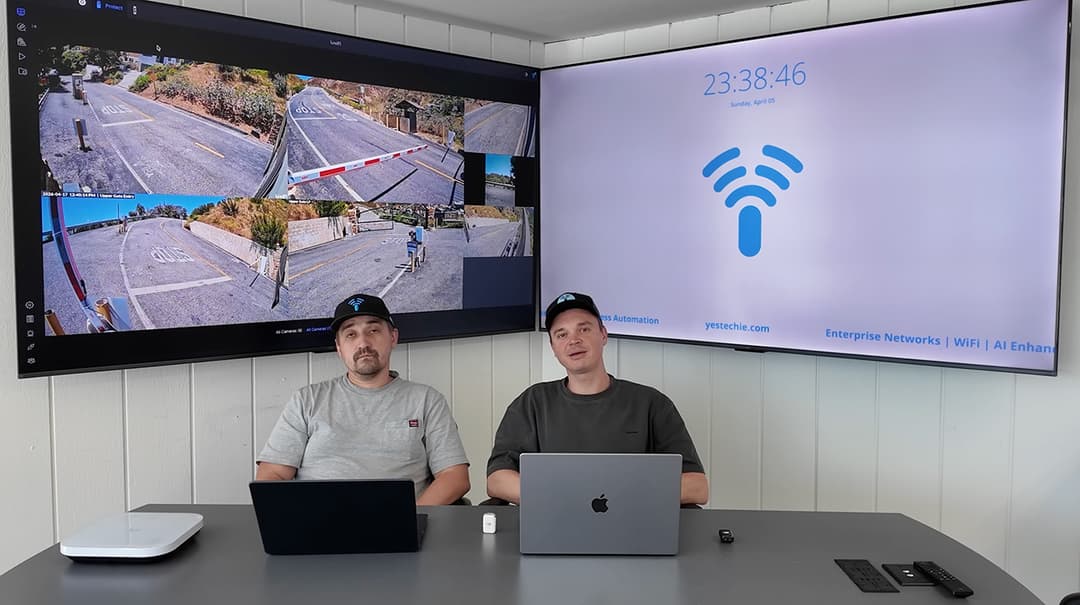
We built YesTechie on a clear principle: technology should empower your enterprise, not hold your balance sheet hostage. To substitute for remote factory support, I provide comprehensive, localized enterprise SLA options through my team - encompassing proactive network monitoring, emergency on-site technical support, and hot-swappable on-site spare inventories. This operational model ensures rapid hardware restoration and expert configuration maintenance without tying your physical security to a predatory billing cycle.
Optimize Your Physical Security Infrastructure
Contact the YesTechie engineering office today at 818-275-2707 or visit yestechie.com to schedule a structured TCO audit and site layout consultation with me.
Frequently Asked Questions (FAQ)
1. Does UniFi Protect really have zero ongoing license fees or subscription costs?
Yes, 100%. When you purchase UniFi Protect hardware, you own the equipment, the software, and all video data outright. There are no per-camera annual licenses, no software update fees, and no feature-gating. Advanced AI features (such as License Plate Recognition, facial categorization, and automated Alarm Manager triggers) are fully included forever.
2. What happens to UniFi Protect cameras if the local internet connection goes down?
All primary surveillance operations continue uninterrupted. Unlike cloud-native systems (like Verkada or Avigilon Cloud) that lose live-view or alert tracking during internet outages, UniFi Protect processes and records video 100% locally on Enterprise Network Video Recorders (ENVR). Live monitoring, continuous 4K recording, and local AI automations remain fully active even during a complete ISP failure.
3. Can UniFi Protect handle enterprise-scale deployments with hundreds of 4K cameras?
Yes. In 2026, Ubiquiti’s enterprise ecosystem scales natively via multi-NVR stacking and Site Manager Fabrics. A single UniFi ENVR setup can easily handle hundreds of 4K streams with redundant, hot-swappable enterprise drive arrays (RAID-5/6) for months of footage retention. For example, in our CCFF manufacturing project, we deployed 180 high-density cameras across two states, delivering 384TB of raw local storage without network bottlenecks.
4. How does off-site cloud backup work without paying a subscription?
UniFi Protect offers built-in, license-free off-site archiving. You can link standard user accounts (Google Drive, OneDrive, Dropbox, or a remote local NAS) to automatically upload Smart Event clips in real time. This ensures critical incident footage is safely mirrored off-site for redundancy without paying per-camera monthly storage fees.
5. Can we integrate door access control and security cameras under a single dashboard?
Absolutely. By pairing UniFi Protect with UniFi Access, video surveillance and physical access control operate inside one unified management console. Every door entry, NFC card swipe, or gate cycle is microsecond-stamped and bound directly to the corresponding high-definition camera feed, providing instant forensic audit trails for security administrators.
6. How does YesTechie support enterprise deployments without factory vendor SLAs?
While proprietary cloud platforms force you into costly multi-year SLAs, YesTechie Corp provides localized, rapid-response enterprise support tailored to your business. As Certified UniFi Integrators, we offer 24/7 emergency response options, proactive network telemetry monitoring, and on-site spare device inventories. If a unit fails, our team can swap the hardware on-premises within hours, eliminating slow RMA shipping cycles and vendor lock-in.