360° Security: UniFi AI Multi Sensor 4 Camera Parking Lot Deployment
Securing expansive outdoor perimeters like manufacturing facilities, logistical hubs, and corporate parking lots typically presents a steep financial and infrastructure bottleneck. To eliminate dangerous blind spots, traditional layout designs force integrators to cluster multiple individual bullet or dome cameras on a single structural pole. This multi-camera approach exponentially increases hardware acquisition costs, consumes valuable switch ports, and complicates day-to-day ecosystem management.

When Ubiquiti unveiled the UniFi AI Multi-Sensor 4 (UVC-AI-MS-4), our team at YesTechie immediately recognized it as a massive leap forward for high-density surveillance architecture. As certified Ubiquiti integrators, we have already executed an enterprise multi-sensor camera deployment on an active site. This technical article breaks down the on-site performance, field configuration, and deployment advantages discovered during this high-density surveillance infrastructure upgrade.
The Multi-Sensor Concept: Four Cameras in One Housing
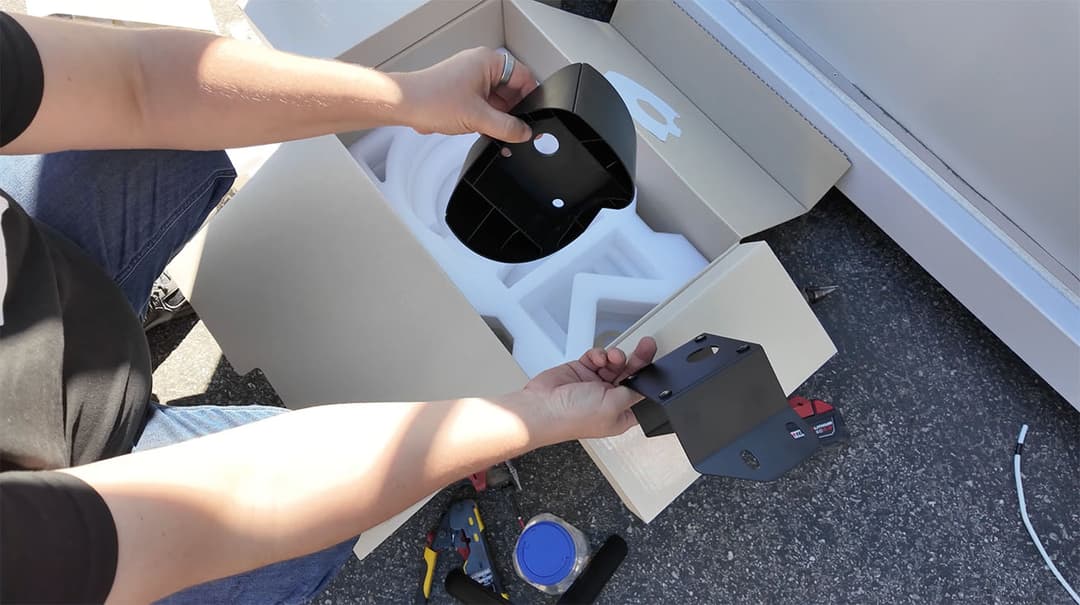
Unboxing the AI Multi-Sensor 4 reveals an enterprise-grade node optimized strictly for industrial durability and high KKD (Efficiency Coefficient). This is not a standard wide-angle dome camera; it is a highly integrated, heavy-duty surveillance asset containing four independent 5MP/4K image sensors configured inside a single robust housing.
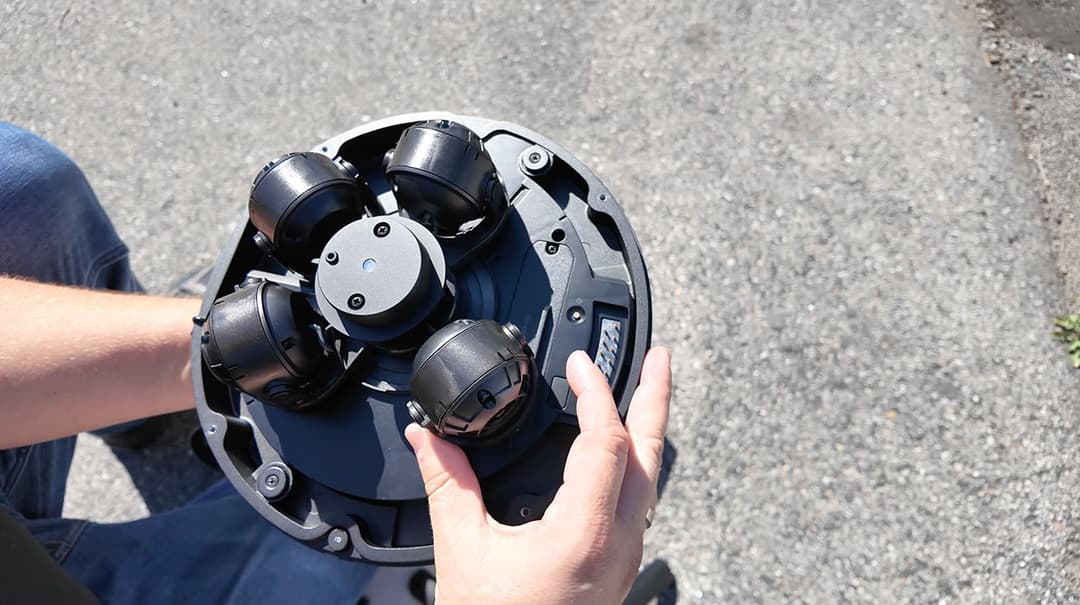
For properties requiring high-stakes perimeter protection, this centralized system entirely replaces the need to mount an array of separate devices. Utilizing an enterprise multi-sensor camera deployment prevents the structural clutter of positioning multiple brackets on an exterior wall or mounting pole. It offers a visually minimalist and architecturally clean footprint while providing consistent, uncompromised 4K resolution across all target fields.
Video Feed Behavior: Independent Streams in UniFi Protect
The single most frequent question we encounter across professional integration forums is whether the AI Multi-Sensor 4 automatically stitches the four captured images into a single panoramic video field. The technical answer is no. Within the UniFi Protect dashboard interface, the console recognizes and displays each of the four internal sensors as an entirely independent, unstitched video feed.
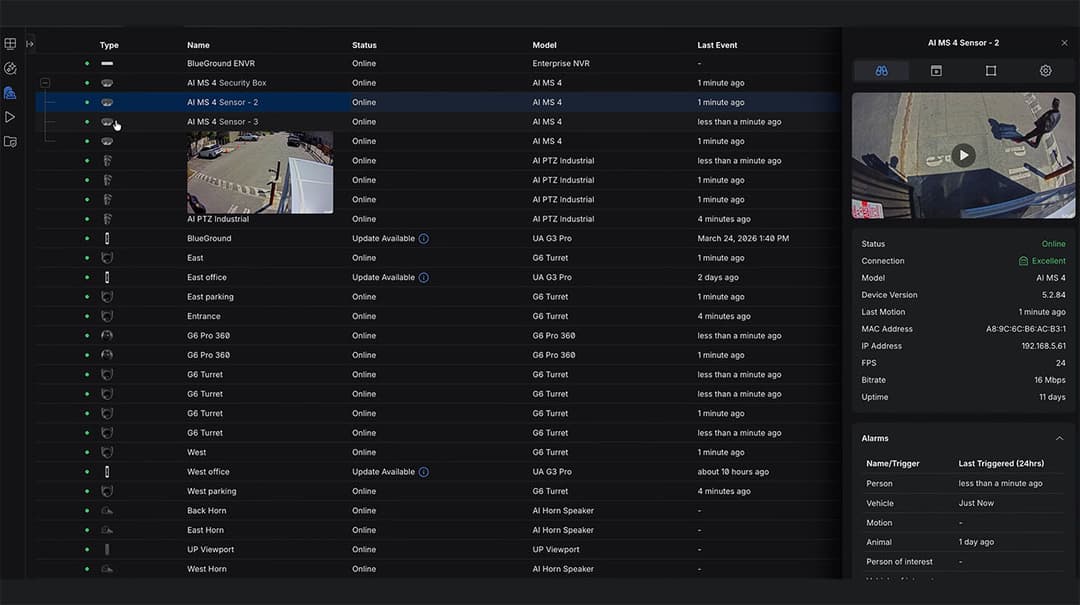
While the feeds are logically linked inside the application environment for seamless, grouped multi-view navigation, they operate as distinct cameras with independent stream profiles. This strategic hardware layout is a major advantage for commercial property operators. It grants installers the freedom to manually tilt, pan, and rotate each of the four lenses inside the housing. You can configure a flawless, gapless 360-degree perimeter grid or overlap the focal paths to target high-traffic zones, such as multi-lane driveways or adjacent loading docks.
The Efficiency Factor: Four Streams, One Ethernet Cable
From a deployment and labor perspective, the most impressive engineering achievement of the UVC-AI-MS-4 is its cable infrastructure management. In a legacy deployment, capturing four independent fields of view requires running four separate CAT6 home runs back to the server room, utilizing four individual Power over Ethernet switch ports.
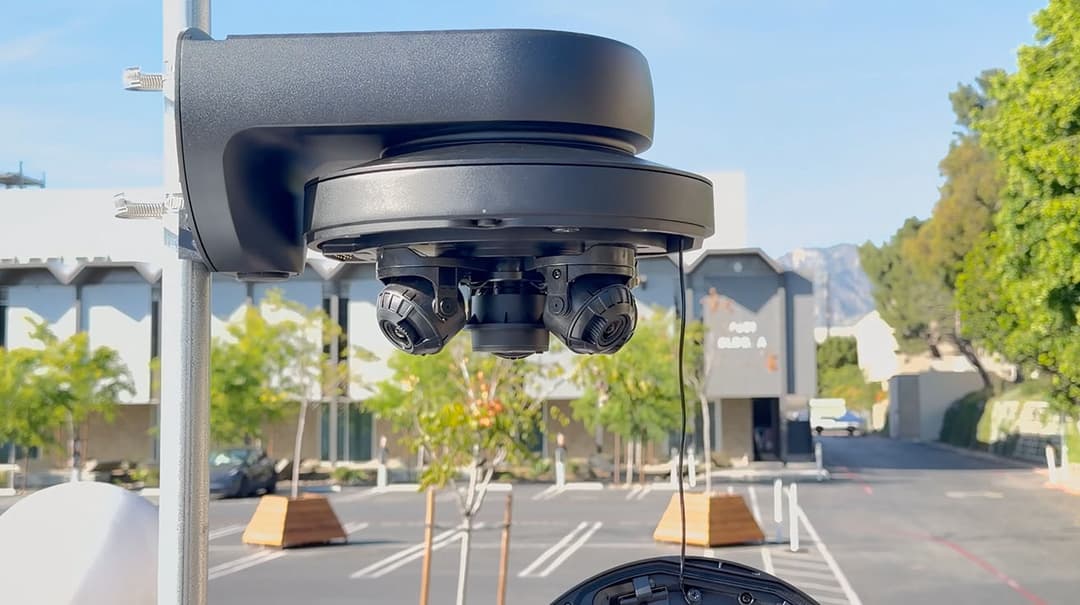
An enterprise multi-sensor camera deployment built around the AI Multi-Sensor 4 completely rewrites this equation. This unit requires only one single Ethernet cable supplying PoE++ (802.3bt) power to bring all four internal 4K cameras completely online. By consolidating the infrastructure down to one line, we dramatically slash field labor overhead, reduce conduit requirements, and maximize switch port efficiency. This clean architecture is highly valuable when executing a broader enterprise network modernization for manufacturing facilities, where minimizing infrastructure clutter and optimizing network bandwidth are top operational priorities.
360° Infrared: Powerful Night Vision Regardless of Alignment
Ubiquiti engineered the infrared illumination system on this device with excellent attention to field reality. Standard multi-camera clusters often suffer from uneven night vision performance, creating dark zones when individual cameras operate with mismatched IR ranges or competing beam angles.
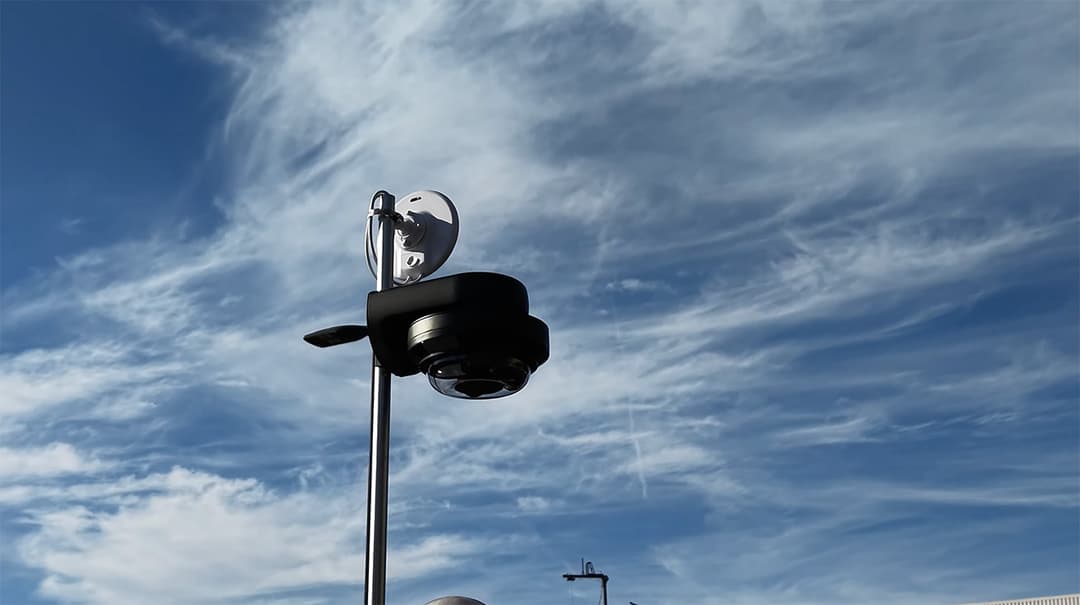
The AI Multi-Sensor 4 mitigates this vulnerability by featuring a high-intensity, built-in 360-degree infrared matrix array integrated directly into the chassis housing. No matter how you choose to angle, pan, or overlap the internal lenses during installation, the entire surrounding perimeter is evenly flooded with powerful IR illumination at night. This ensures seamless, high-contrast video capture across the entire site without a single blind spot or unlit drop-off zone.
Mounting Versatility: From Corners to Poles
Mounting geometry is traditionally a major headache for technicians when managing large facility footprints, but the AI Multi-Sensor 4 shares a heavy-duty mounting profile similar to the enterprise AI PTZ. For this release, Ubiquiti has introduced a dedicated, structural corner mount that is cross-compatible with both the Multi-Sensor 4 and the AI PTZ units.
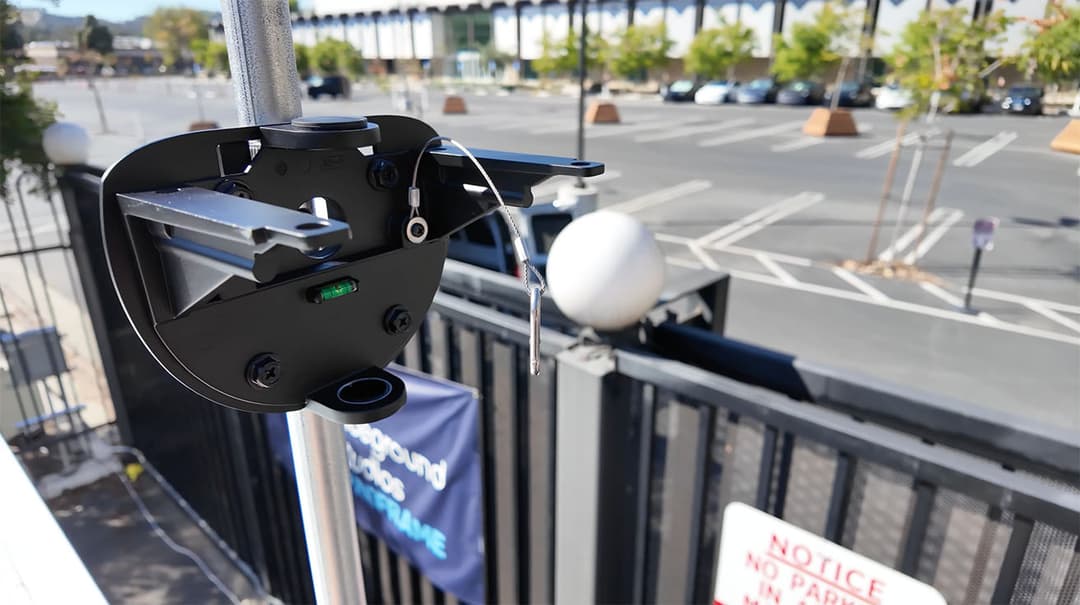
Whether your deployment blueprint demands a flat interior ceiling mount for an expansive logistics facility, a reinforced pole mount for an open outdoor lot, or a flush-wall exterior mount, the available installation pathways are extensive. This physical adaptability is critical when building secure node deployments across demanding industrial sites, such as a specialized SCADA communication network layout where environmental placement must remain ultra-stable and resilient against severe weather conditions.
Ideal Environments for Multi-Sensor Deployment
Based on our hands-on field testing and deployment observation, this multi-sensor camera platform delivers the highest operational KKD in the following environments:
- Manufacturing Facilities: Tracking multiple intersecting automated production lines or high-risk machinery cells from a single structural mounting node.
- Large Warehouses: Providing synchronized, simultaneous multi-angle coverage of high-density storage aisles, inventory racks, and busy loading docks.
- Parking Lots: Maintaining continuous, uncompromised perimeter coverage and vehicle lane tracking with zero blind spots using a single hardware asset.
Real-World Case Study: Our Parking Lot Configuration
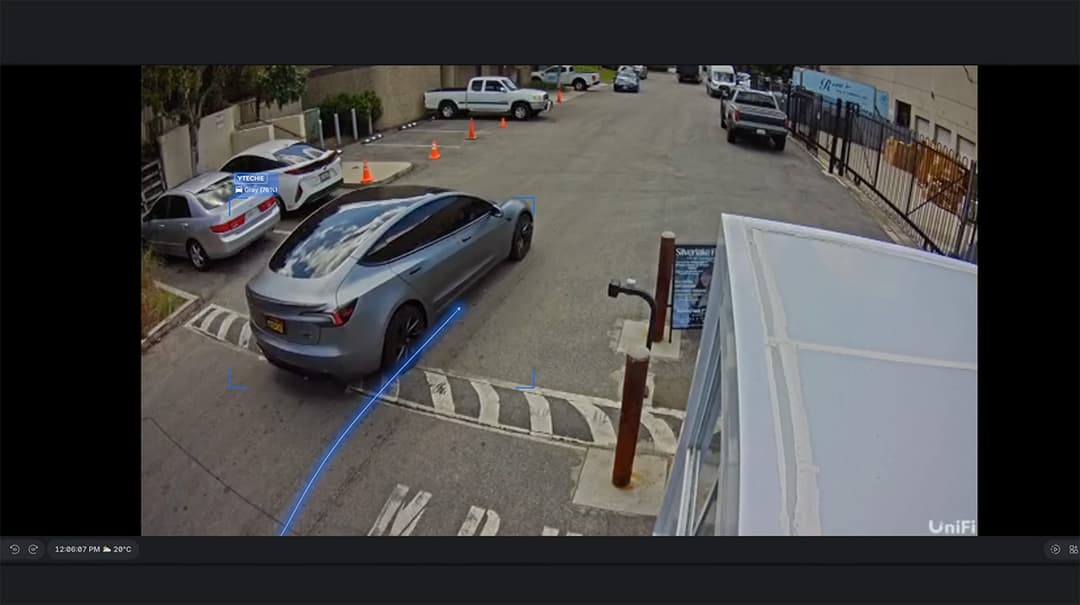
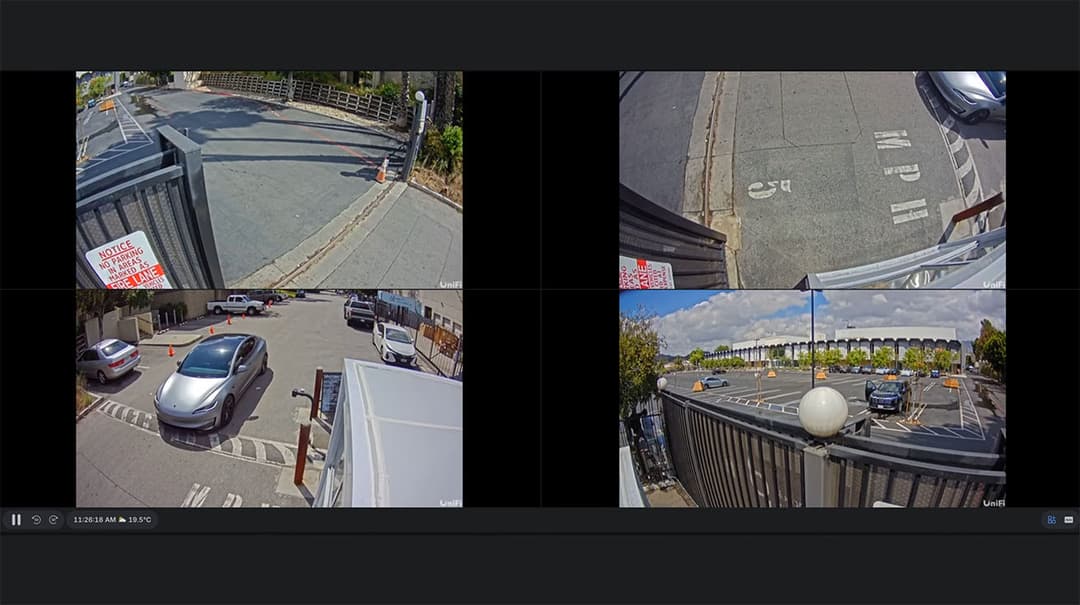
For this specific field deployment, we engineered the four internal 4K sensors to construct a comprehensive, automated security perimeter around a high-traffic entry checkpoint. Instead of generic wide-angle tracking, we precision-tuned each camera lens to execute a highly specialized operational task:
- Sensor 1 (The Parking Lot Exit): Pointed directly down the egress lane to track all departing vehicles. This lens was calibrated to capture crisp, high-resolution vehicle plates, feeding clean data into the UniFi Protect License Plate Recognition (LPR) engine.
- Sensor 2 (The Parking Lot Entry): Target-locked onto the incoming lane. This node records all entering vehicles and applies real-time Face Detection analytics to identify individuals moving past the entry barrier.
- Sensor 3 (The Security Guard Booth): Positioned to monitor all activity around the entry booth structure. This feed provides continuous video and audio documentation of visitor interactions with the on-site security guard for liability mitigation, safety audits, and operational quality control.
- Sensor 4 (The Main Parking Area): Oriented toward the expansive open parking lot. This sensor captures a massive chunk of the main property footprint that would traditionally require two separate wide-angle cameras to monitor effectively.
Final Summary & Working with YesTechie
By leveraging the unique capabilities of the UniFi AI Multi-Sensor 4, our team provided the client with full, continuous 360-degree site visibility, high-speed edge AI analytics (including LPR and face tracking), and an incredibly efficient single-cable hardware footprint. It represents a highly optimized solution that drops installation friction while maximizing data capture density.
If you are currently evaluating your property's physical security infrastructure or mapping out a brand-new perimeter surveillance project, partnering with an experienced integration team is essential. YesTechie engineers the critical technology solutions that power today's most demanding enterprise environments, from high-security logistical hubs and manufacturing facilities to media complexes. As Certified Ubiquiti UniFi Integrators, we leverage over two decades of technical expertise to architect the intelligent ecosystems of a modern enterprise: resilient networks, AI-powered security, advanced access control, and seamless business automation.
We completely eliminate the recurring software subscription fees and licensing costs that plague traditional enterprise surveillance platforms. Our team manages your entire deployment lifecycle from the initial network topology design to the physical fiber optics, structural mounting, and advanced AI rule configuration. To learn more about our deployment strategies across industrial properties, check out our project breakdown on executing a comprehensive warehouse security infrastructure upgrade, or connect directly with our team via our main services portal to schedule an on-site engineering layout consultation and build a secure technological foundation for your business.
Check out the video from this deployment:
FAQ: UniFi AI Multi-Sensor 4 Deployment & Technical Specifications
How many network cables need to be run for the UniFi AI Multi-Sensor 4?
You only need to install a single CAT6 Ethernet cable to power and transmit data for all four internal image sensors. However, because this enterprise camera processes four continuous 4K video streams and runs high-intensity 360° infrared LED matrices, it requires a verified PoE++ (802.3bt) power source to operate safely and reliably.
Can the positioning of each individual sensor be adjusted independently?
Yes. While the rugged exterior chassis housing remains locked in a fixed position, each of the four internal 5MP/4K camera sensors is mounted on an independent internal gimbal. This allows the technician to manually pan, tilt, and rotate each lens during installation to cover completely different angles or overlap them to monitor high-risk zones.
Does the UniFi AI Multi-Sensor 4 support License Plate Recognition (LPR)?
Absolutely. The unit features built-in, high-speed AI analytics that run directly at the network edge. This includes highly accurate real-time License Plate Recognition (LPR) and advanced Face Detection. To optimize capture accuracy, our integrators professionally calibrate shutter speed properties, lens focus, and vehicle approach angles.
Is a multi-sensor camera a direct replacement for an AI PTZ camera?
No, they serve completely different operational roles. An AI PTZ camera is engineered to lock onto, zoom in, and dynamically track a single moving subject across massive distances. The AI Multi-Sensor 4 is a constant "eyes-on" wide-area asset. It ensures that you maintain uninterrupted 360-degree coverage of an entire site at all times, meaning it will never miss an incident while pointed elsewhere.
Are there any monthly software subscription or per-camera licensing fees?
No. In strict alignment with the entire Ubiquiti ecosystem, the UniFi AI Multi-Sensor 4 is completely license-free. There are zero recurring monthly fees, per-device software costs, or user subscription tiers. Property owners retain 100 percent ownership of their physical hardware and video data records.
How does recording and storage allocation work with four sensors on one NVR?
Within the UniFi Protect management interface, the AI Multi-Sensor 4 is recognized as four individual camera channels. This means it will occupy four active camera slots on your network video recorder console and consume storage space for four independent 4K data streams. We highly recommend utilizing high-capacity, enterprise-grade hard drives to maintain adequate data retention windows.