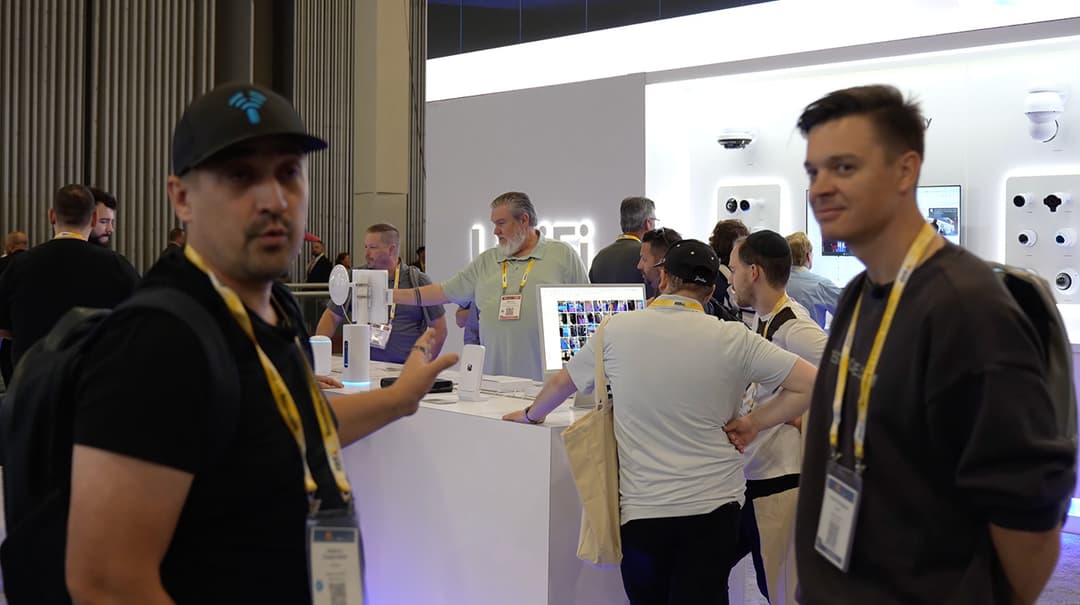
UniFi Booth Tour at ISC West 2026: New Gear That Got Our Attention
At YesTechie, we do not simply install hardware off the shelf; we live with it, push it past its factory limits, and rigorously field-test its stability on active sites. This year’s ISC West security exposition in Las Vegas marked a major shift in the deployment possibilities of the Ubiquiti ecosystem. The manufacturer's pavilion showcased a fleet of innovative physical assets engineered to target the exact infrastructure roadblocks we face every day, ranging from heavy, grit-heavy industrial operations to complex, multi-site decentralized networks.
This technical analysis provides our first-hand engineering assessment of the new hardware lines set to transform the way we architect enterprise physical security integration frameworks this year.
Cloud Gateway Industrial: Hardware for the Real World
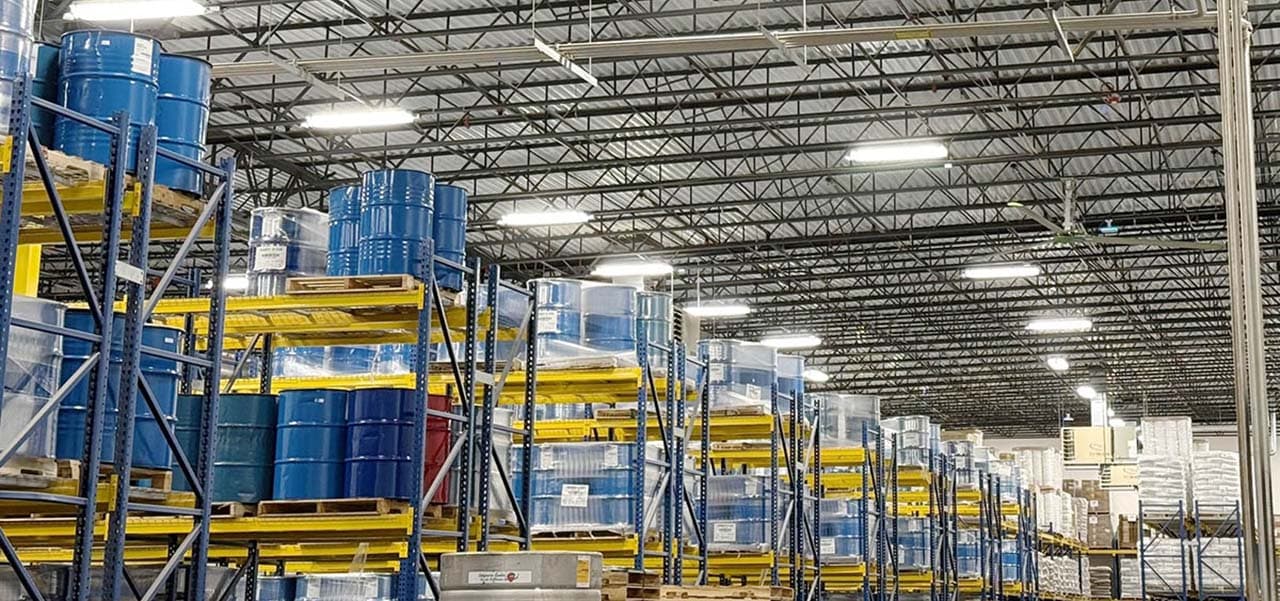
We initiated our structural hardware review with the Cloud Gateway Industrial (UCG-Industrial). While a large portion of the integration market views the UniFi console lineup through the lens of clean corporate office footprints, our deployment history includes extensive network construction inside high-severity industrial facilities. We regularly build networks for heavy CNC machine shops, chemical painting bays, and automotive manufacturing floors.
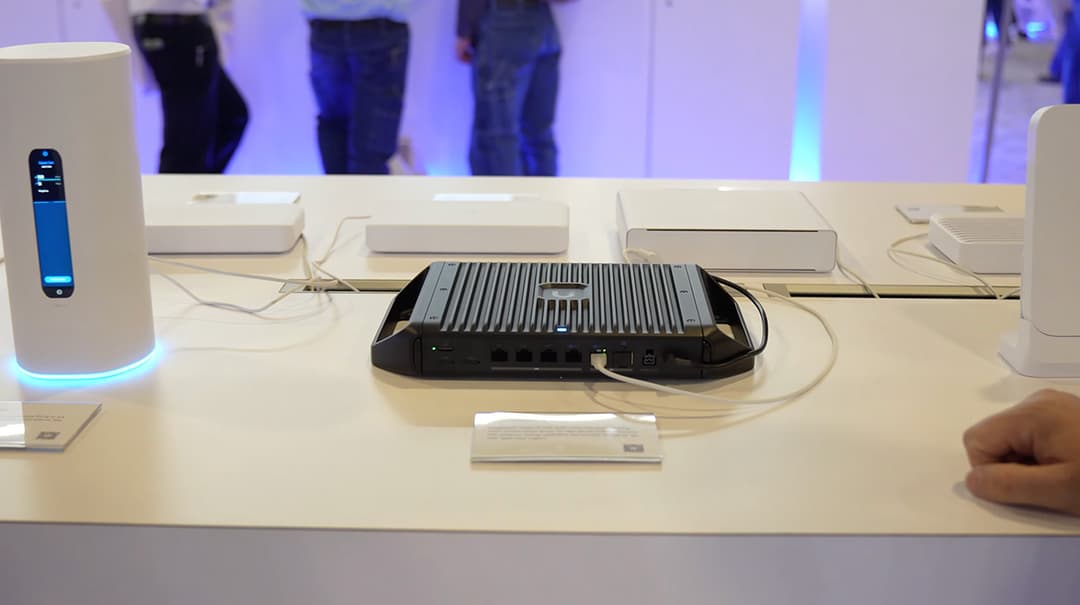
Normally, the airborne oil mist, metallic particulate dust, and ambient heat found in these facilities are an immediate death sentence for standard commercial-grade electronics. In prior deployments, our teams were forced to absorb the extra infrastructure cost of installing completely sealed, climate-controlled, and filtered equipment racks simply to shield the switches from environmental failure. The UCG-Industrial completely rewrites this deployment model. This device is a hardened, ruggedized, high-density PoE gateway engineered with a heavy-duty, dust-resilient thermal chassis that natively executes the full UniFi application matrix, including Network, Protect, and Access. It eliminates the need for bulky, expensive protective enclosures, letting us establish the core infrastructure right in the middle of active production environments.
The Camera Lineup: Lessons from the Field
Analyzing the main surveillance wall gave our technical team an excellent opportunity to measure these new products against our direct field experience. At YesTechie, we have deployed almost every generation of hardware Ubiquiti has brought to market, but two specific platforms are currently on our immediate integration roadmap: the enterprise multi-sensor units and the ultra-wide lens matrices. In fact, our team has client deployments for these exact models scheduled for mobilization this week.
Expert Insight: The Truth About LPR (License Plate Recognition)
We routinely track industry forums where integration technicians complain that AI-driven License Plate Recognition (LPR) platforms fail or drop frames in low-light scenarios. Our field results prove the exact opposite. The UniFi Video Camera G6 Pro Bullet (UVC-G6-Pro-Bullet-W) remains our absolute go-to hardware asset for precision license plate logging at night. Even in zero-ambient-light environments, its capture accuracy is flawless if you know how to configure the device properties.
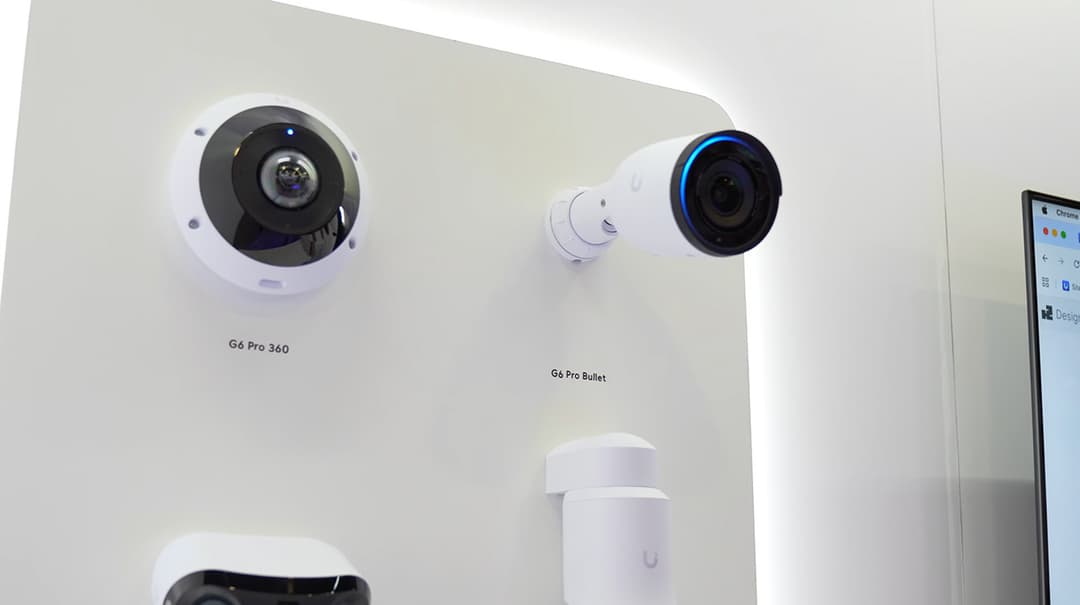
True LPR optimization is never a standard plug-and-play operation. It requires an experienced integrator to log into the application console and manually tune the hardware’s shutter speed thresholds, sensor gain, and targeted exposure areas to match the physical approach vectors of the vehicle lanes. When tuned correctly, these integrated AI-driven lenses match the performance metrics of single-purpose proprietary LPR platforms that carry heavy annual subscription costs.
UniFi G6 180: Precision in the Warehouse
The UniFi Video Camera G6 180 is a highly specialized asset built to solve a specific warehouse architecture blind spot. We receive continuous inquiries from facilities and safety managers who need to maintain continuous tracking down long inventory racking aisles. If you position a standard wide-angle or bullet camera over an aisle, the lens either fails to capture the extreme ends of the lane or produces a highly distorted, unusable image at the margins.
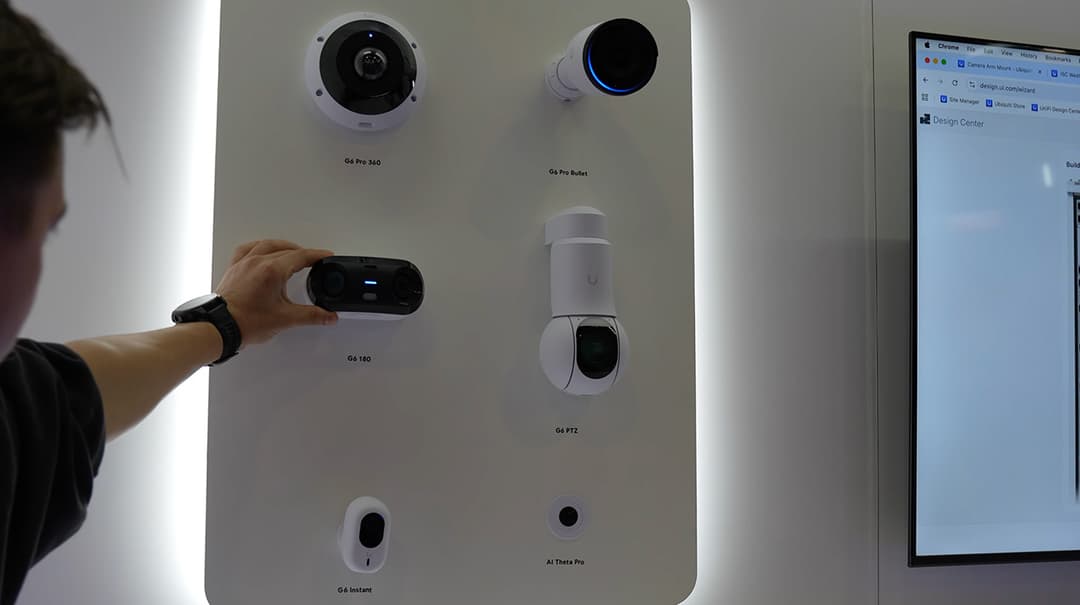
The G6-180 overcomes this constraint by delivering a true, unstitched 180-degree panoramic horizontal field of view. This makes it a perfect ceiling-mounted asset for comprehensive aisle and forklift lane monitoring. A key physical design feature we examined at the booth involves the mounting assembly: while the internal lens delivers a fixed, ultra-wide panoramic sweep, the structural mounting bracket allows for manual vertical tilt tuning. This is a critical adjustment feature when anchoring a device 20 or 30 feet in the air along structural steel rafters, allowing you to tilt the frame downward to capture specific high-visibility tracking zones on the active warehouse floor.
UniFi G6 Edge: A First Look at the NVR-Less Future
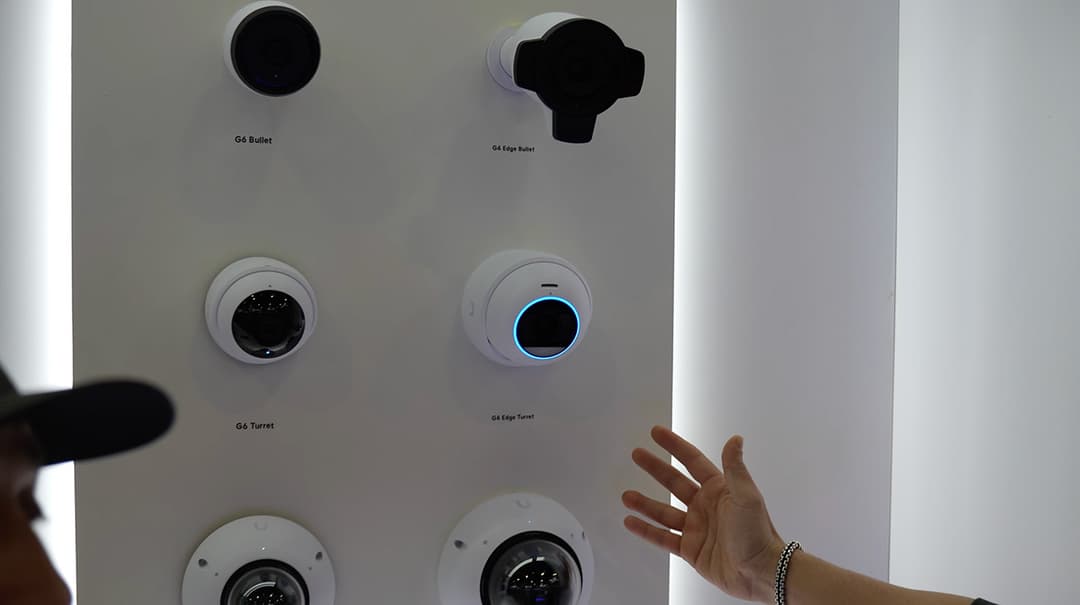
Right as we were concluding our hardware analysis, Ubiquiti announced the most disruptive product line of the entire event: the UniFi G6 Edge Series, encompassing specialized Bullet, Turret, and Dome configurations. This hardware line introduces a fundamental shift in enterprise physical security integration topology.
Our team is currently engineering a massive corporate security proposal involving 100 geographically decentralized buildings across a municipal area. In roughly 80 percent of these remote sites, the client requires only two to four security cameras to cover their primary entry and exit lines. In a traditional IP surveillance configuration, a deployment of this nature forces the integrator to install a local Network Video Recorder (NVR) or a standalone hardware console at every single one of those 100 distinct locations. That old approach creates 100 independent points of failure, drives up hardware acquisition budgets, and adds significant long-term maintenance overhead.
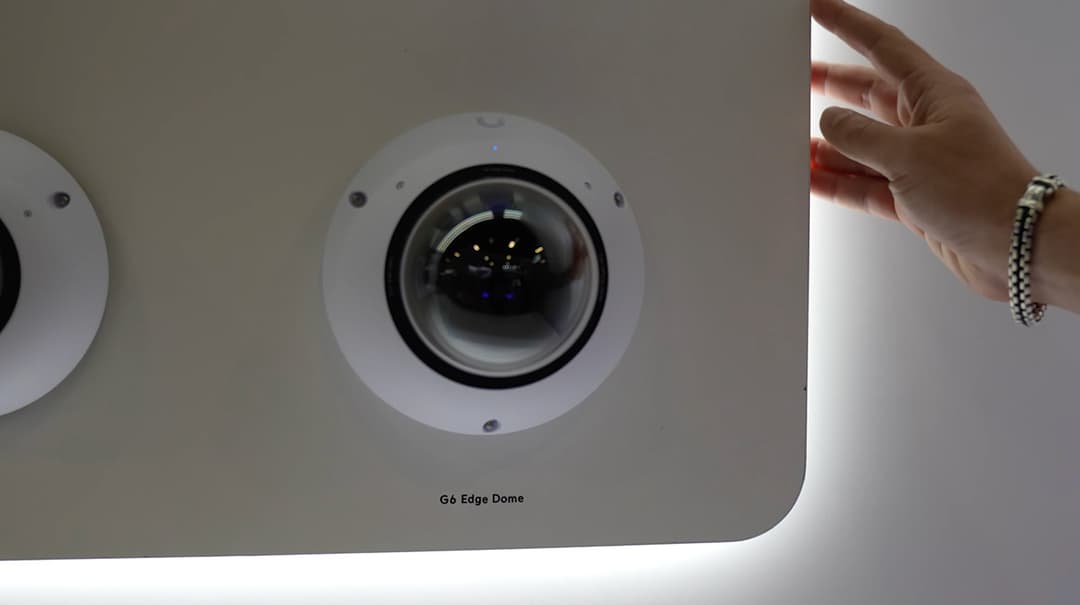
The G6 Edge series eliminates this local footprint entirely by shifting to a cloud-ready, NVR-less surveillance architecture:
- Built-In Edge AI Processing: Each camera is equipped with an advanced processor capable of executing high-speed, onboard AI object detection, facial recognition, and data processing directly on the device.
- On-Board Standalone Storage: Featuring high-end internal non-volatile memory and expandable SD card support, the entire Protect application environment runs directly inside the camera shell.
- The Zero-Touch Provisioning (ZTP) Workflow: Leveraging the new Enterprise Fabric layer inside the cloud dashboard, our technicians can pre-register all 100 locations from our central office using unique ZTP validation codes. Once the field team connects the camera to any local PoE switch or power injector on-site, the device immediately reaches out to the network, self-provisions, and registers to the master system. We can logically organize, tag, and monitor hundreds of distinct sites from a single pane of glass without deploying a single physical NVR asset to the remote locations.
The G6 Edge Ownership Model: Cloud-Ready, License-Free
One of the most refreshing aspects of the new G6 Edge product line is the complete absence of hidden operational costs. In the enterprise security market, many cloud-reliant camera systems turn into high-priced paperweights the moment an organization stops paying a mandatory monthly subscription fee. Ubiquiti continues to disrupt this predatory model by maintaining a strict license-free architecture.
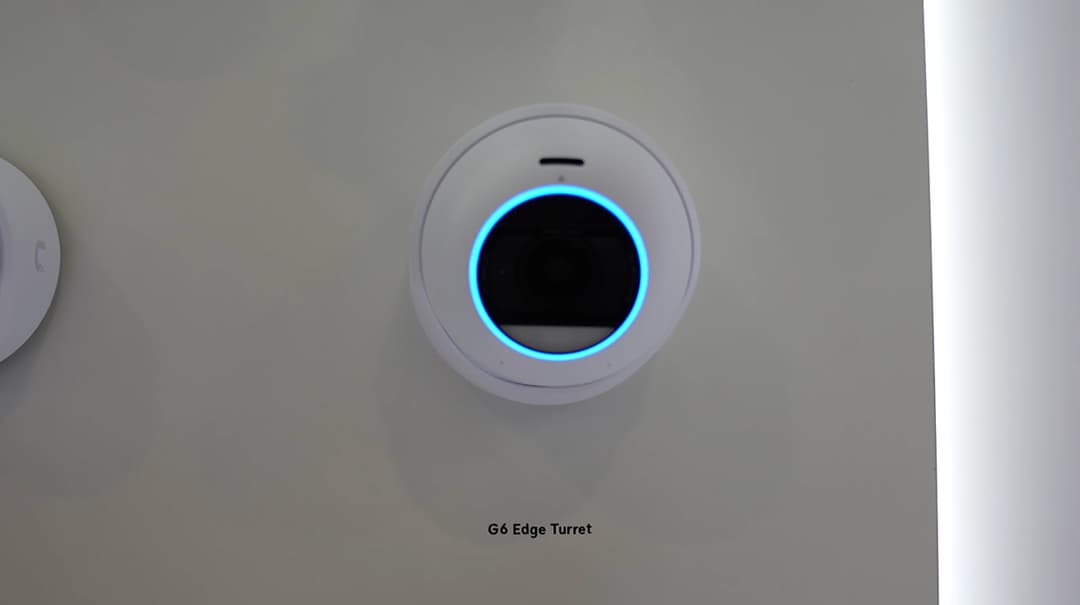
With the G6 Edge series, the client retains 100 percent ownership of both the physical hardware assets and the recorded video footage. All video storage remains encrypted directly on the device's internal memory stacks, and remote multi-site management via the UniFi Site Manager portal is entirely free. This approach directly aligns with why so many forward-thinking enterprises are migrating their infrastructure to the UniFi ecosystem: they are completely done being held hostage by recurring software licensing fees that scale predictably with every added camera node.
Vandal Resistance and Durability
Handling the physical units at the ISC West pavilion confirmed that these Edge devices are engineered for high-exposure environments. The heavy-duty metallic casings possess a true vandal-proof build quality, making them incredibly solid to the touch. This physical hardening is essential for the distributed multi-site deployments we frequently manage across cities. When installing standalone hardware at hundreds of remote storefronts or utility nodes where an on-site IT technician might not step foot for months, you need a resilient shell that can withstand direct physical impacts, keeping the internal chips and storage modules functional.
The Future of Footage Redundancy
A critical point of discussion at the booth focused on data mirroring protocols. While the G6 Edge cameras process and record all primary data streams locally on their internal storage, the Ubiquiti engineering team confirmed that upcoming firmware updates will unlock off-site footage mirroring. This allows the camera to dynamically backup its streams to an NVR located at a completely different corporate facility or push clips directly to a secure cloud destination. This technical advancement ensures that even if a remote camera node is physically torn down, stolen, or destroyed during a breach, the critical evidence remains untouched and instantly retrievable from the off-site archive.
UniFi Access: Modern Security on Old Wires
Moving out of the surveillance pavilion, the UniFi Access Retrofit Hub and its accompanying reader array stood out as major problem solvers for commercial renovation projects. A common bottleneck when upgrading security in commercial real estate is the massive labor cost associated with pulling new CAT6 cables through finished, fire-rated walls or historical concrete structures just to hook up a single door reader.
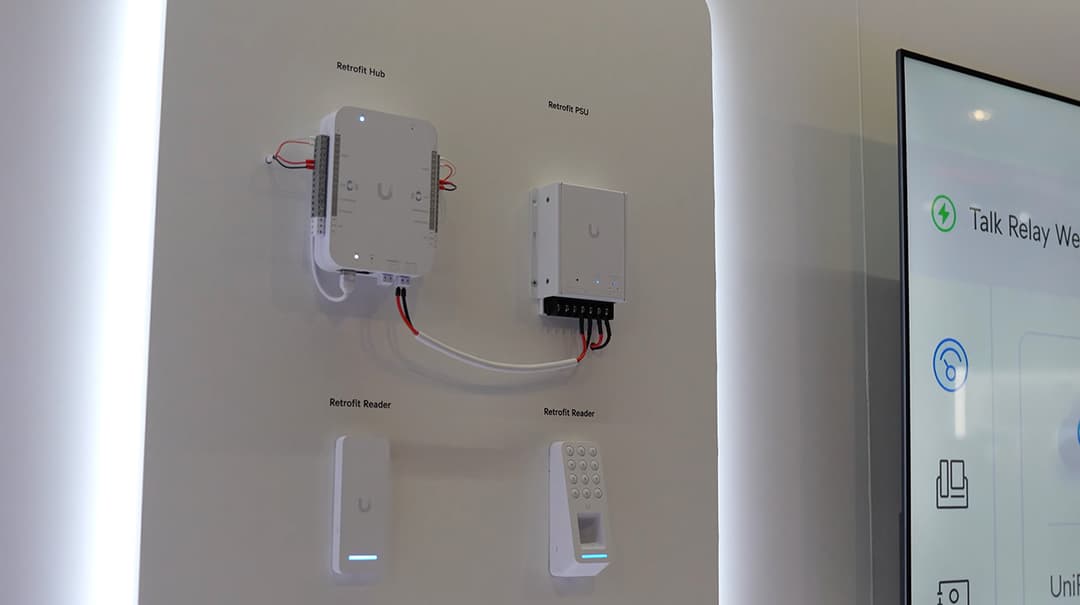
The new Access Retrofit system allows us to bring high-end modern features like encrypted NFC proximity cards, customized PIN codes, and live biometric fingerprint scanning to facilities using their existing 2-wire legacy cabling. By running the upgraded digital protocols over the old copper lines, we eliminate the structural barriers to entry. This installation flexibility is precisely why our team leverages custom, user-managed configurations when retrofitting active business parks that require high-security door access control.
G6 Pro Entry: The Sleek Powerhouse
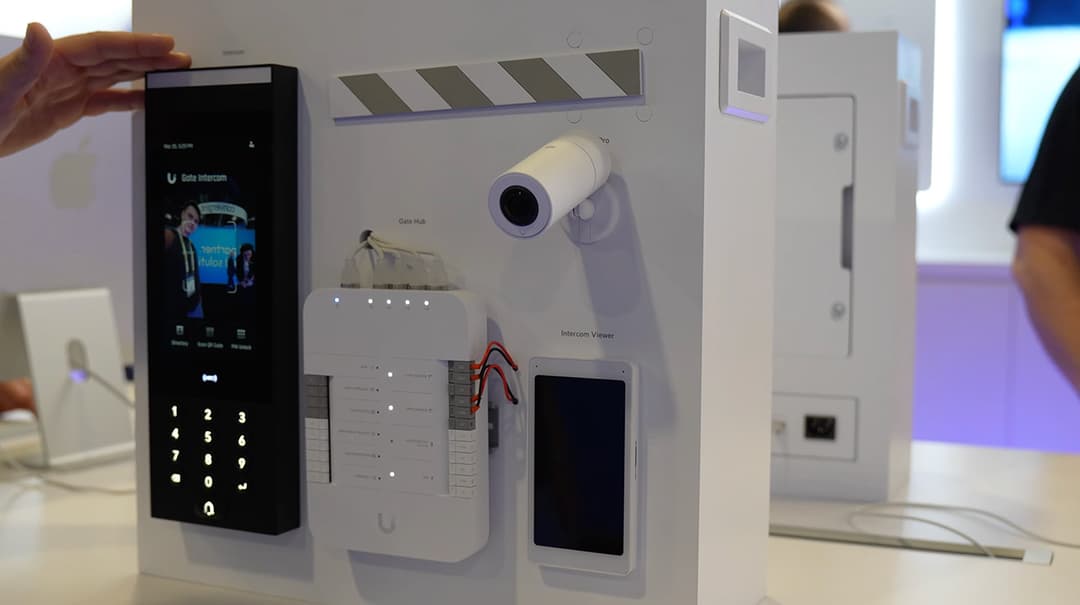
We also put the new UniFi Access G6 Pro Entry door station through its paces at the live demonstration kiosk. Our team actually finalized orders for several of these units for our active client roster right from the convention floor. It features a smaller, highly compact physical footprint compared to the standard UniFi Intercom, making it an ideal choice for narrow door frames, side entries, or sleek modern office glass partitions.
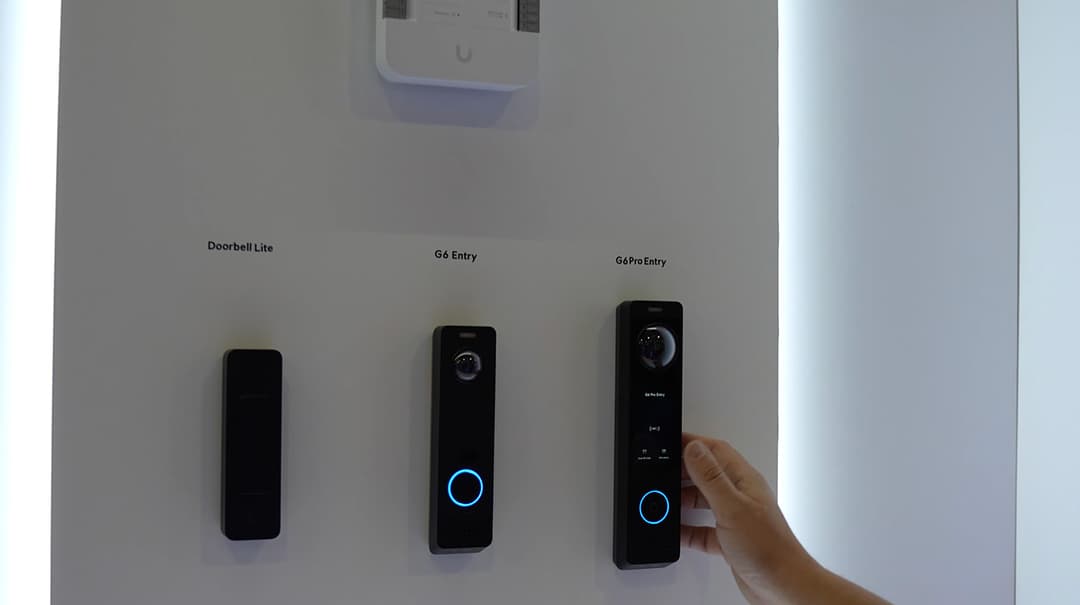
Despite its compact chassis, it makes zero functional compromises. The device natively handles a responsive, high-contrast digital user directory directly on its faceplate, and supports full AI face recognition, custom PIN code access, and guest QR code scanning. It delivers the same feature density as its larger sibling but in a form factor tailored for refined corporate interiors.
The Alarm Hub: Retrofitting Your Security
For our industrial, logistics, and manufacturing accounts, the newly introduced UniFi Alarm Hub is a massive infrastructure asset. Most enterprise facilities already possess hundreds of legacy wired door contacts, window sensors, and glass-break detectors routed throughout their floor plans. Forcing a client to rip out thousands of feet of functional low-voltage wire and replace hundreds of perimeter sensors just to modernize their dashboard is a highly inefficient use of capital.
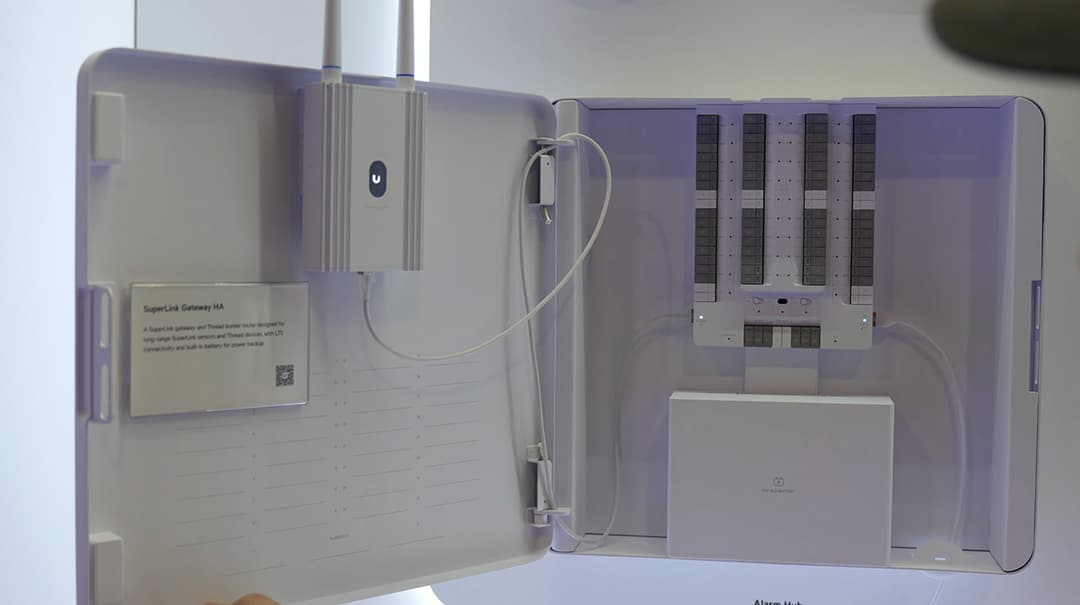
The Alarm Hub acts as a hardware bridge, letting us terminate all existing legacy wired sensors directly into the UniFi ecosystem. Once wired into the hub, the entire array is mapped instantly into the UniFi Protect Alarm Manager application. This allows us to convert completely passive, disconnected magnetic contacts into intelligent, automated triggers that can activate neighboring cameras, flash exterior floodlights, or push instant high-priority mobile alerts to security teams.
Superlink: Breaking the Range Barrier
When physical obstructions or immense distances make hardwiring impossible, the new UniFi Superlink long-range wireless bridge takes over. Operating on a highly resilient wireless spectrum, the Superlink delivers a connectivity radius of approximately 1.5 miles.
We frequently manage manufacturing spaces or expansive industrial rail yards where running trenching or conduit to a remote automated gate or an outer perimeter warehouse door is cost-prohibitive. With Superlink, we can deploy secure wireless sensors boasting a 1-to-2-year battery life that reliably bridge those massive distances. This ensures that the outer edges of an industrial site remain fully monitored without blowing out the client’s infrastructure budget.
Relays and Environmental Intelligence
The technical showcase also highlighted the new UniFi Relay, a compact but highly capable dry-contact component built to bring third-party industrial hardware into the automated security loop. When you link these physical relays to the Protect Alarm Manager application, you construct a highly responsive automation engine.
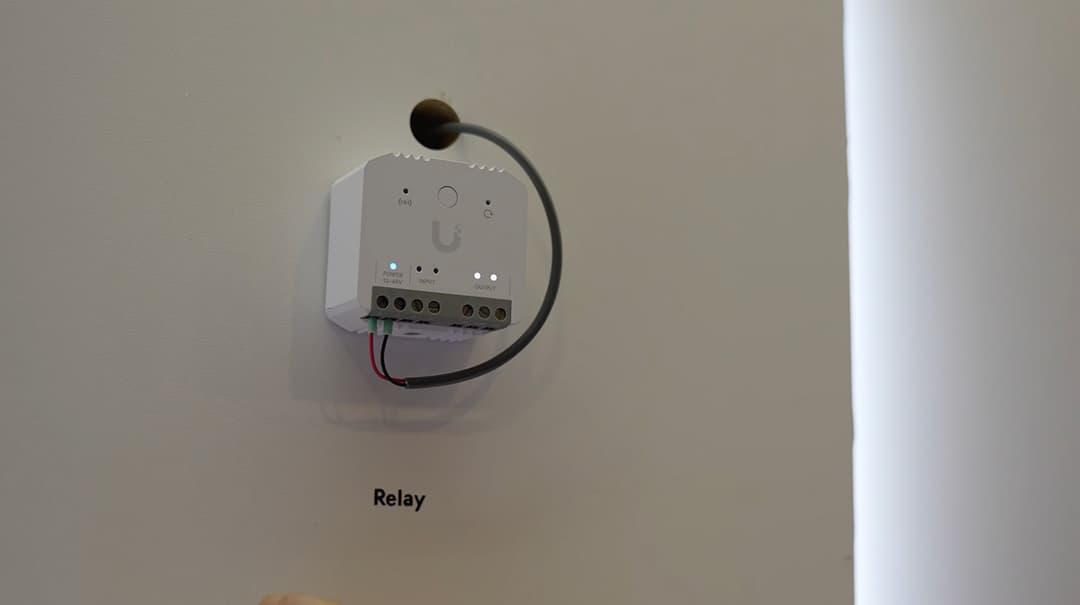
Additionally, the expansion of UniFi's smart Air Quality Sensors represents a major safety addition for industrial environments. In production facilities and chemical processing plants, real-time monitoring of volatile organic compounds (VOCs), humidity, and particulate matter is a strict requirement for safety and compliance. Integrating these environmental sensors directly into the primary physical security console lets the client manage facility health and perimeter safety from a single pane of glass.
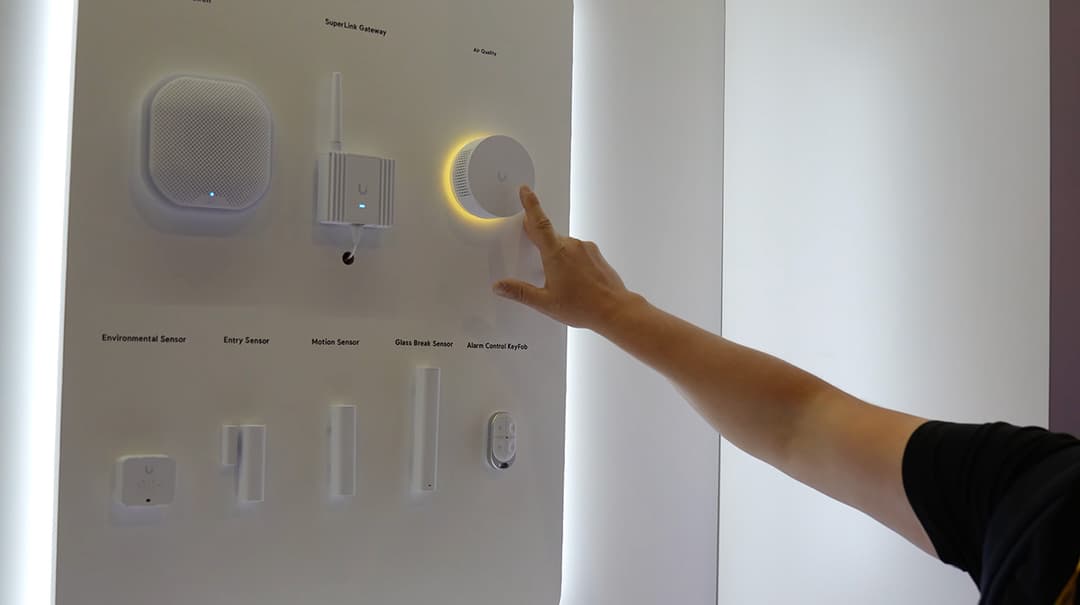
The Device Bridge: Mobility Solved
Our deployment teams frequently encounter tricky layout scenarios where pulling a physical network drop is not viable due to mobile concrete structures, active production lines, or changing floor plans. At the booth, the UniFi Device Bridge and Device Bridge Switch were showcased in several highly practical layouts.
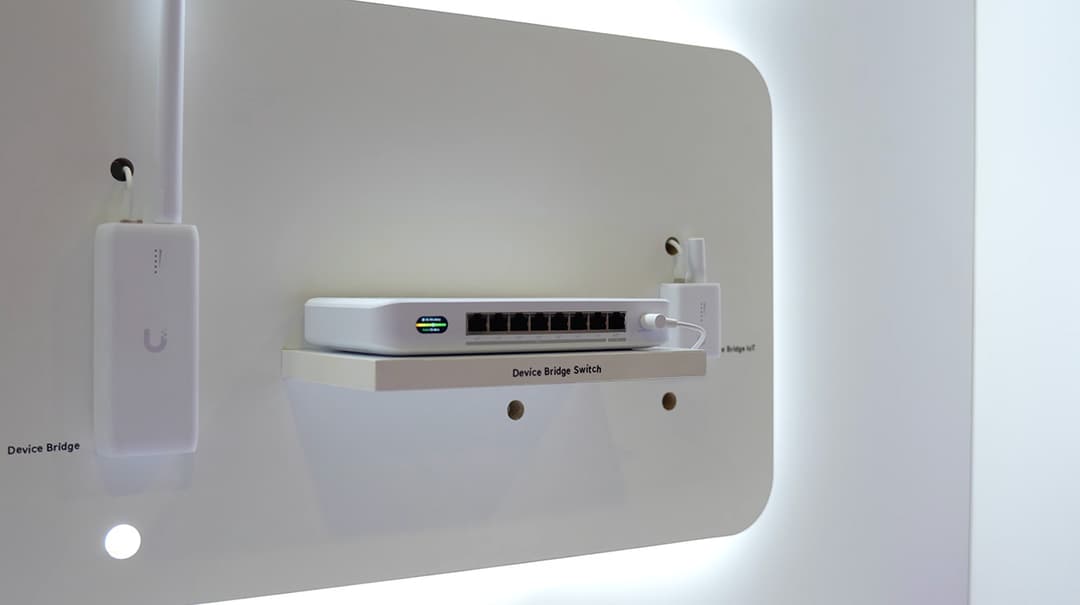
One case study we analyzed involved a large commercial warehouse where staff needed to relocate industrial label printers dynamically across different packing bays: they simply anchored the hardware through the Device Bridge to maintain high-speed network connectivity wirelessly. Our team leveraged this exact technology to build a custom Mobile Conference Unit, mounting an interactive display and an enterprise video bar onto a heavy-duty rolling cart. The entire conference unit requires just a single connection to a local electrical outlet; the Device Bridge handles the network backhaul wirelessly, providing perfect mobility across the corporate workspace.
Compact Redundancy: NVR Instant and UPS
For smaller commercial footprints, remote offices, or residential properties running only five or six cameras, the UniFi NVR Instant is an incredibly clean piece of hardware. It features a sleek, desktop-friendly form factor that completely eliminates the space requirement of a standard 19-inch equipment rack.
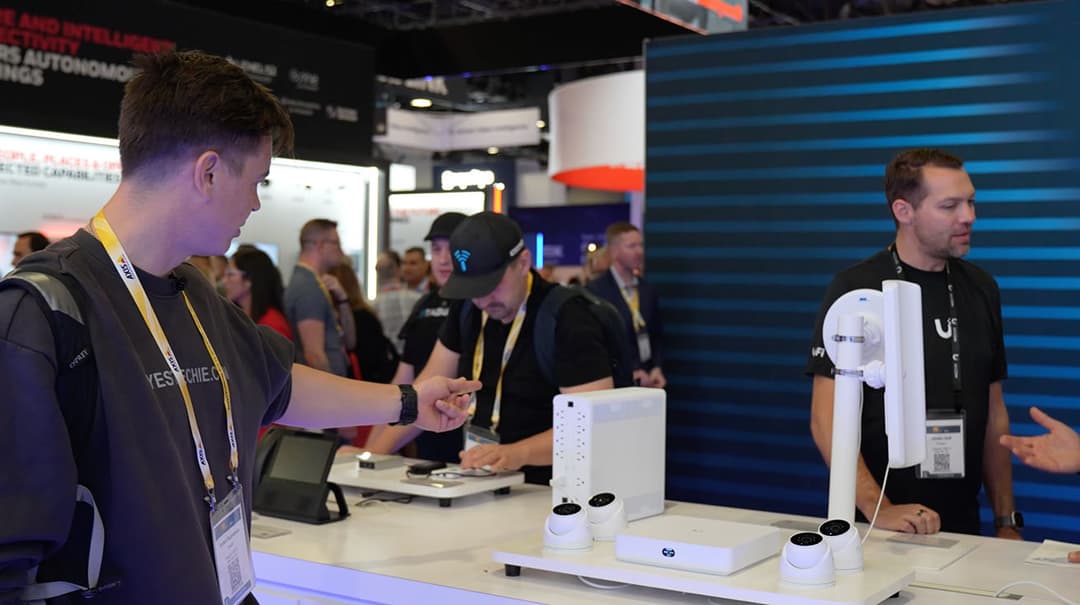
At the pavilion, it was displayed alongside UniFi's new compact Uninterruptible Power Supply (UPS). This hardware pair provides reliable, automated battery backup and local video storage retention in a footprint small enough to sit quietly on an office bookshelf, ensuring that a localized power outage never drops the property’s active surveillance feeds.
Wi-Fi Desk Phones: More Than Just VoIP
The newly updated UniFi Talk G3 Touch Enterprise desk phones represent a significant tool for active reception and security desk stations. These endpoints can connect completely over a local Wi-Fi network, requiring nothing more than a local PoE drop or a standard USB-C desktop power adapter to run.
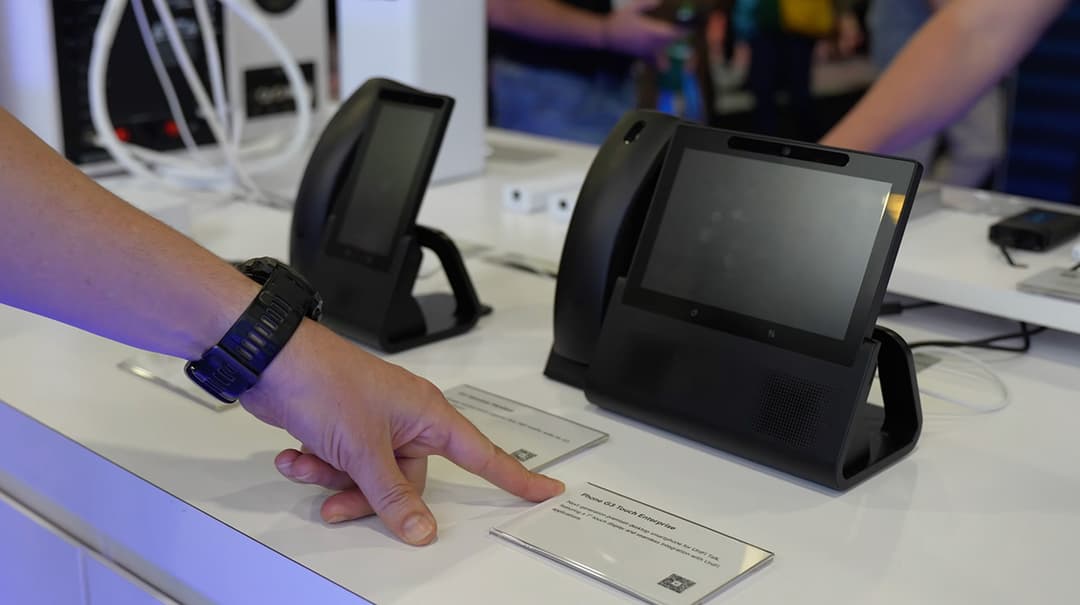
Our team recently completed a multi-line deployment consisting of eleven of these Talk units and was impressed by their hardware versatility. Far beyond traditional VoIP communication, these touch-screen desk devices function as a live, dedicated viewer for the UniFi Protect application. A front desk receptionist or building guard can monitor real-time security camera streams, check visitor identities, and trigger door locks via UniFi Access directly from the phone interface without ever needing to look away from their primary desk space.
Expert Insight: Tuning for Perfect LPR
Returning to the camera pavilion, our technicians spent time reviewing edge calibration for automated tracking systems. We have engineered numerous high-traffic vehicle entry systems, and when configured properly, the AI algorithms are unmatched at isolating license plates in low-light and adverse weather conditions.
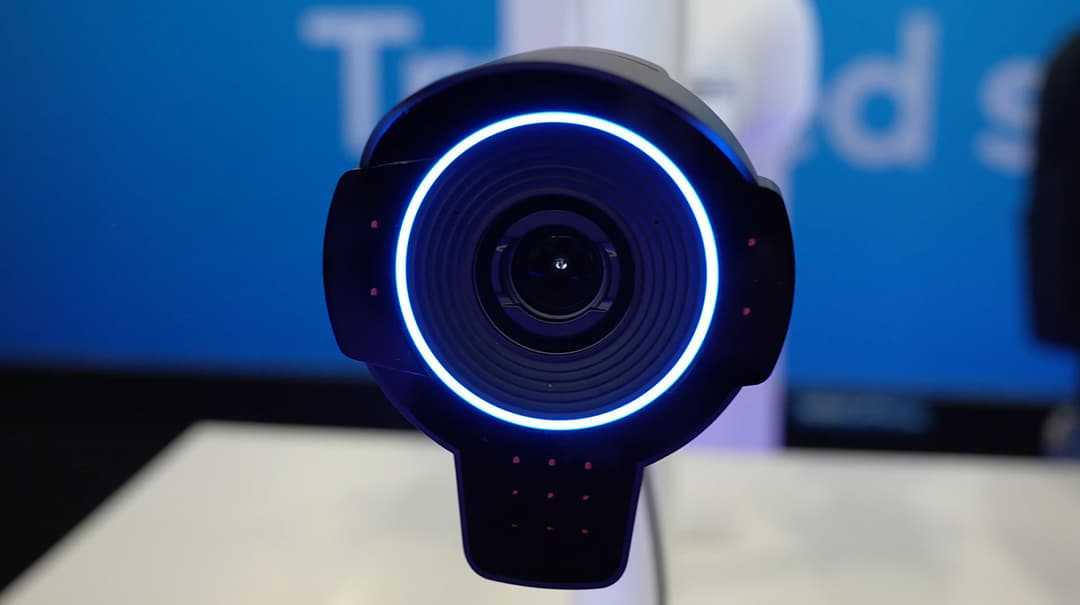
However, many integration technicians struggle online because they treat LPR like a standard plug-and-play feature. Achieving a 100 percent capture rate requires an experienced team to tune the internal camera settings. At YesTechie, we have mastered this precise calibration workflow, manually adjusting exposure curves, frame rate priorities, and shutter speeds to match the exact vehicle approach velocities of each site, ensuring clean captures every time.
Active Deterrence: The AI Horn Speaker
The UniFi Protect AI Horn Speaker (UVC-AI-Horn) remains one of the absolute sharpest tools in our perimeter protection toolkit. We have deployed these audio deterrent arrays across high-stakes facility boundaries to transform passive systems into active security shields.
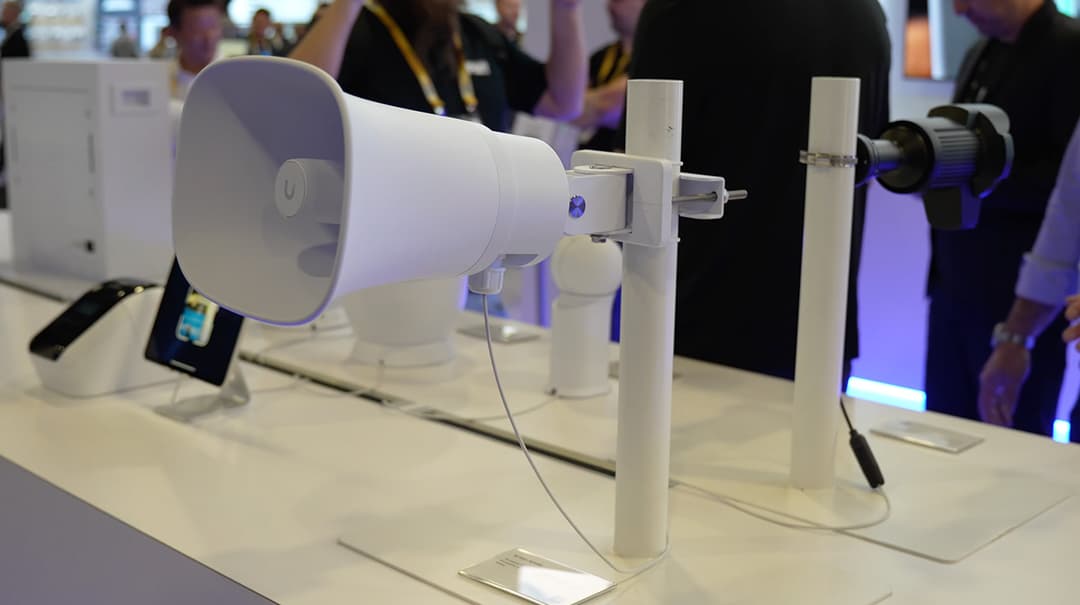
When linked directly to fixed cameras or smart multi-sensor units via the Alarm Manager application, the AI Horn Speaker issues automated, high-volume audio warnings the exact second a bad actor crosses a virtual boundary line. This proactive defense regularly deters intruders and stops security breaches before a suspect ever reaches a physical door or window, minimizing on-site property damage.
Access Kiosk and Intercom Kit
We also analyzed the structural build of the UniFi Access Kiosk, an automated guest check-in terminal built to handle high-traffic commercial lobbies and corporate entryways. The system automates digital badge printing, visitor registration, and NDA signatures seamlessly.
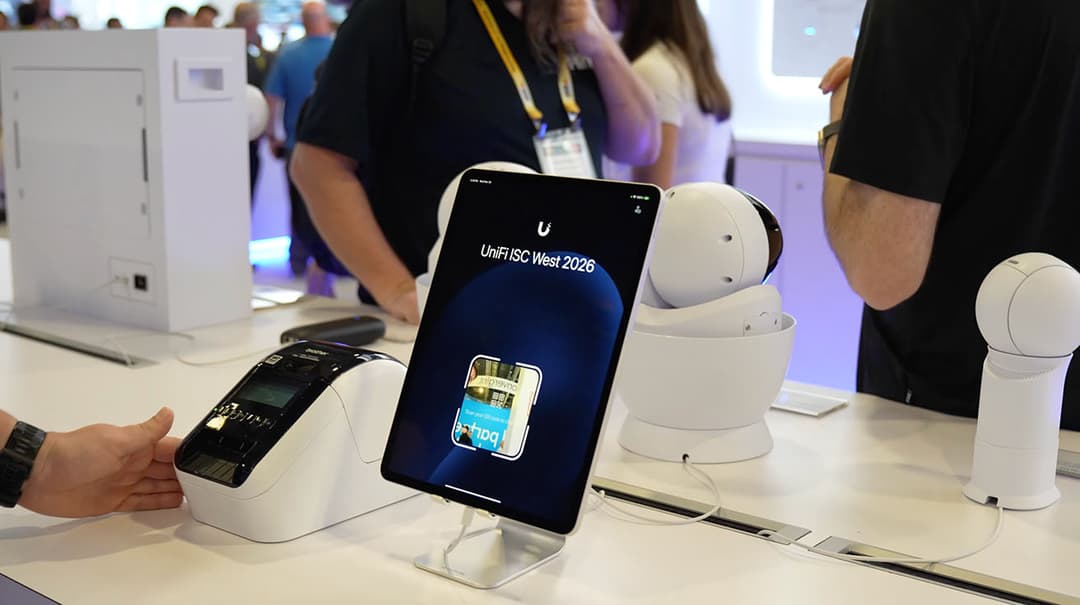
Directly adjacent was the complete UniFi Intercom Kit. While the smaller G6 Pro Entry is an excellent development for space-constrained doors, we still highly recommend the standard UniFi Intercom for primary exterior main gates. The heavy-duty physical buttons, large digital touchscreen, and robust weather-proof chassis deliver a premium, resilient user experience that can easily withstand decades of constant public use.
The "Proper" UniFi Rack Build
To conclude our engineering tour, our team stopped by the master rack infrastructure display. Ubiquiti always showcases the gold standard of network topology construction: utilizing their signature brush panels, uniform patch bays, ultra-thin flexible patch cables, and perfectly routed horizontal management.
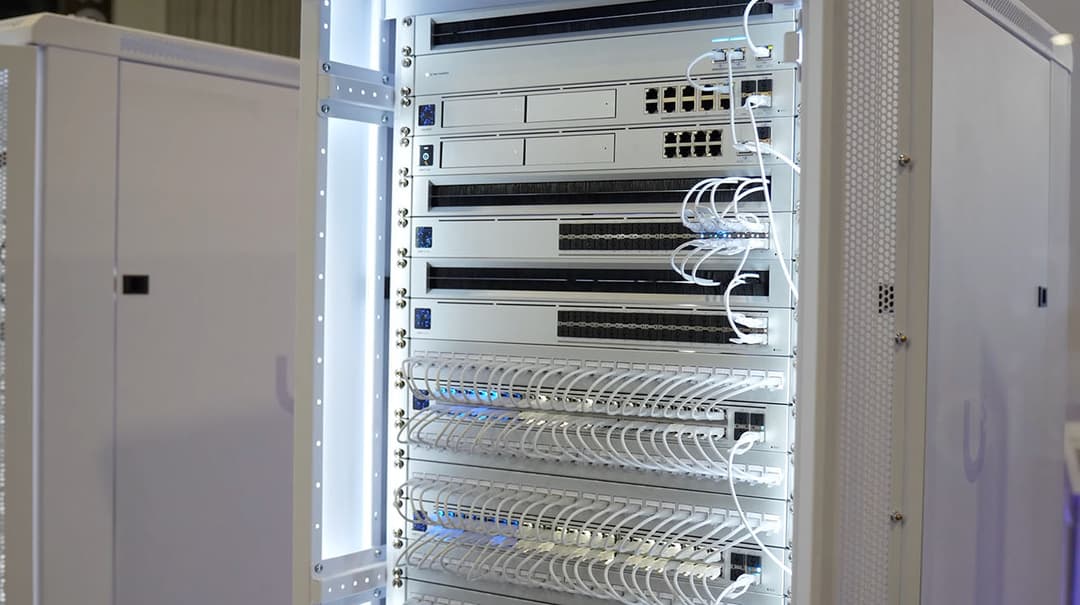
At YesTechie, we take pride in delivering on-site equipment racks that perfectly mirror this clean, industrial aesthetic. A meticulously organized server rack is not just about looks; a combed, properly spaced rack optimizes system airflow, drastically drops equipment operating temperatures, simplifies future hardware expansion, and accelerates technical troubleshooting. Furthermore, using UniFi’s integrated LED rack illumination ensures that if an internal cable ever requires a physical diagnostics check, your team can see every connection clearly.
Conclusion: Let YesTechie Design Your Next Project
The hardware layouts showcased at ISC West 2026 solidify a major shift in our industry: the future of physical defense is built on simplified infrastructure, single-cable efficiency, edge AI processing, and completely integrated management dashboards. At YesTechie, we stay ahead of this technical curve by testing every new hardware asset inside our own settings before moving it to our customers' active sites.

If you are currently planning an upcoming technology build or need an advanced network designed for an industrial property, the team at YesTechie is ready to mobilize. We know exactly what to expect from these cutting-edge hardware releases and will ensure your facility deploys the precise equipment needed to maximize your long-term security. Rest assured, our team will design and execute your infrastructure in the best way possible.
To schedule a direct engineering layout consultation, reach out to our team via our main services portal or visit our dedicated Ubiquiti installers team directory to launch your project with confidence.
Want to see this gear in action right from the convention floor? Check out our live UniFi Booth Tour video here:
and catch our complete ISC West breakdown video here:
to see exactly how these upcoming releases will redefine enterprise security.
FAQ: Technical Overview from ISC West 2026
Do the UniFi G6 Edge cameras require a local Dream Machine or NVR console to record?
No. The G6 Edge series is engineered for an entirely NVR-less surveillance architecture. Each camera houses an advanced processor that executes AI analytics locally and saves all video records directly to integrated, on-board non-volatile storage. All that is required on-site is a standard PoE power source and an active internet connection to securely link the camera streams directly to the UniFi Site Manager dashboard.
What is the operational connectivity range of the new UniFi Superlink wireless bridge?
The UniFi Superlink wireless bridge delivers an impressive long-range line-of-sight connectivity radius of approximately 1.5 miles. This specialized wireless backbone is ideal for large industrial complexes, remote gate lines, or detached storage yards where running physical underground data conduits or fiber optic trenching is cost-prohibitive.
Can the new UniFi Talk desk phones be used to operate entry door locks?
Yes. Devices like the UniFi Talk G3 Touch Enterprise desk phone integrate seamlessly with the UniFi Access ecosystem. The high-resolution touch display allows office reception staff or security personnel to monitor live UniFi Protect camera feeds, verify visitor identities, and trigger the remote door unlock command directly from the phone interface.
How does Active Deterrence function within the UniFi Protect ecosystem?
Active Deterrence shifts a security network from passive recording to real-time incident prevention. By pairing edge AI cameras or multi-sensor units with high-output hardware like the UniFi Protect AI Horn Speaker via the Alarm Manager application, the system automatically triggers localized audio warnings or high-intensity strobe rules the exact moment an unauthorized perimeter breach is detected.
Can old, existing building alarm sensors be saved during a UniFi network modernization?
Yes, utilizing the new UniFi Alarm Hub. This device acts as a hardware-to-software bridge that allows installers to wire existing legacy door contacts, window sensors, and motion detectors directly into the modern UniFi application layer. This protects the client's original hardware investment while enabling full automation rule configuration inside the Protect Alarm Manager dashboard.